Our second morning in Camp Xugana we went for a hike on Baobab Island. Our guide Joe armed himself with a.375 Holland & Holland rifle (an elephant gun). We stepped off the boat and waited as Joe walked ahead and checked for danger. The island is quite large and has numerous trees, including the eponymous baobab. There were many birds, lechwes and a few warthogs on the island, and a raft of hippos across the channel.
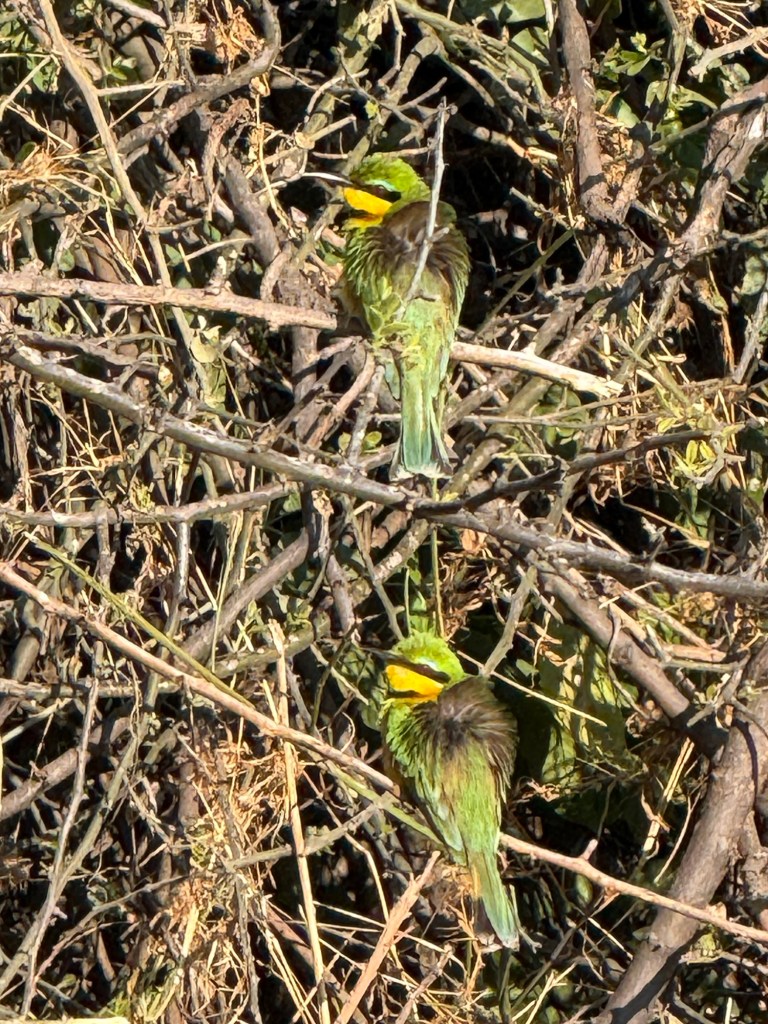
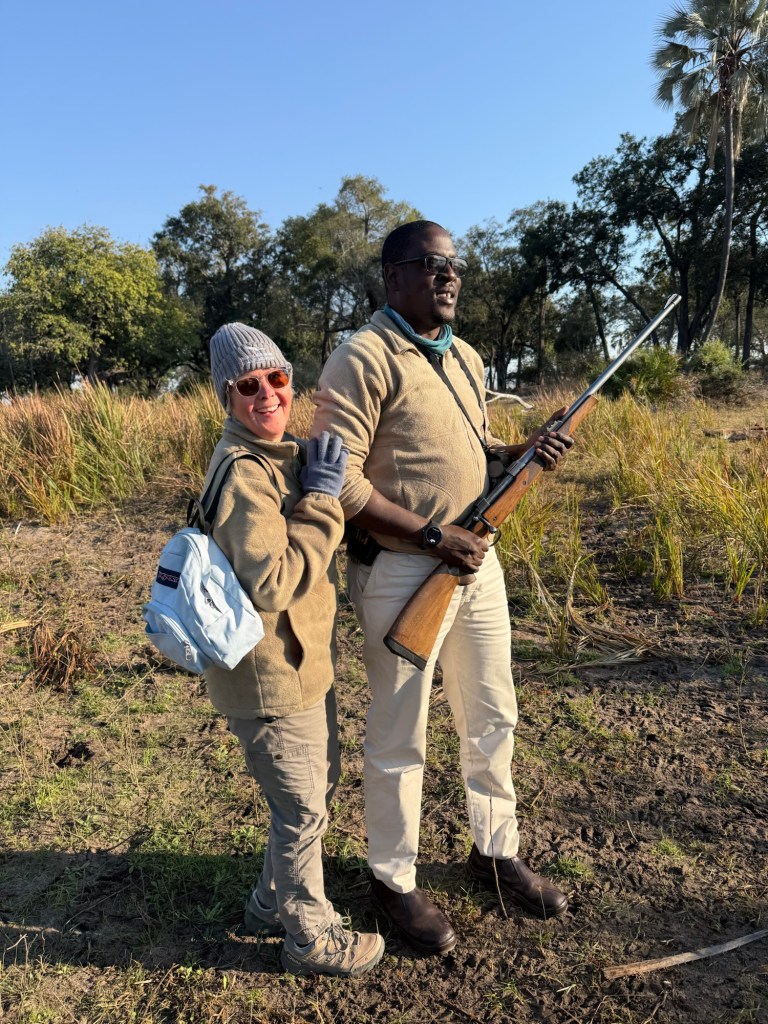
As we walked through the brush we heard a splashing, and several red lechwes came rushing down the river bed, then turned sharply and veered inland. Baboons were shrieking in the trees and birds took flight. We couldn’t see anything but Joe was on alert. Something had spooked the animals, and it wasn’t us. Joe directed us atop a nearby termite mound for a better view. He checked his rifle and released the safety. We waited, scanning the brush for a lurking predator. It started to get hot. We couldn’t see anything, but Joe was anxious. We waited,
After some time Joe relaxed. The animals resumed their grazing and the baboons quieted. We continued our walk. We passed a leafy plant that had a foul odor. It looked like an herb. Joe asked us what it smelled like, and responses ranged from body odor to urine to vomit. It was the African sage plant. I asked Joe if it was used for cooking and he laughed. “No one eats it, not even the animals.”
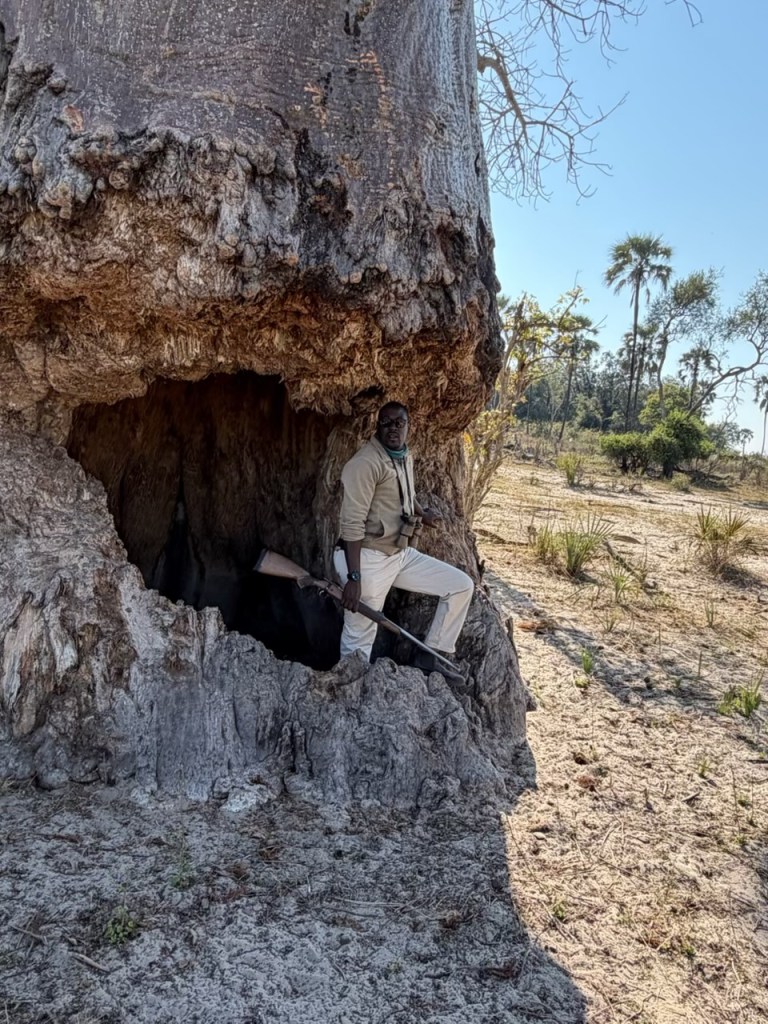
We walked toward a large Baobab tree with a cavernous opening in the trunk. “The bushmen would use this for shelter. But so will the animals “. The tree was a thousand years old.
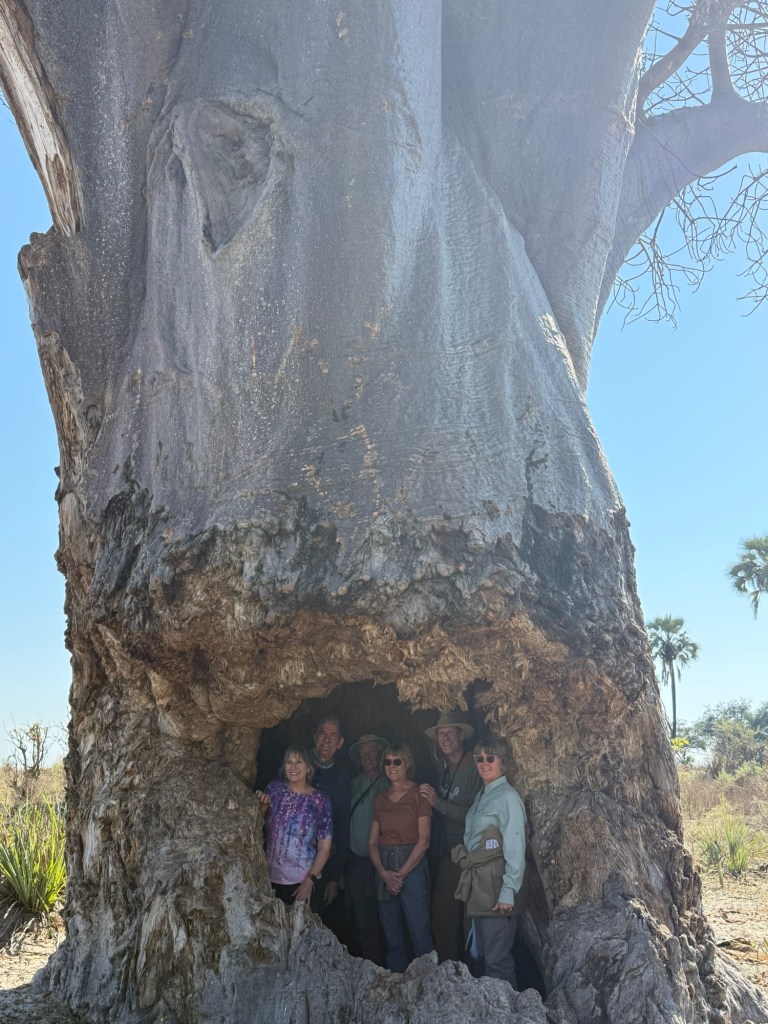
We spotted more birds and a few warthogs rooting in the ground, then headed back to our boat. A break for coffee, and then off to camp for lunch and our afternoon siesta.
At 3:00 PM we have light refreshments, then return to the boat for our afternoon excursion. Today we’re learning about plants and going for a short ride in a mokoro, or dugout canoe .
Bushmen in the Delta used Pampas grass and Papyrus for building shelters. Water lillies were an important source of food, with a large tuber at their base. The lily stem is hollow, with a honeycomb interior that helps filter water for drinking. The base of the papyrus is also edible.
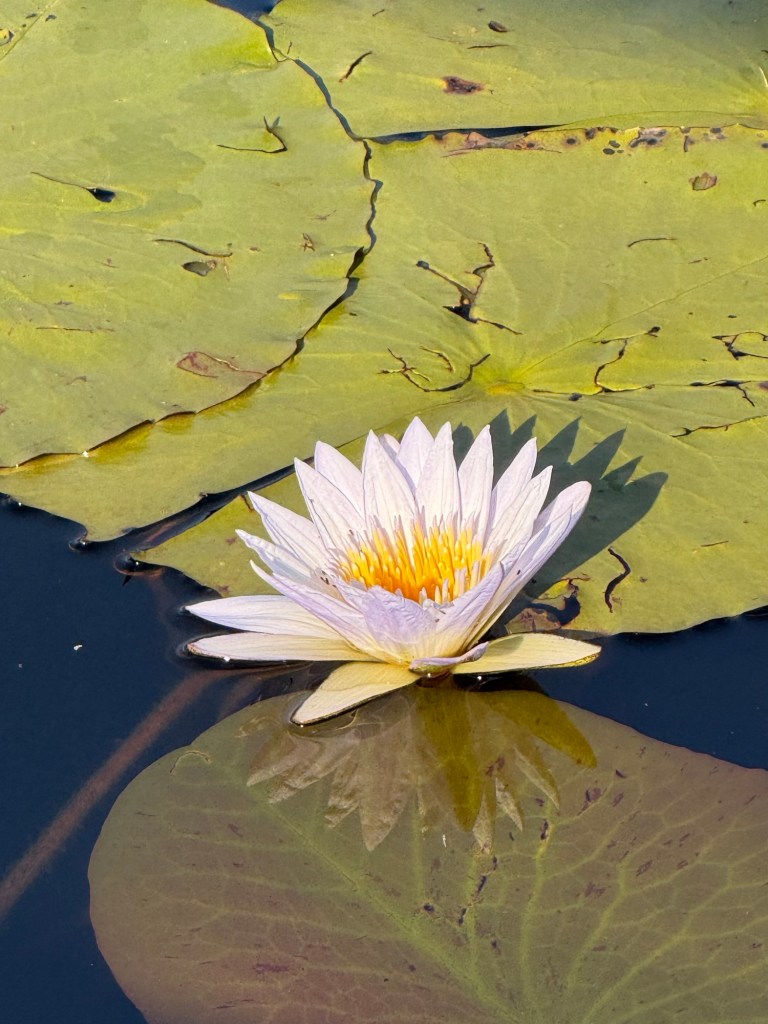
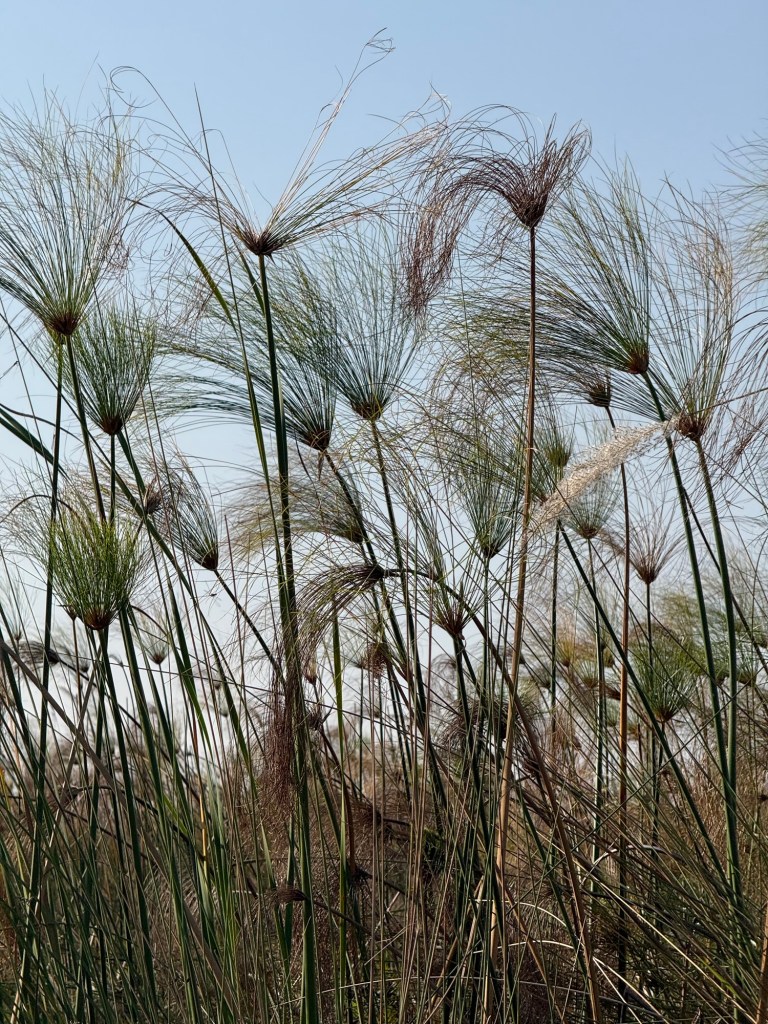
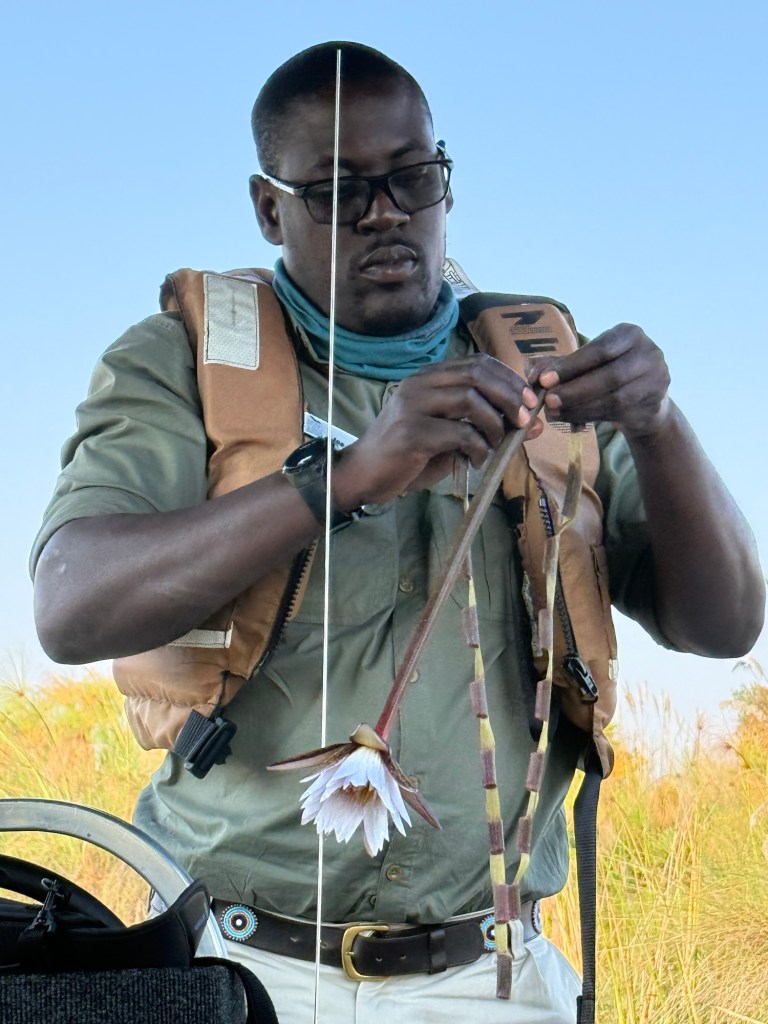
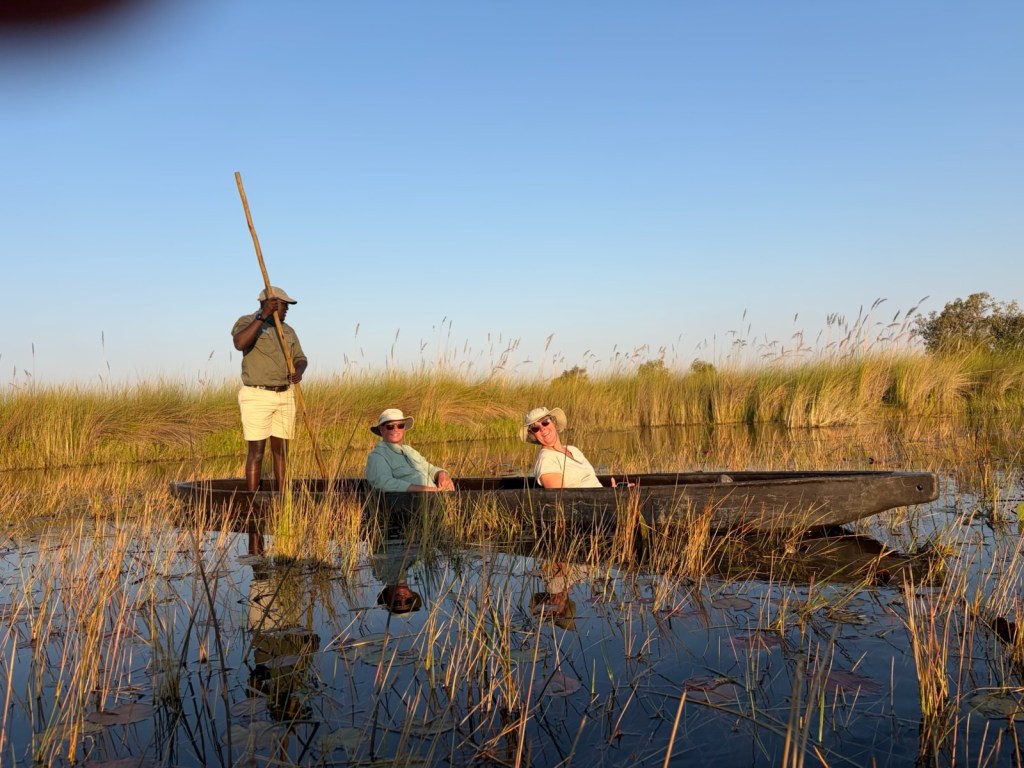
We then reach the mokoros, tied to the dock near the airstrip. Traditional mokoros are made from large trees, and vary in size from small one or two person craft to larger boats used for transport. They could be very heavy. Ours were not the real thing, and were made of fiberglass. We sat in the bottom as Joe poled us through the water silently, drifting past water lillies and reeds, the sun warm on our backs. The currents through the Delta are surprisingly strong, and as we turned back to the dock Joe used his pole mainly for steering. A pleasant ride.
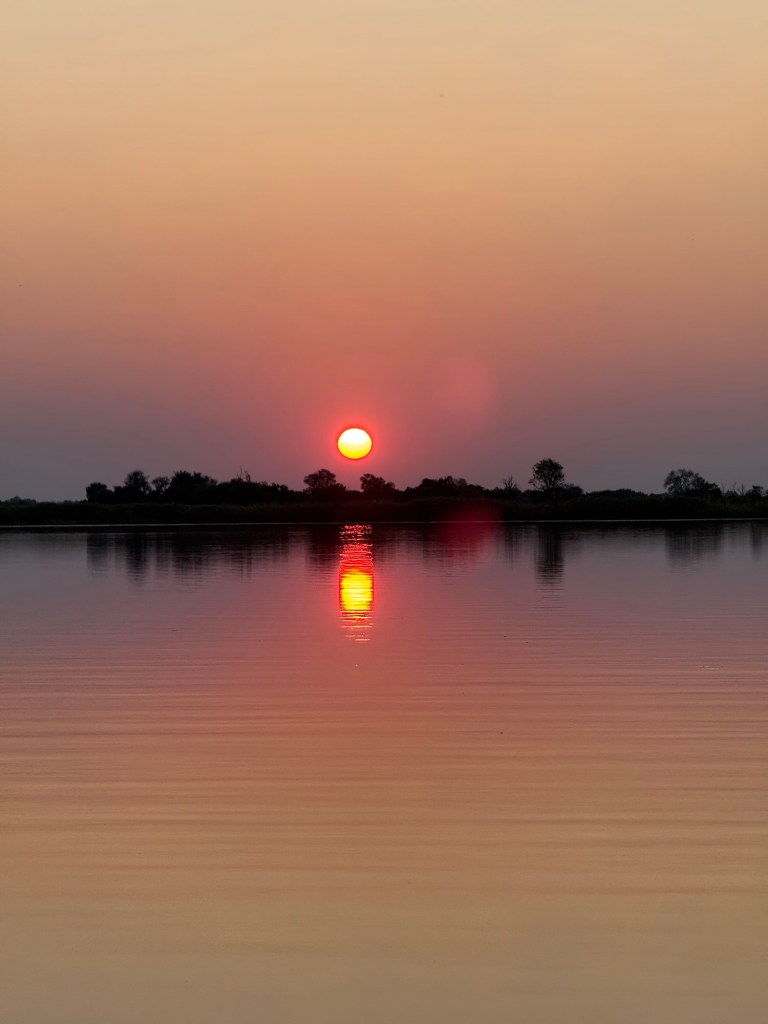
As the sun sets we stop on the water for a cocktail and a snack. The sunsets are beautiful. Then back to camp for our dinner. Tomorrow afternoon we will leave Camp Xugana and the Okavango Delta and head north to Victoria Falls.