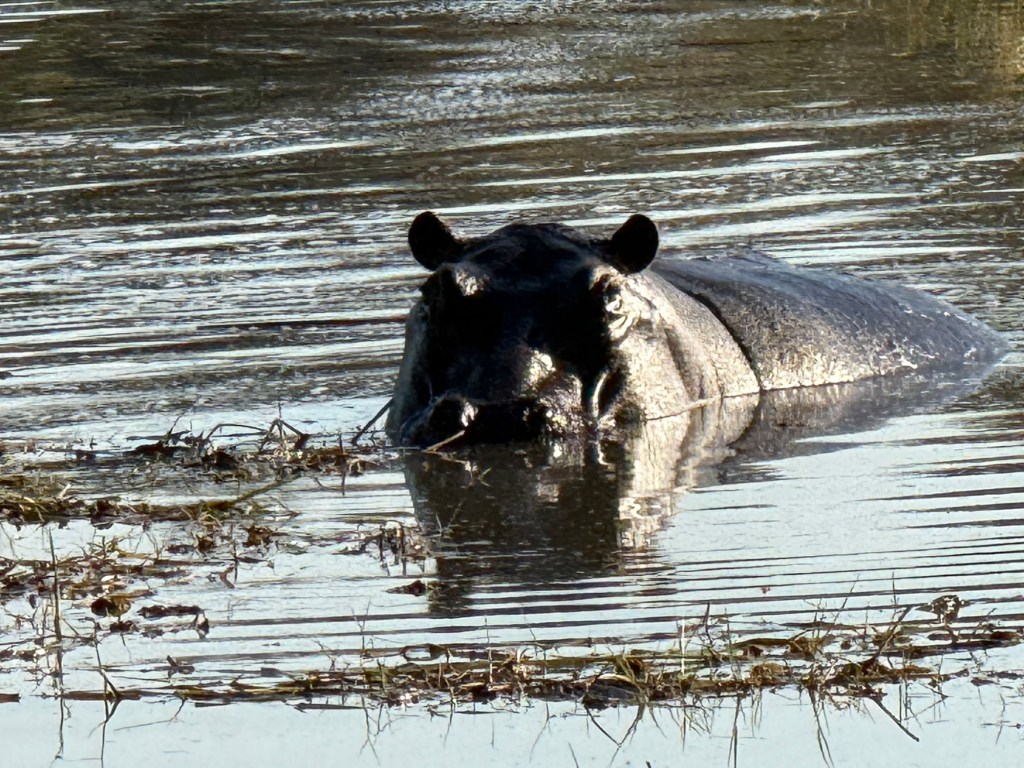
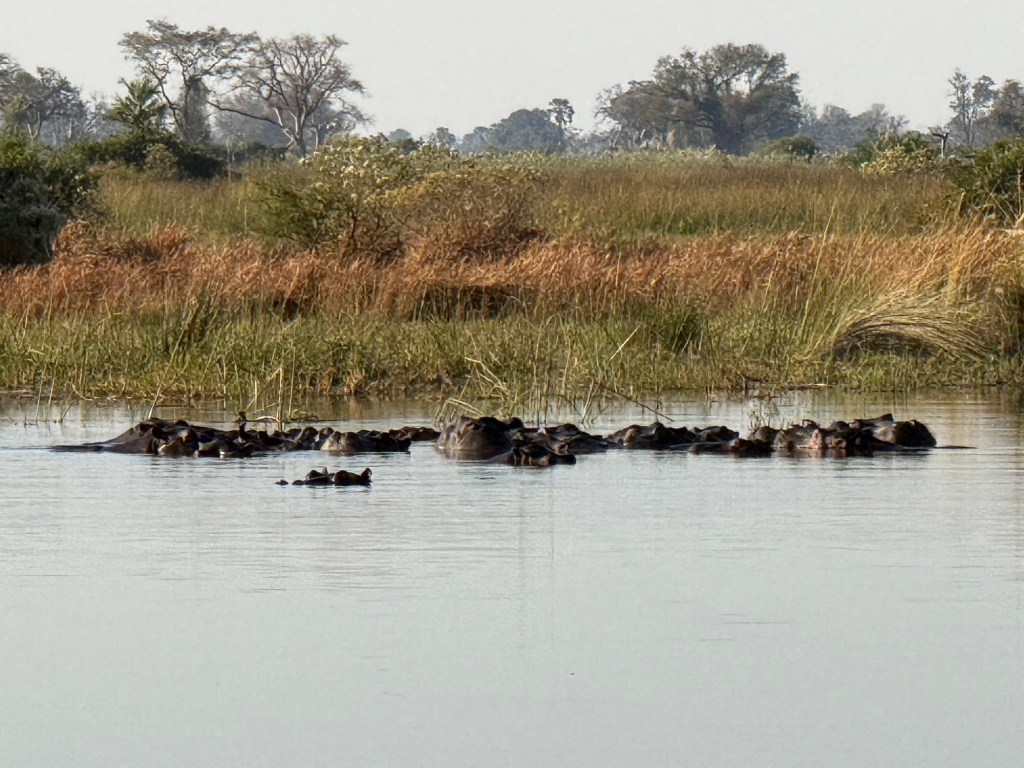
Our last morning at Camp Moremi we packed, ate breakfast and headed out for one last game drive. We hadn’t seen any hippos on our earlier drives, but today they were abundant. Usually in the water and nearly submerged. They make a loud chomping noise as they eat the vegetation in the water. They are very good swimmers, but are usually standing in the water as they eat. They are dangerous if approached, and quite territorial. A hippo will open its mouth wide and show its teeth as a warning. They grunt and roar. They are often seen in large groups called rafts while in the water, but they sleep on land.
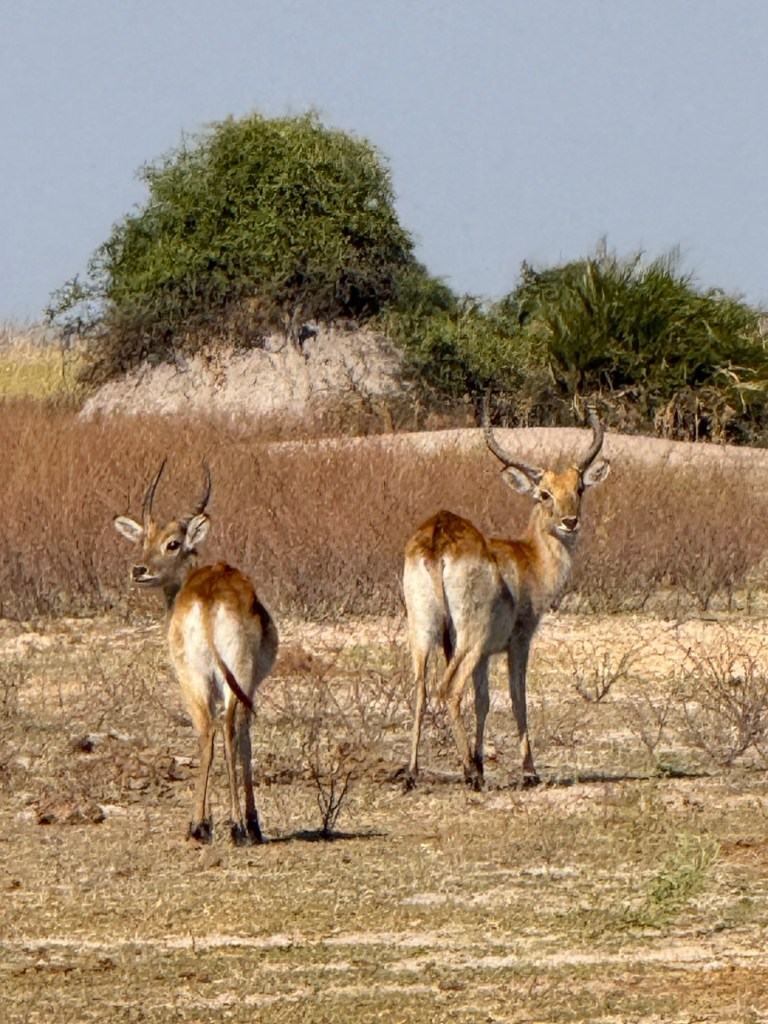
After our morning drive we headed to the nearby airstrip. A quick ten minute flight brought us to another airstrip and our boat to Camp Xugana. The camp is on an island and all of the wildlife is reached on flat bottom skiffs. As we skimmed through the narrow channels we passed small islands and open marshes. Various birds, red lechwe, and hippos were spotted.
The lechwe is a marsh dwelling antelope about the size of a small white tailed deer. they keep to the wetlands to avoid predators and are seen grazing in the shallow waters or on small islands.
Both Camp Xugana and Camp Moremi are owned by Desert & Delta Safaris along with two other camps. They have a shared solar power system that provides electricity to the camps. Although we technically sleep in tents, they’re quite luxurious, with ensuite bathrooms. Camp Xugana also has outdoor showers surrounded by a bamboo privacy wall- nice!
Meals are served in a communal dining area, and it’s been fun meeting the other guests, including a couple in their 80’s, John and Kay from New Zealand, several Swiss and German groups and a couple from Singapore. Before each meal the staff welcome us with songs and dancing. The food is good and plentiful. The bar is open.
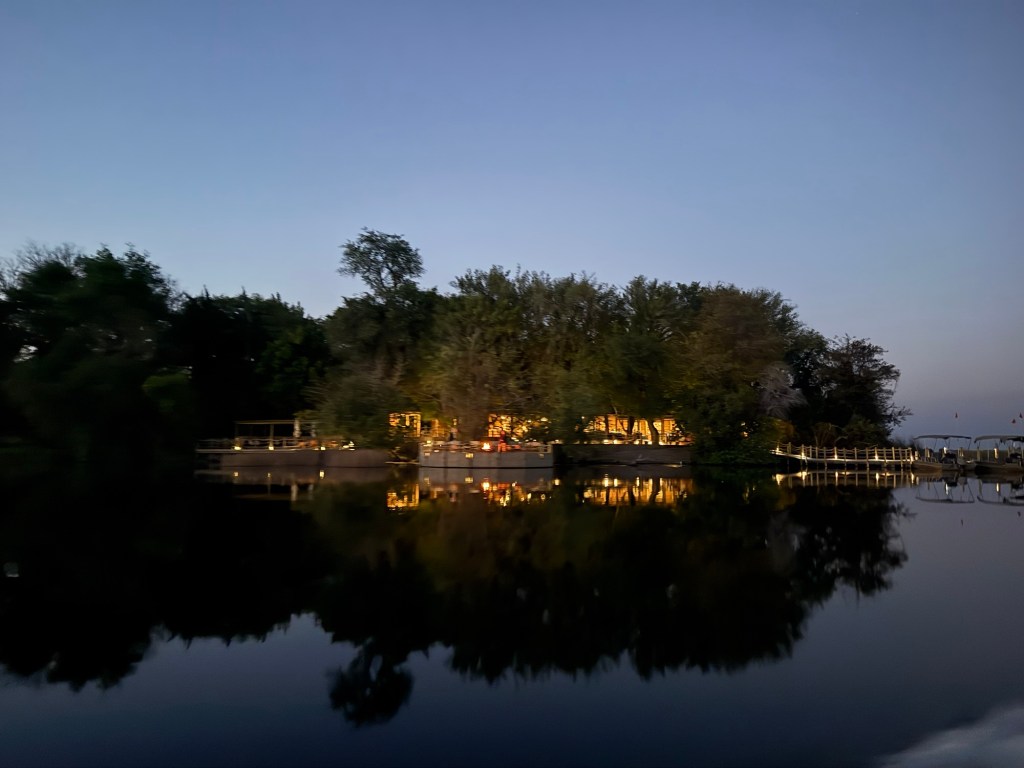
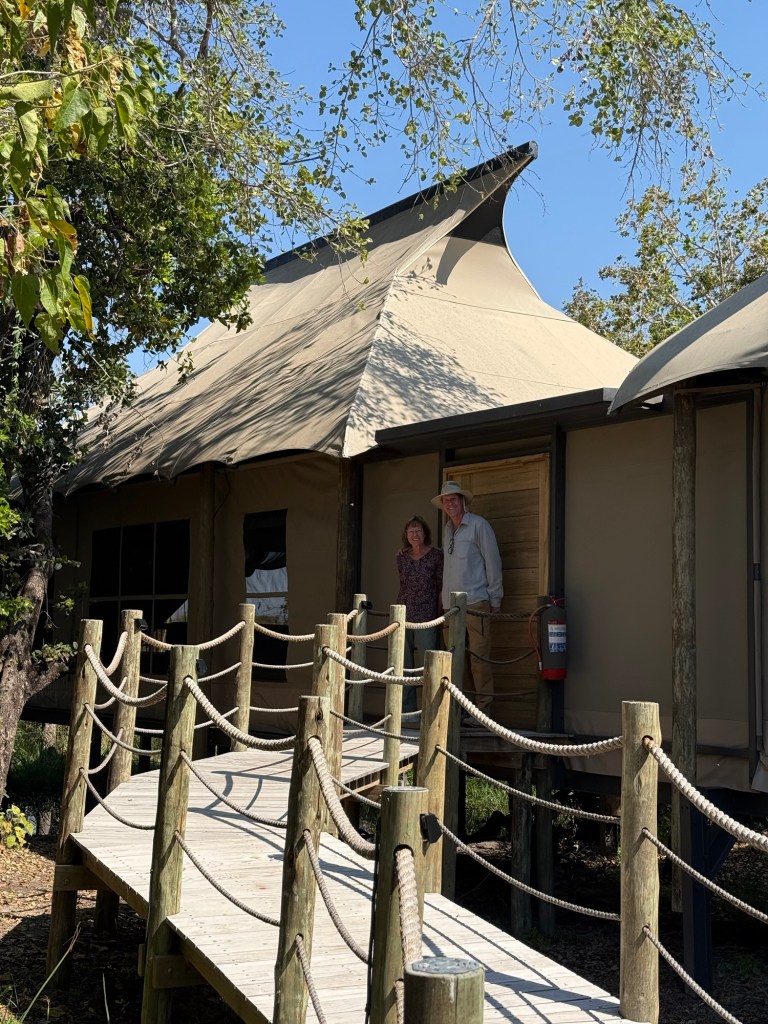
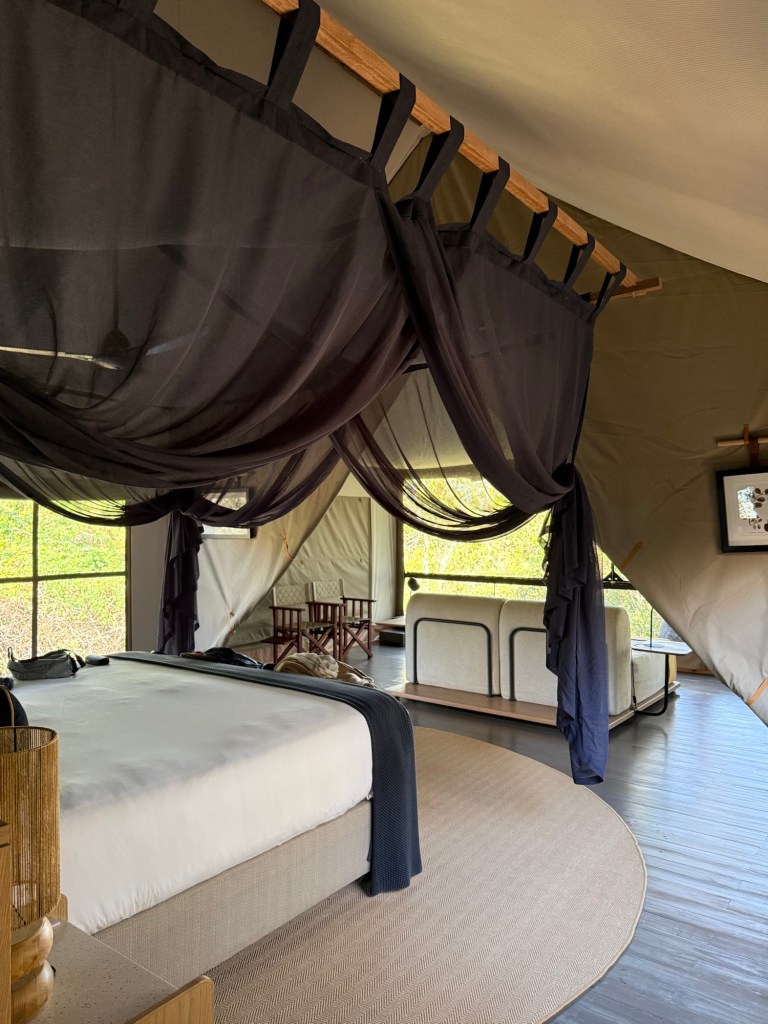
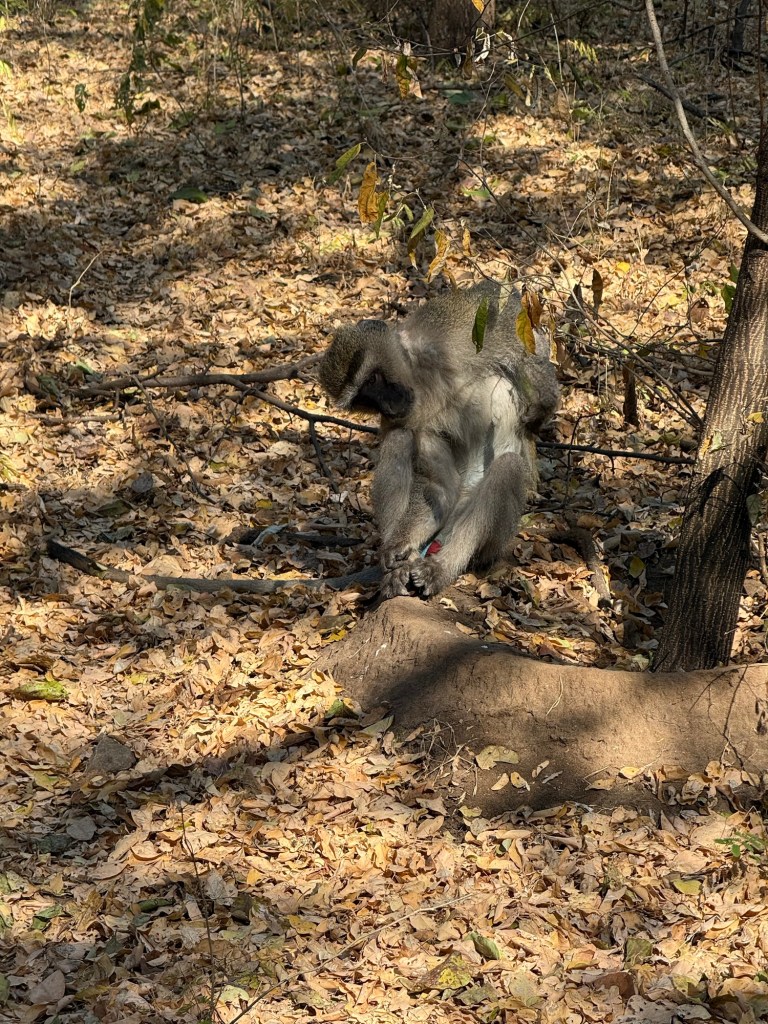
Animals roam freely in and around the camp, and after dark guests must be escorted to and from their rooms. We could hear hippos snorting nearby and there were baboons in the trees but we didn’t have any close encounters.
Mornings start early, with a wake up call at 6:00, followed by a breakfast buffet. Then out on the boat.
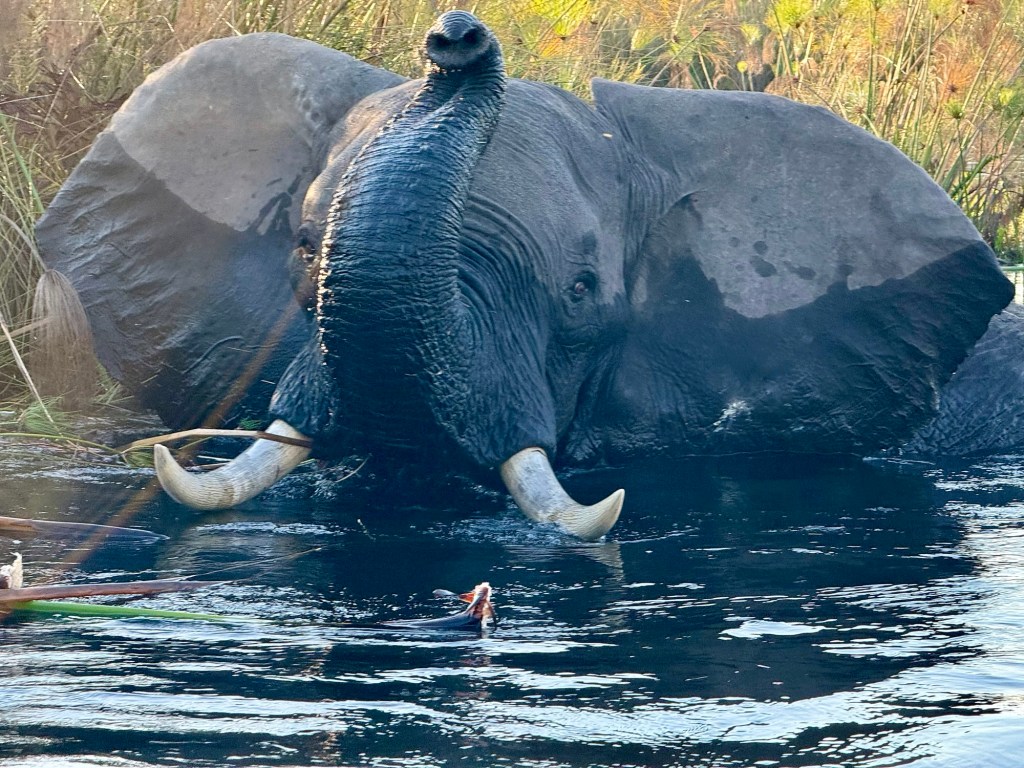
Early one morning as we turned down a narrow channel an elephant stood in the water eating grass. We stopped to admire him and then skirted past, at which point he turned, flared his ears and trumpeted a warning.