Our Guides

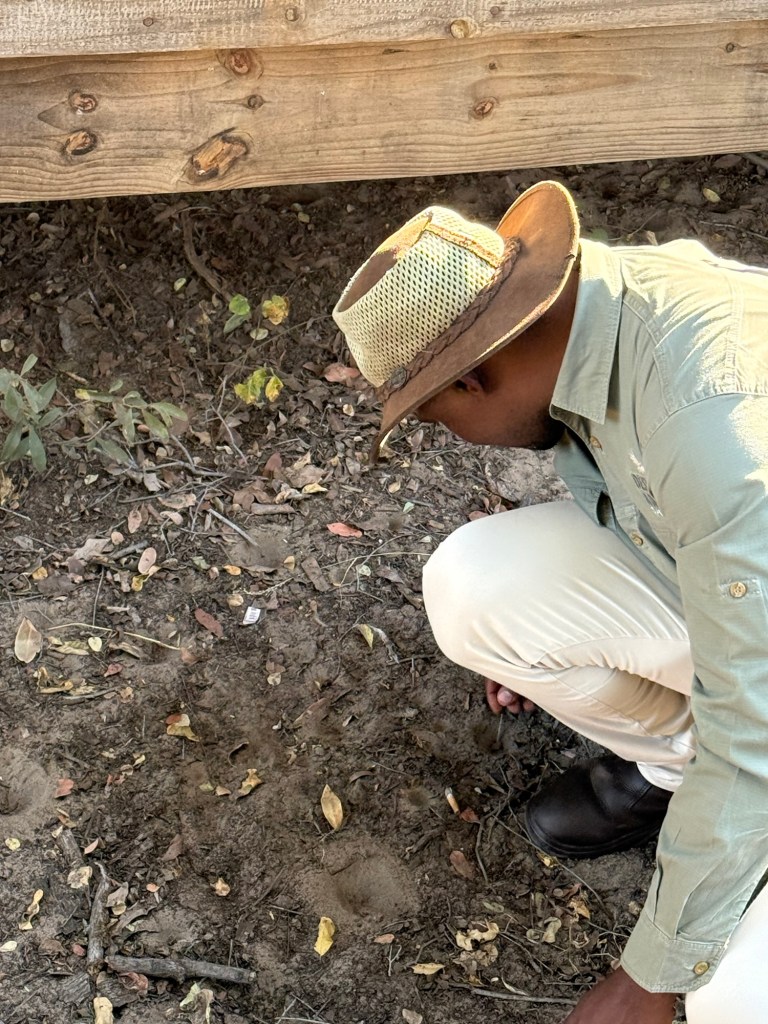
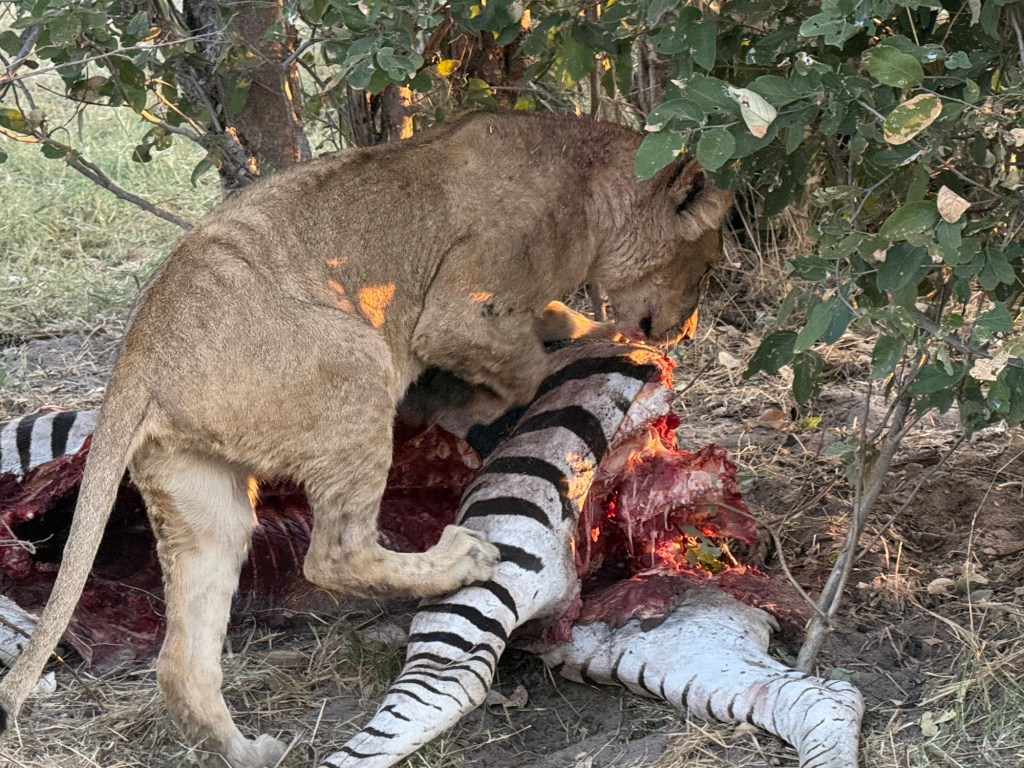
Whether stalking the big five on safari, braving the precipice of Victoria Falls, or sipping wine at a beautiful estate, all of our touring in Africa was curated by the men (and they were all men) who guided us. To be a tourist guide or a safari guide is a great responsibility, taking care of ignorant rubes who would soon find themselves in real danger if left on their own. All of our guides had formal training and certification. The safari guides have to be knowledgeable about the flora and fauna found in the wilderness, and also have driver and firearm training.

For the city guides, knowledge of the neighborhoods, customs and tourist attractions is essential, but also knowing areas and situations to avoid.

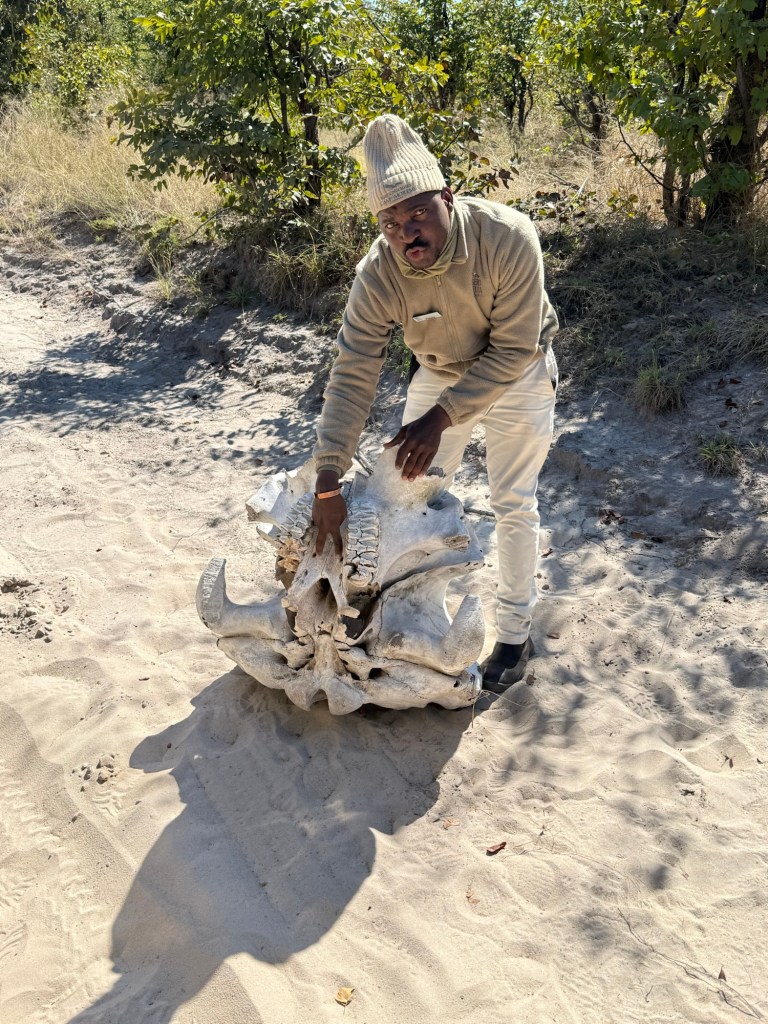
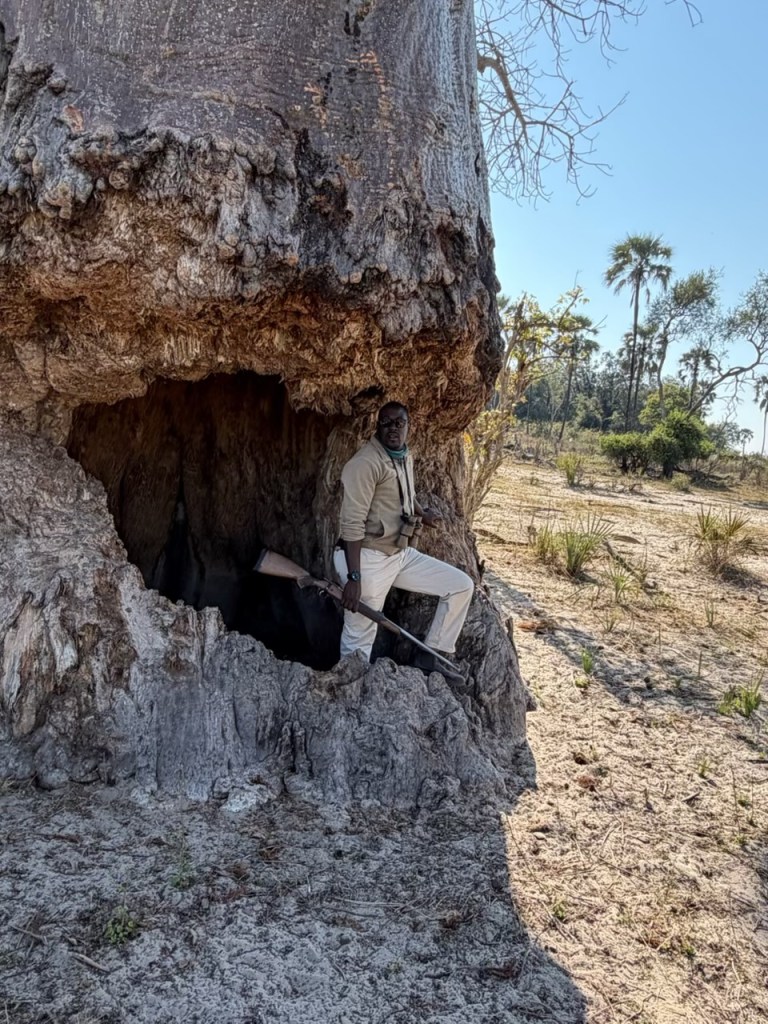
Our first guide in the bush at Camp Moremi was Rodgers, a rough edged man who was expert at tracking animals and finding things others might not see.
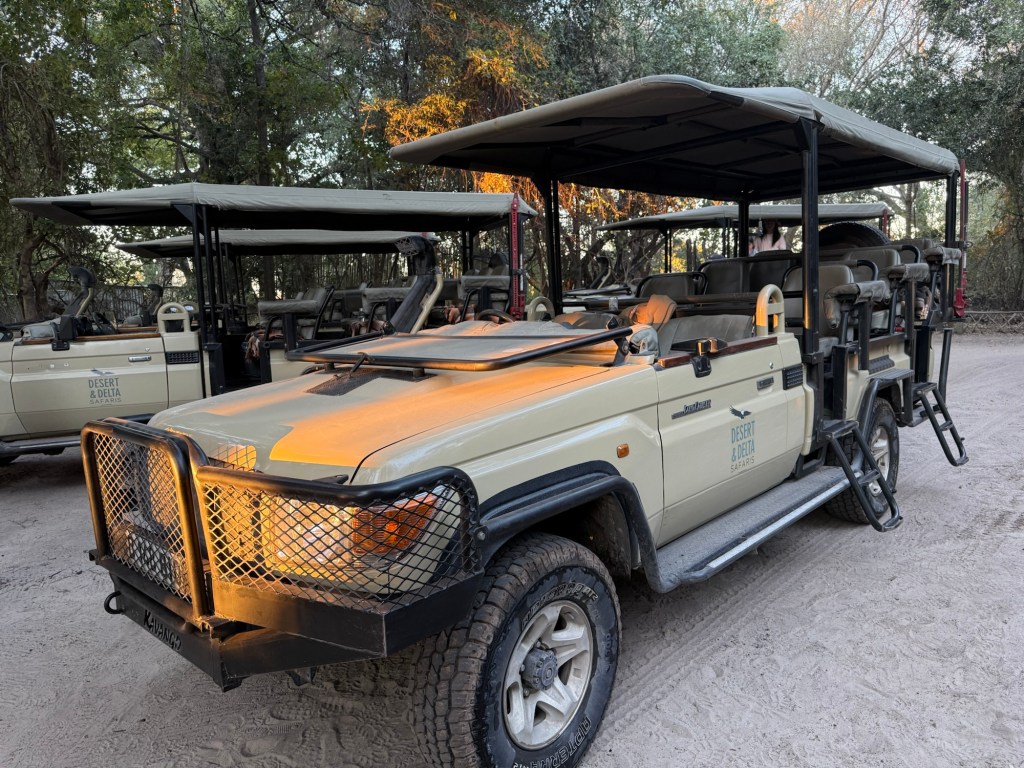
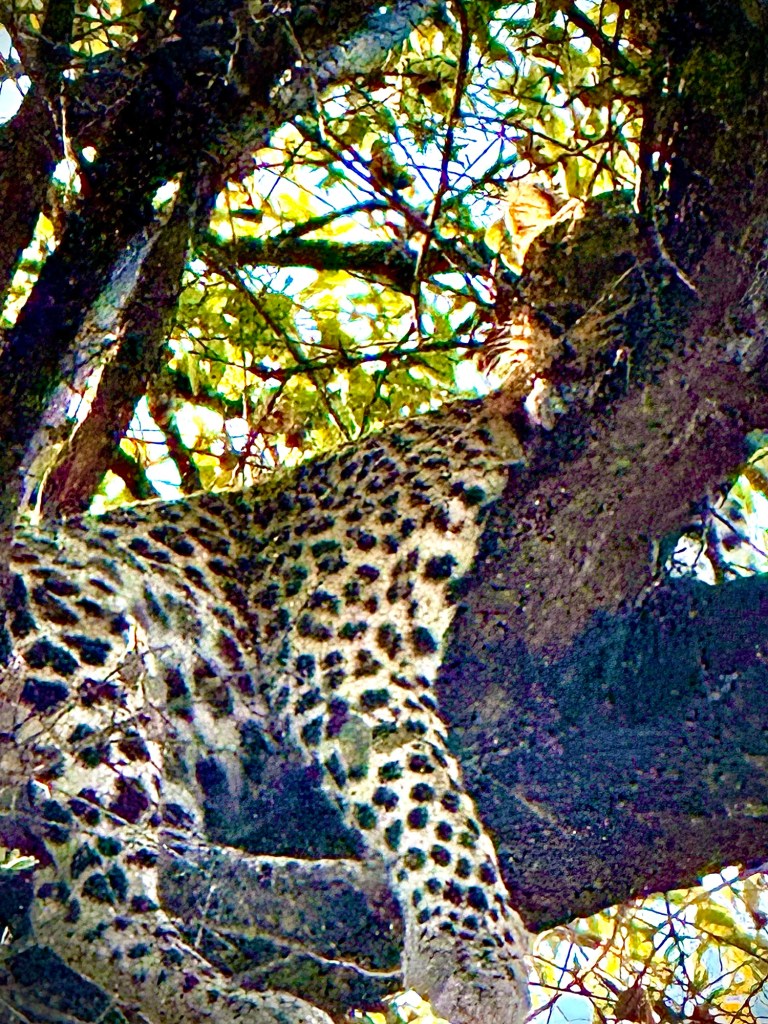
One of the most thrilling adventures with Rodgers was racing through the bush to find a leopard. They are seldom seen in the Okavango Delta, so when word came over the radio of a sighting, Rodgers turned into a NASCAR driver racing to the site. The Land Cruisers are open sided, and sit high. The paths we drove are sandy, rutted and serpentine. The Cruiser fishtailed through the bush, branches scraping the sides and slapping us as we drove. At one point we were nearly bounced from our seats, and Rodgers yelled “You should buckle your seatbelts!” We survived the drive and got a great view of a large leopard in a tree.
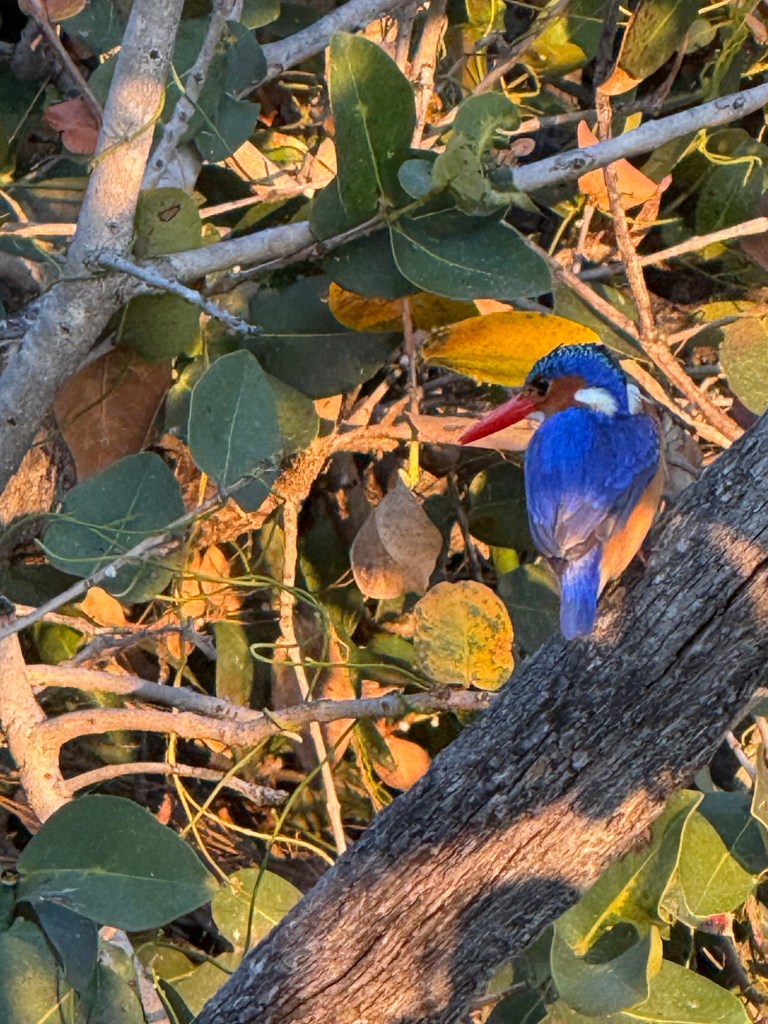
When we moved on to Camp Xugana, Joe took over as our guide. Joe had the heart of a poet, gentle and cautious. He appreciated the beauty of the Delta and loved to share sunsets, birds and flowers with us. But he also found us lions basking on a beach, hippos gaping their jaws in warning and crocodiles sunning under a tree.
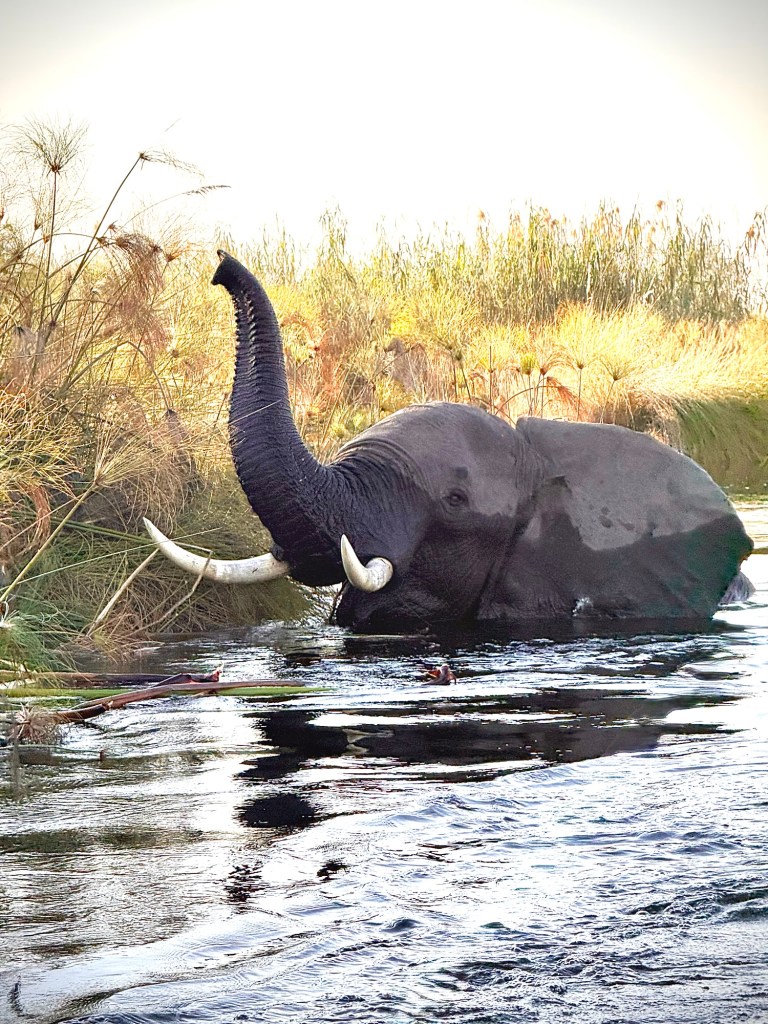
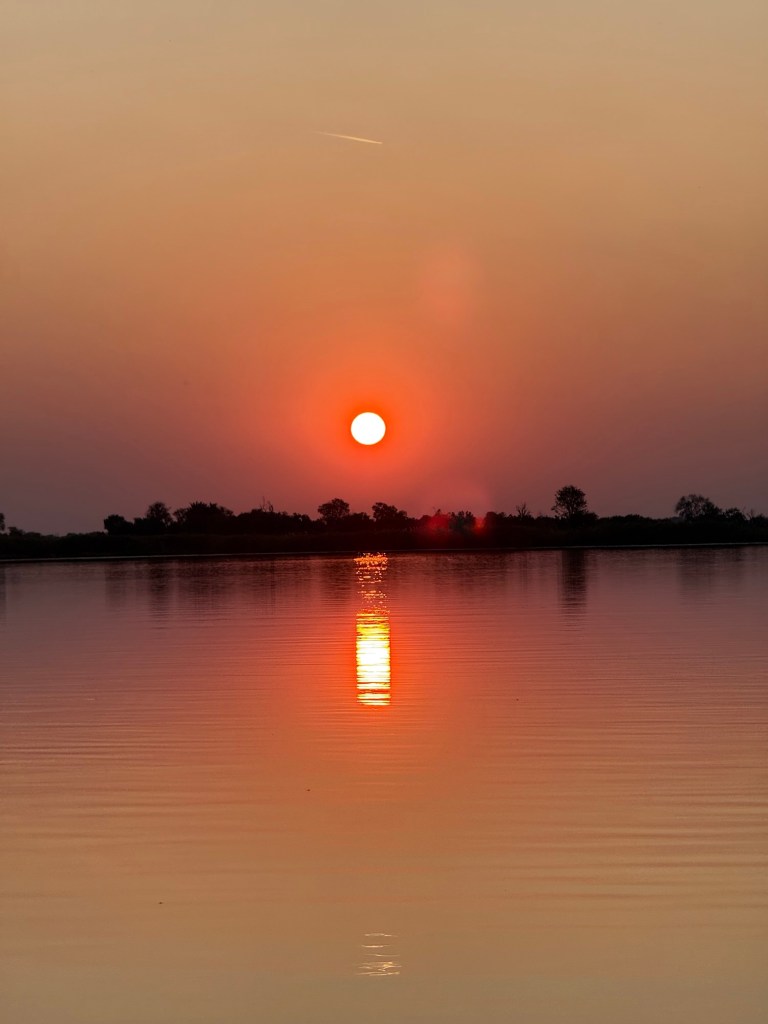
Joe would find a quiet spot on the water for our sunset gin and tonic, and one evening shared a poem he had written with us.
At Victoria Falls in Zimbabwe our guide was Hastings. He was well versed in the history of the Falls and the story of David Livingstone. As we walked from viewpoint to viewpoint along the trail he pointed out the perfect spot for a great picture and told us story of the Falls before Livingstone arrived.

The guides were also interesting and unsparing when they spoke of their own country and their government. The guides in Botswana are reverential when speaking of Seretse Khama, the first president of the country after liberation. He insisted on honesty in his government and set the country on a path of peace and prosperity unrivaled in all of Africa. The guides in Zimbabwe and Zambia spoke of corruption and poor management.
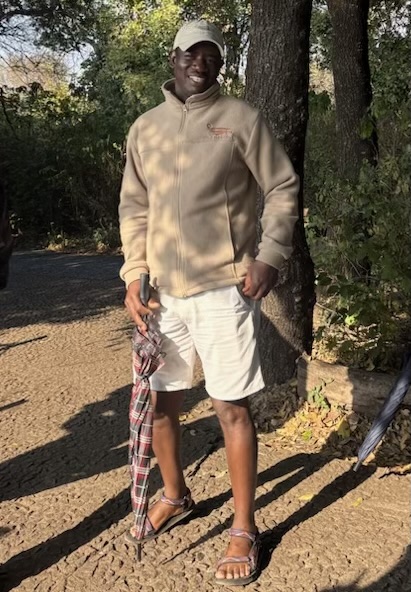
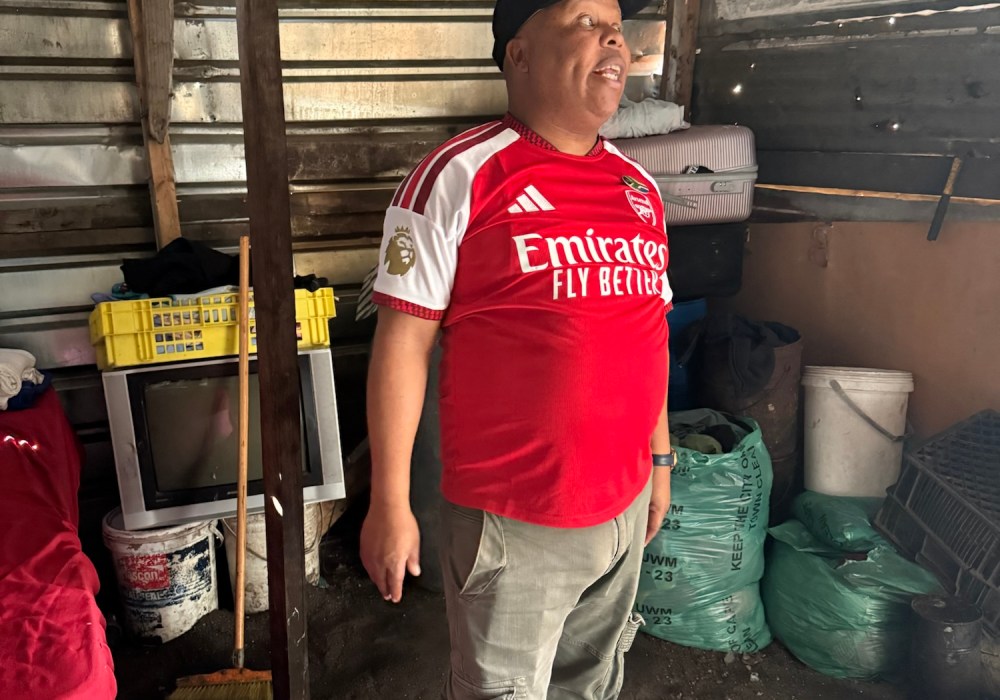
One of the most interesting guides was Chippa, who gave us our tour of Langa township. He had grown up in Langa, and still lived there with his family. In what could have been a very dangerous place, his local knowledge and standing in the community opened doors to us.
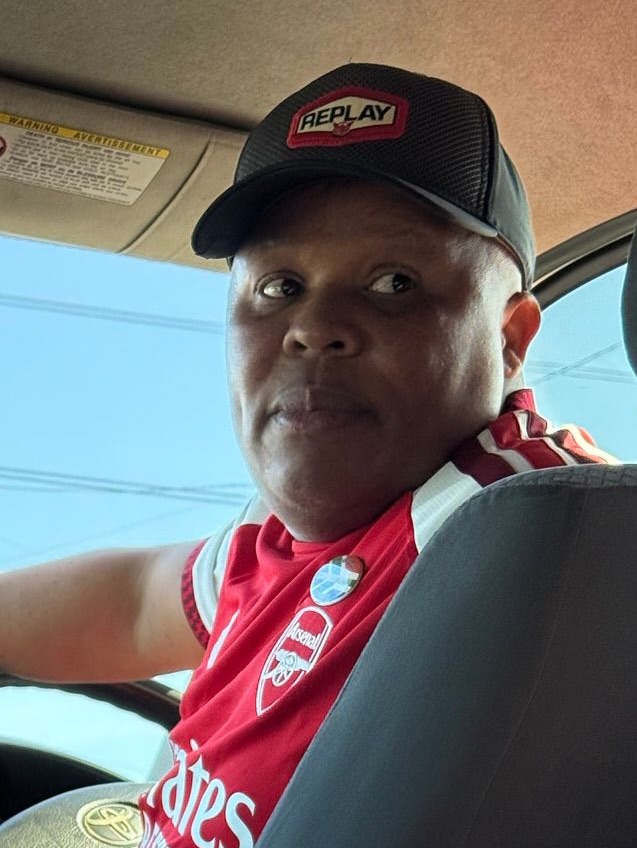
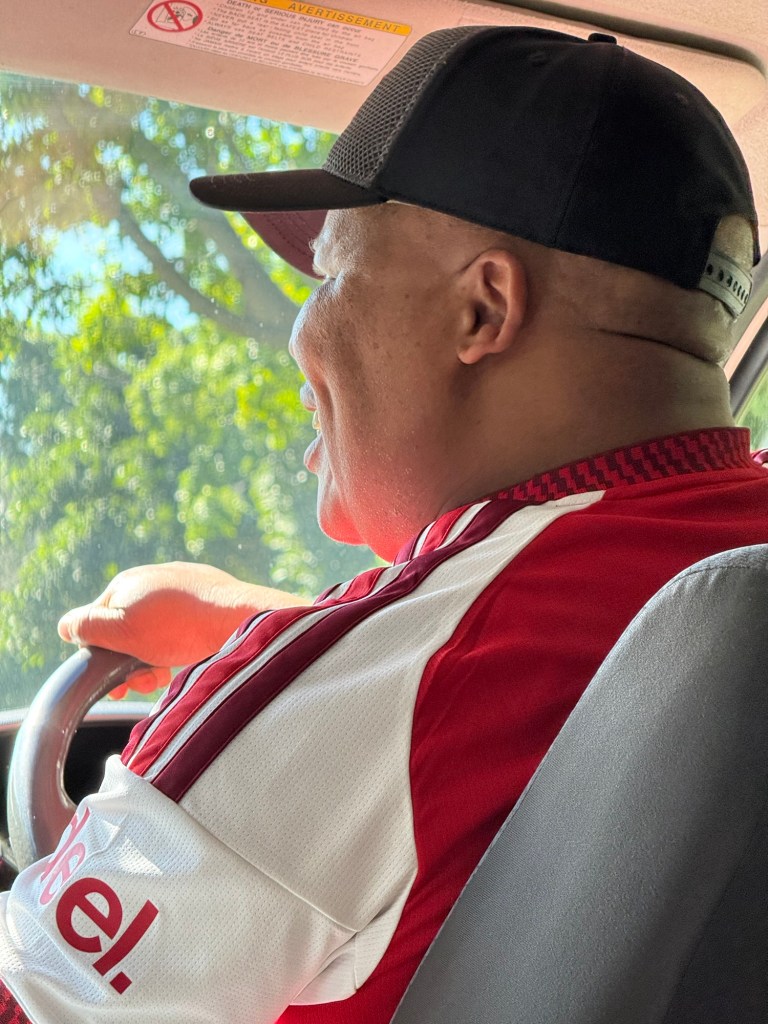
Our guide throughout our stay in Cape Town was Kyle. He was a man on the move, racing from place to place and muttering at slower cars in his way “really, dude?” He was constantly on his phone checking information and lining up new clients, but he never neglected us. His knowledge of the country was vast, and he shared freely.

As we got to know him, Kyle opened up and shared more personal details about his life and his childhood. He grew up poor, and has been hustling and entrepreneurial his whole life. He looks at government officials and their corruption with disgust. He looked forward to the rare day off to have a ‘braai’ with his family – a traditional cookout usually with boerwors sausages cooked over a wood or charcoal fire.

By the end of our stay Kyle was a friend, and saying goodbye at the airport was a bittersweet but fitting end to our trip.
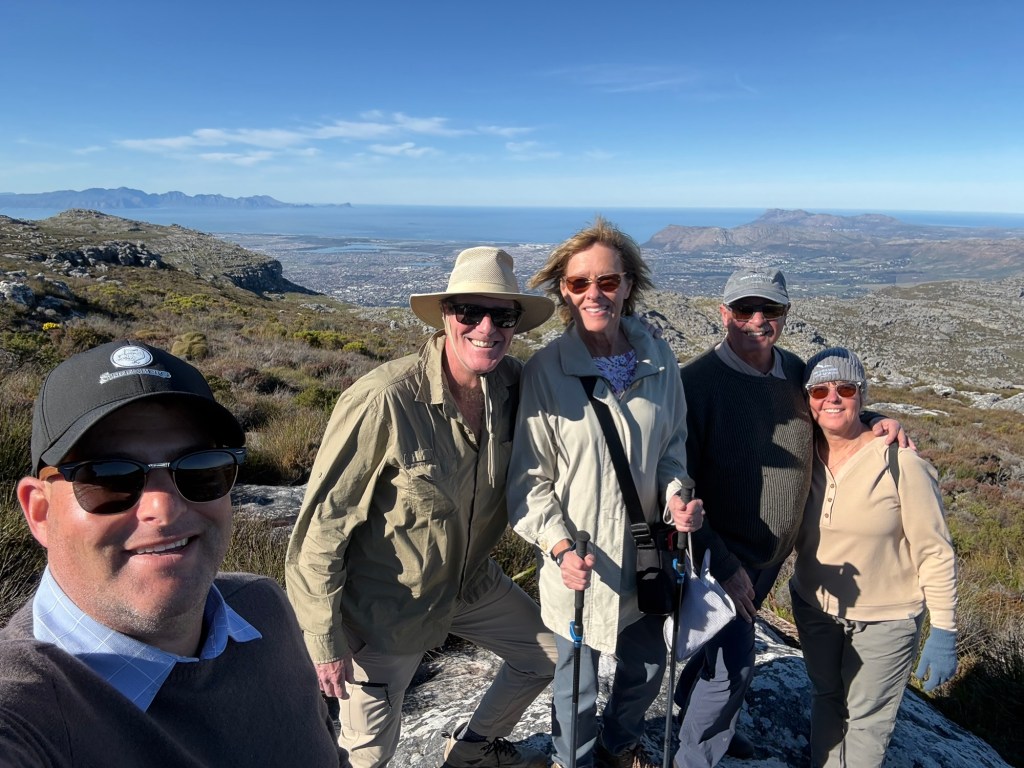
Our guides really made our trip so special, and many of the great memories we have of Africa are because of them. A huge thanks to all.
The Long Trip Home

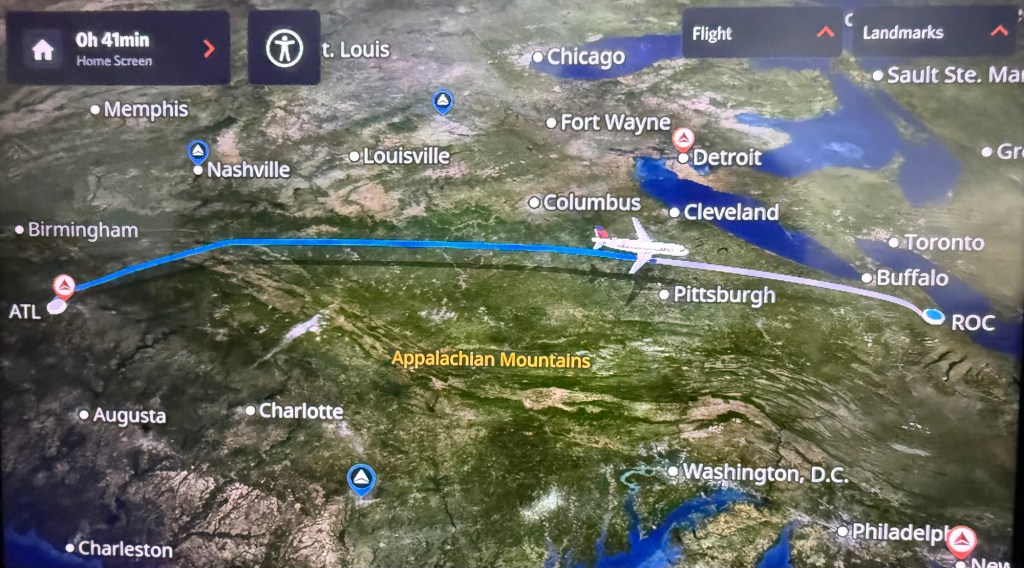
We’ve got a two hour flight from Cape Town to Johannesburg before our 15 1/2 hour flight to Atlanta. Our final flight is the two hours from Atlanta to Rochester. If everything goes smoothly we should be home in about 30 hours. Kyle drops us off at the Cape Town airport and we bid him farewell. He’s been a great tour guide and friend during our stay.

As the Safair flight approaches Johannesburg, it’s dusk, and we fly over miles of the townships near the airport. I can see fires burning along the edge of the townships, probably burning garbage.

Johannesburg is where we started our travels and the airport is familiar. We go through customs and security and then have some time to kill. We’re flying Delta back to the states, and they have a deal with Virgin Atlantic that allows us access to the Virgin Atlantic Clubhouse.

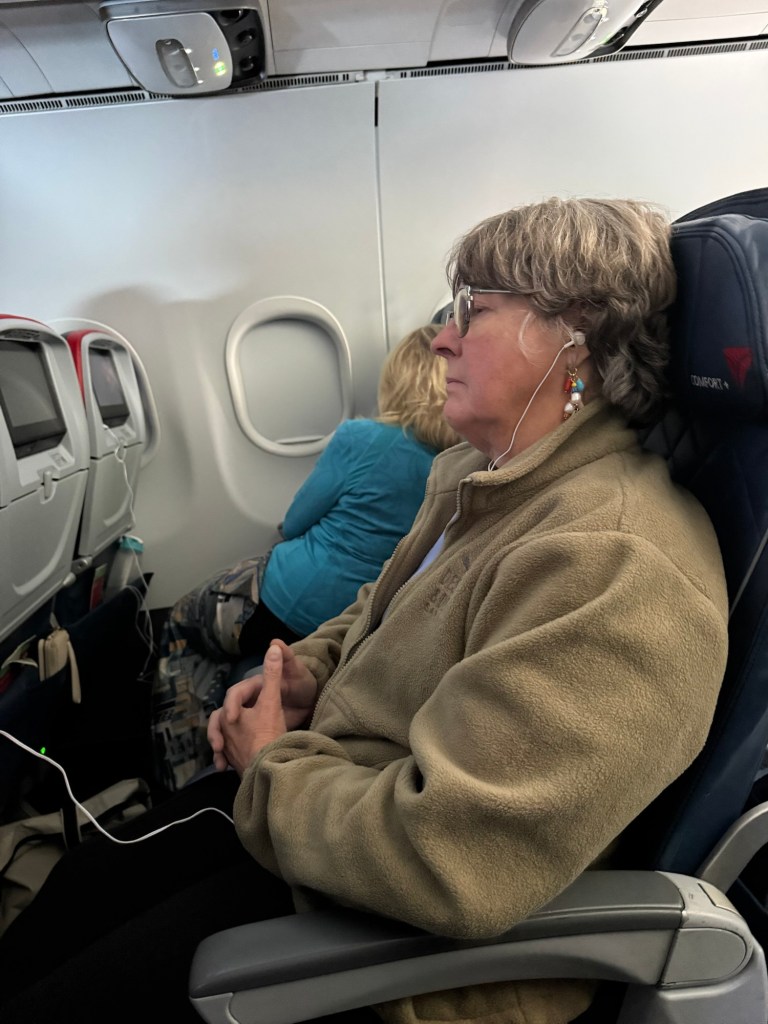
The Clubhouse is very nice, and uncrowded. They have table service, a dining menu and a full bar. Delta needs to up their game to compete. We have dinner with wine and then stroll to our gate. We’ve been upgraded to Delta Comfort Extra, which includes a larger seat and leg rests. At first it seems great. The seat next to me is empty and I’m looking forward to a comfortable flight. But then a very large man in front of me is having problems with his seat, so the flight attendant offers him the seat next to me.

We’re in a four seat row, and Melissa and I are in the two middle seats. We are surrounded by massive people at either end. We’re trapped in here for the next sixteen hours. I will of course need to use the bathroom a couple of times en route, and each time I have to get past my immense neighbor. He wears baggy shorts, and when he stands up he looks like a refrigerator repairman on steroids. The butt crack is monumental.

Time passes, and we make do. We’re able to get some sleep. We touch down in Atlanta at 7:30 in the morning. We have a brief layover, just long enough to get through customs, get through the security dogs, re-check our bags, take the train to Terminal D, and board our flight.

Two hours later we land in Rochester. Sam is there to pick us up, and in no time we are home. Quite a trip.

A Day in Franschhoek

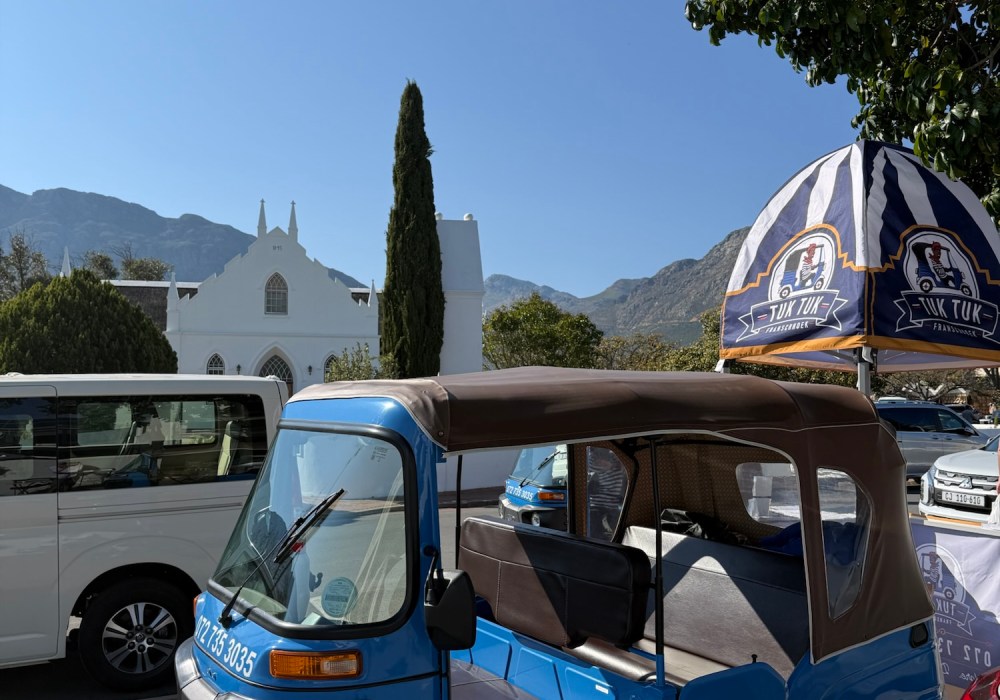
It’s our last day in Franschhoek, and we’re taking it easy. No itinerary. A nice breakfast at the Guest House and then a walk around town. It’s a Sunday, but most of the shops and restaurants are open. We stroll downtown and do some last minute shopping. T-shirts, scarves,jewelry, anything that won’t take up much space in our bags.

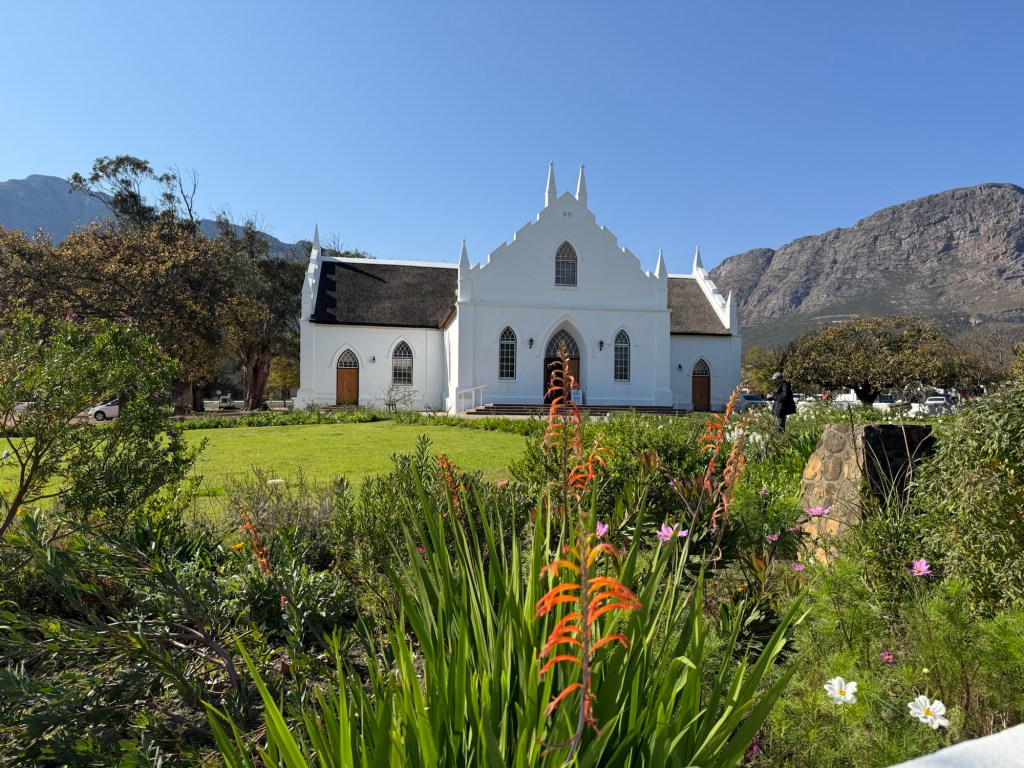
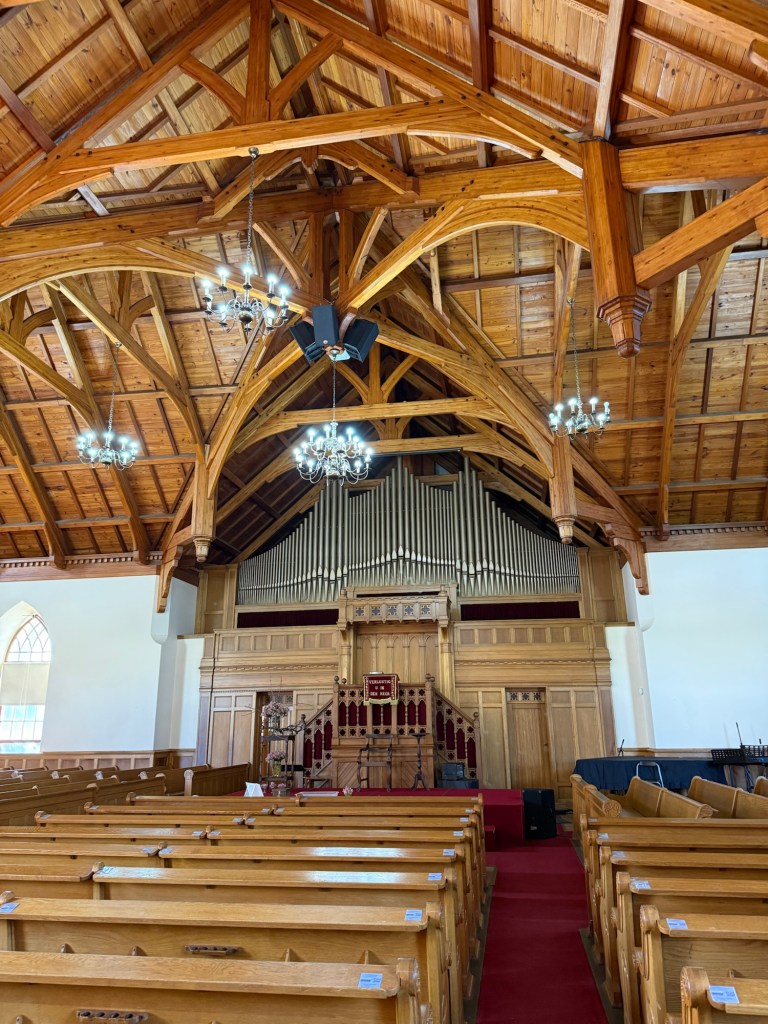
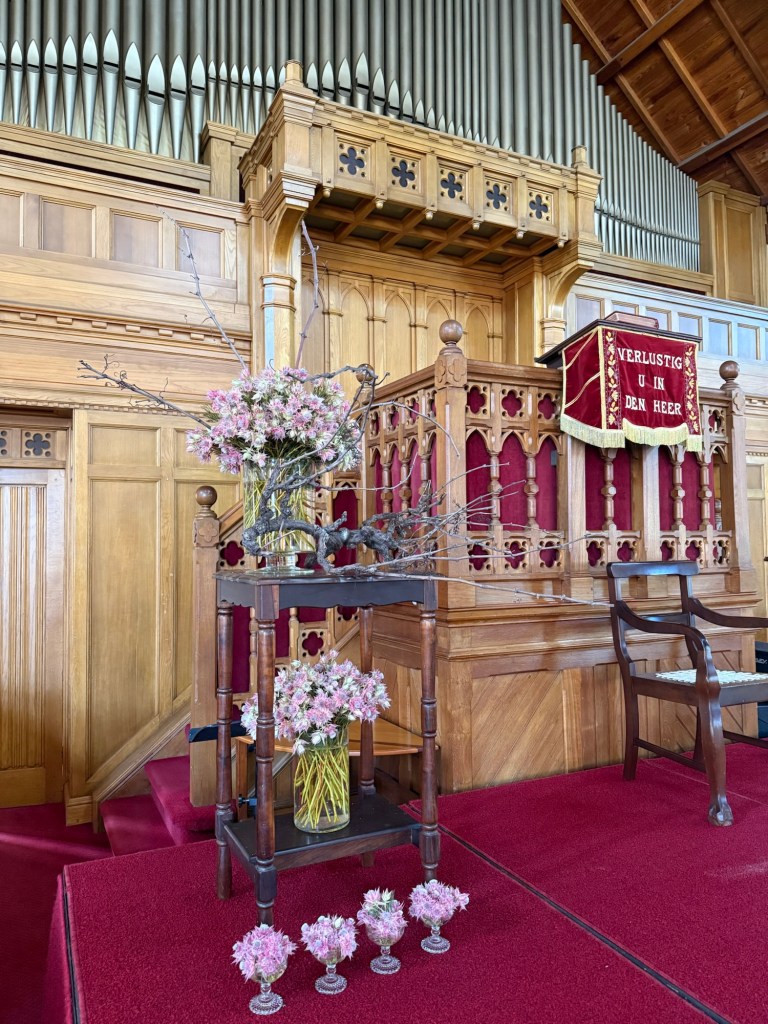
The day is getting warmer. The sun is shining. People are out enjoying the day. We stop at a Dutch Reformed Church and go inside. There’s no ornamentation, but the woodwork is beautiful. A pipe organ rises behind the pulpit. Balconies perch over the ground floor pews. A vase of protea flowers sits beside the pulpit. We make a donation as we leave, the only people in the church on Sunday afternoon.

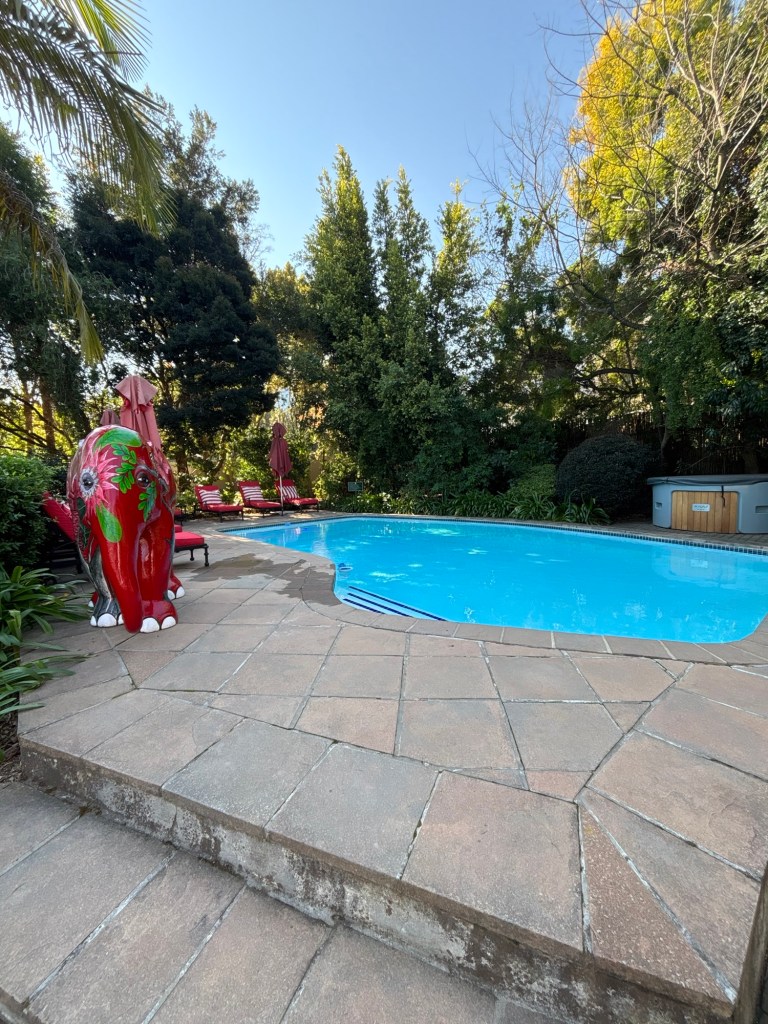
We make our way back to the Guest House and start packing our bags. There’s a pool in back and Melissa decides to go for a swim. The water is about 55°. She takes the plunge, but is out in seconds, shivering. No one else decides to join her.

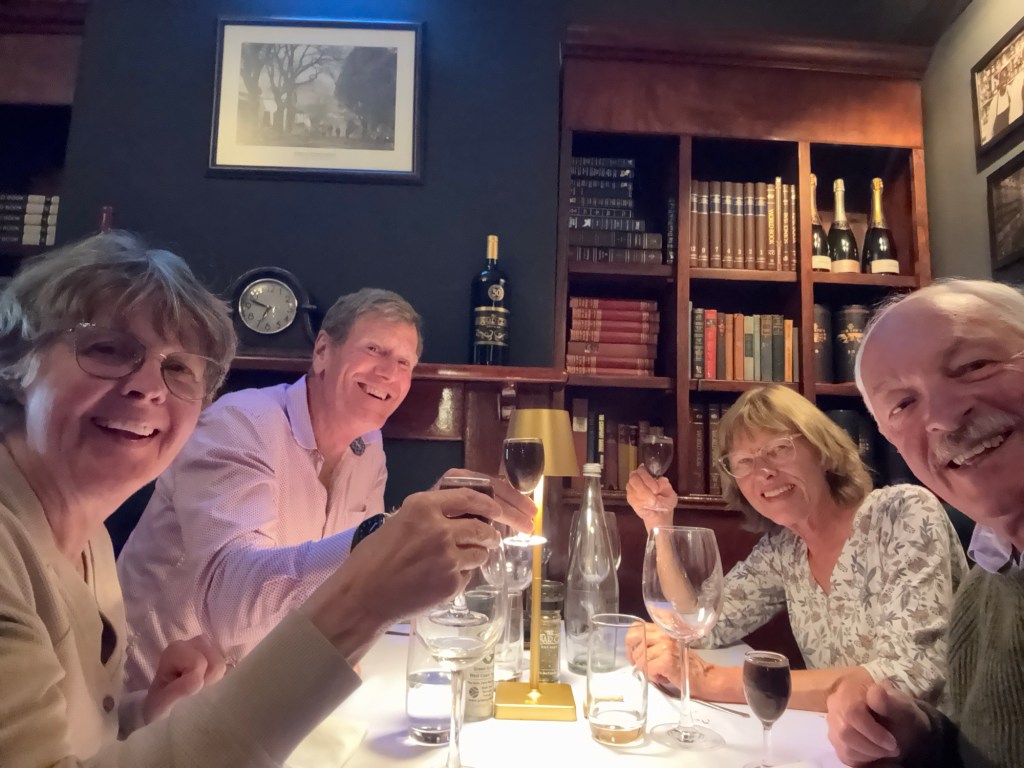
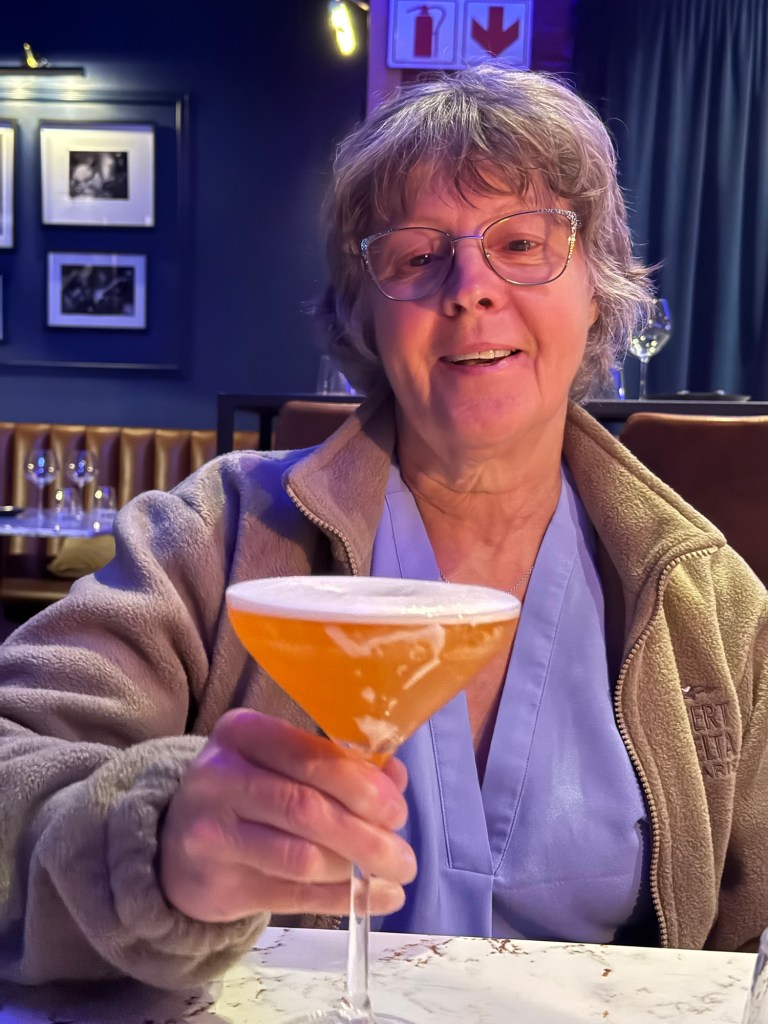
After lazing about for the afternoon, we have dinner at a steakhouse down the road called ‘The Hussar Grill’. Our server is named Primrose and she’s soft spoken and very polite. We have a nice steak dinner to finish our stay, and Primrose brings us a warm chocolate martini cordial gratis.

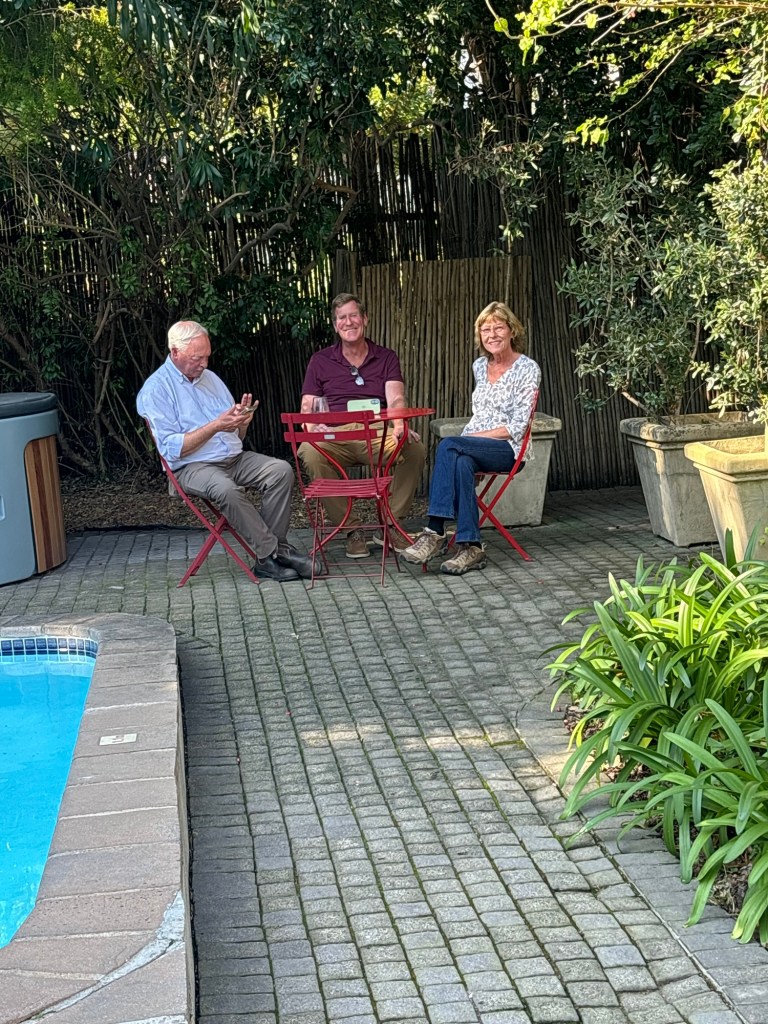
We walk the three doors back the Avondrood and sit outside enjoying the night air. The manager, Carlof is there as he has been most of our stay. He offers us a glass of wine. A newlywed couple from Britain walks through and we have a brief chat. Now it’s time for bed.

It’s been a great trip to Africa, and we’ve covered a lot of ground, from the safari in Botswana to the beauty of Victoria Falls; The city of Cape Town, penguins, whales and dolphins. We just have to mail some postcards tomorrow morning after breakfast and then it’s off to the airport.

Whale Watching, Wine and Dinner

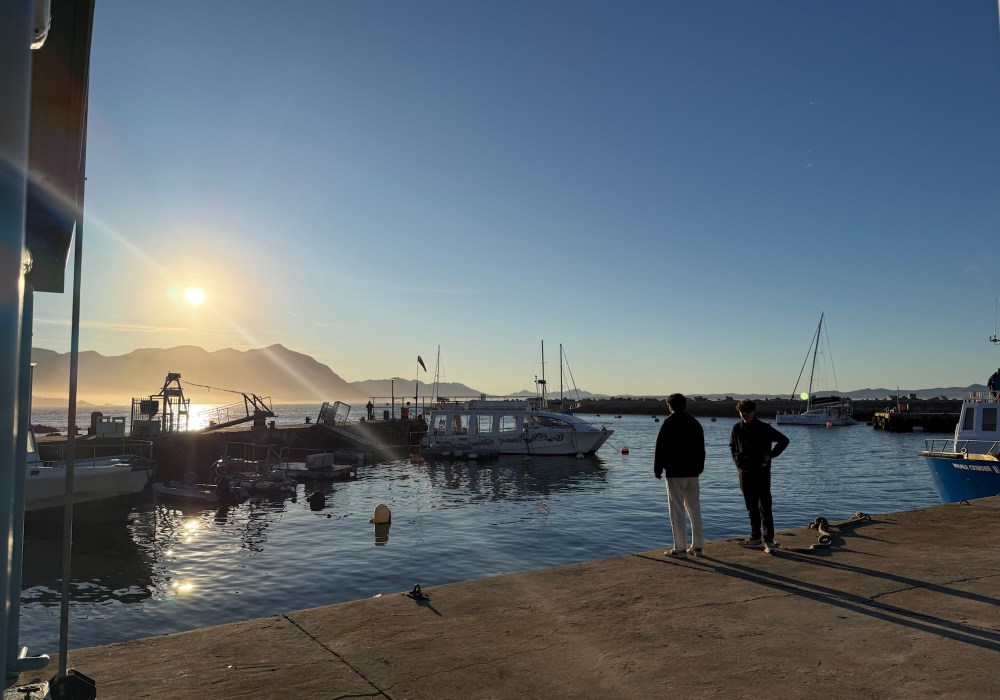
Kyle picks us up at 6:00 AM. We’re going to the town of Hermanus for whale watching on Walker Bay. The drive is normally a half hour, but the Franschhoek Pass is closed for repairs, so we have to take the long way around, two hours each way. The staff at Avondrood has fixed us a breakfast box, and we eat on the road.

It’s another beautiful day, and the weather has been exceptionally warm and sunny during our stay. This is the rainy season, and typically the high temperatures are in the 50’s and low 60’s. Most of our daytime highs have been in the mid 70’s.

As we board the boat in Hermanus, the sun is shining, there’s no breeze, and the water is calm, with only occasional swells. We’ll be looking for Southern Right Whales which migrate each winter from Antarctica to the warmer waters around Southern Africa. There are also occasional Humpback whales and Brydes whales. We might also see pods of dolphins.

The Right Whales give birth during their stay in African waters, nursing the calves until they are strong enough to survive the 3000 mile journey to Antarctica. They don’t feed while in Africa, but they do mate. They survive on the huge stores of blubber they accumulate feeding on plankton and krill in Antarctica.

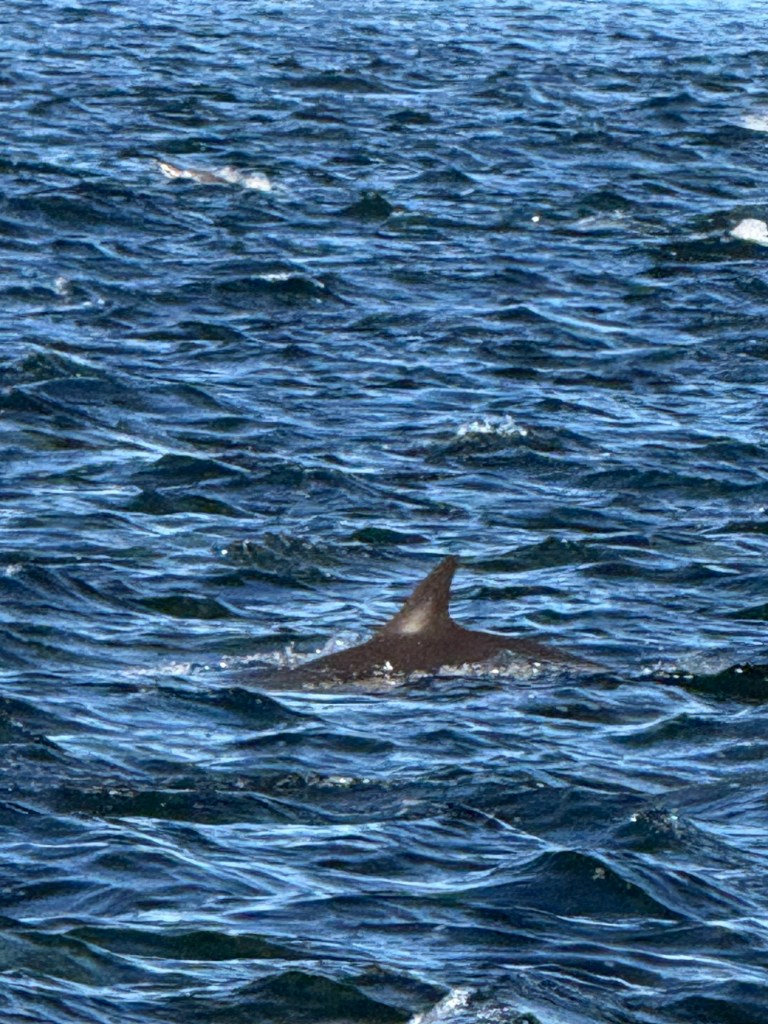
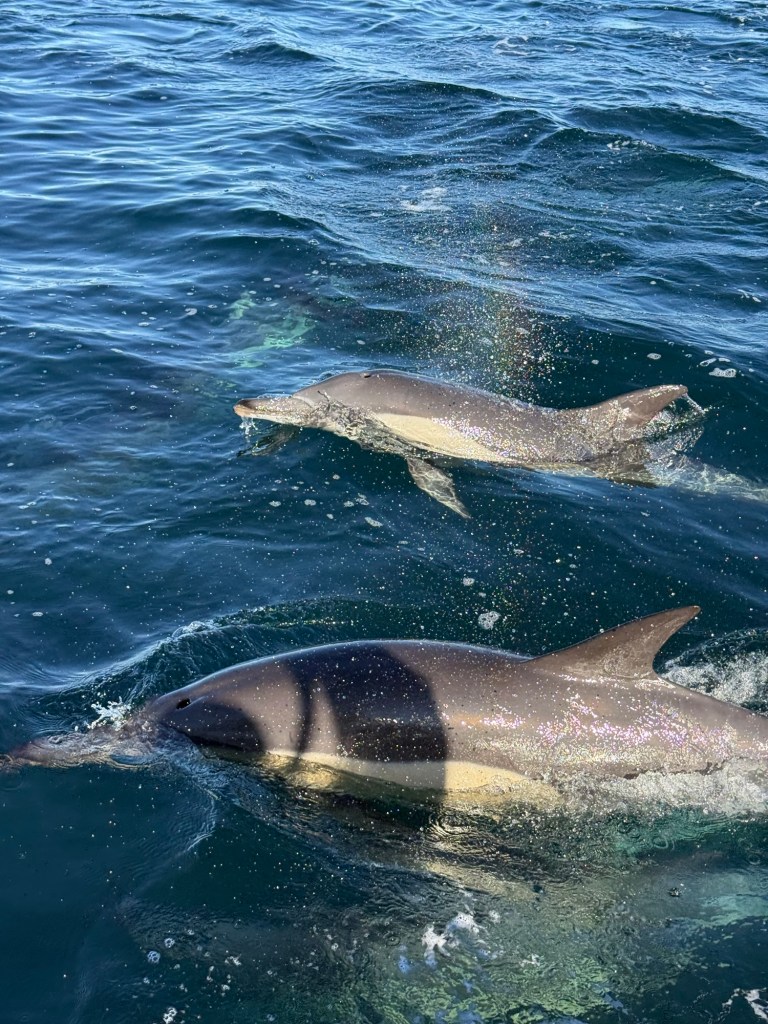
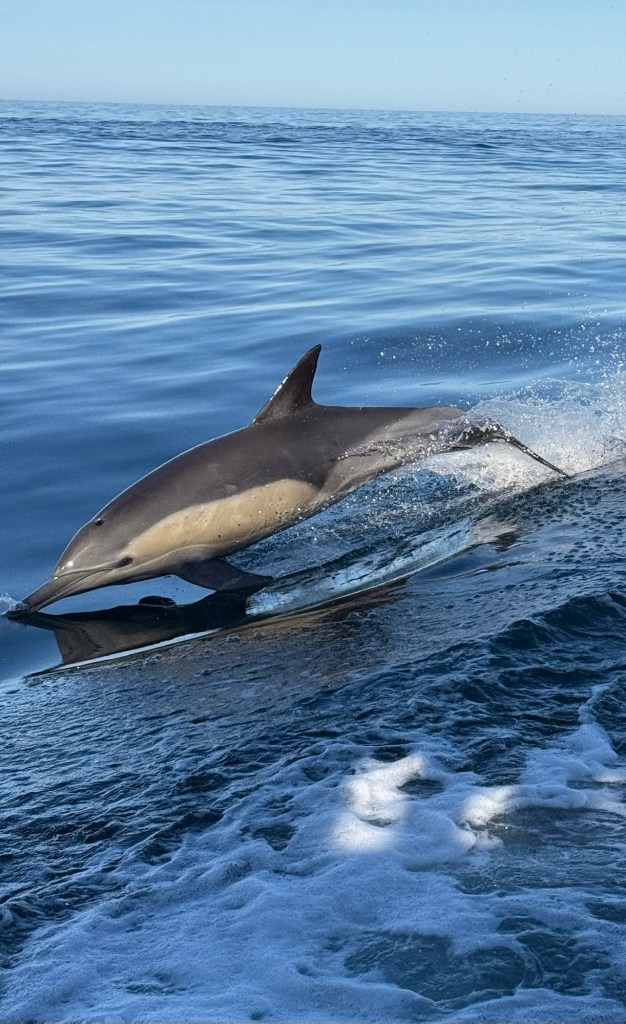
The boat cruises into Walker Bay, and we can see whitecaps nearer the shore. Then we realize the whitecaps are dolphins rocketing from the water. Hundreds of dolphins.

They start racing with the boat, bodysurfing in our wake. They seem to be having a ball.
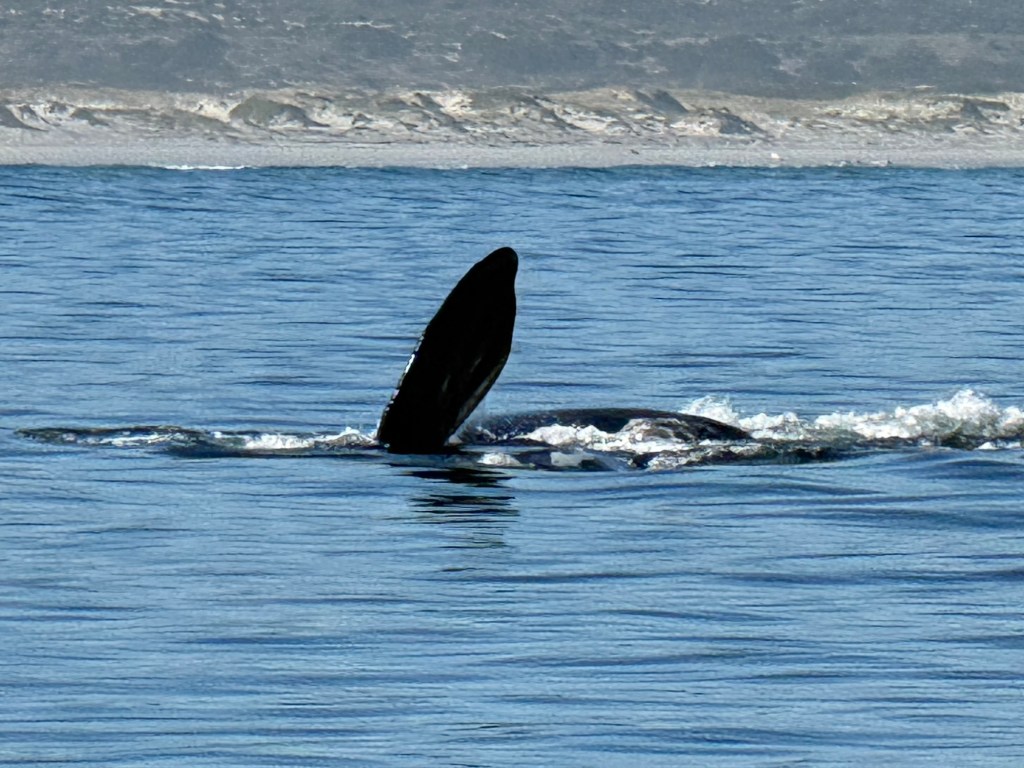
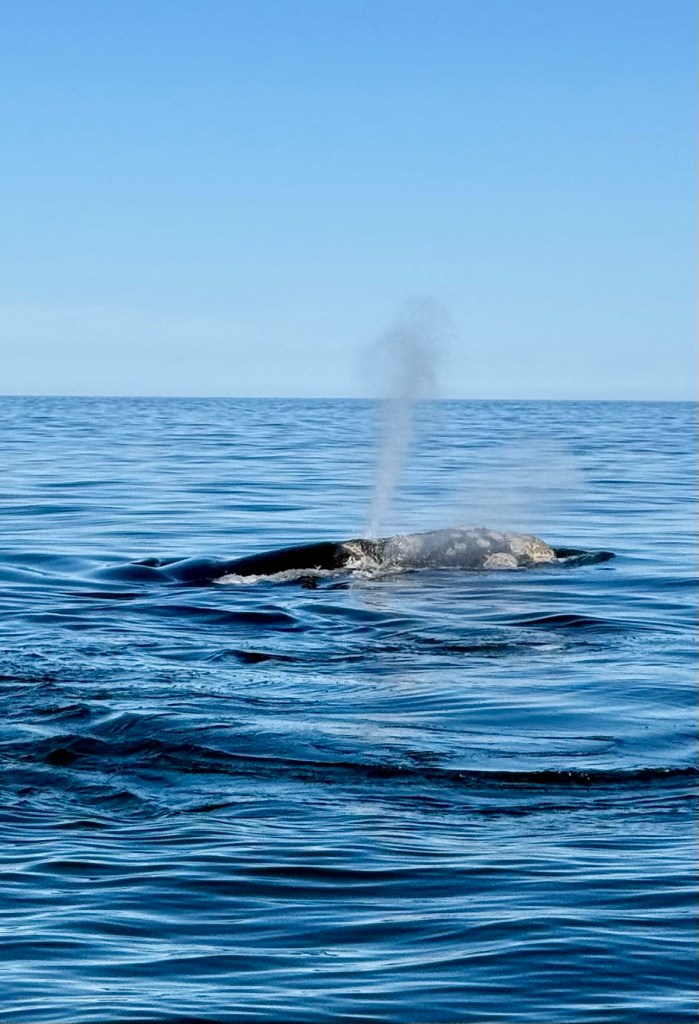
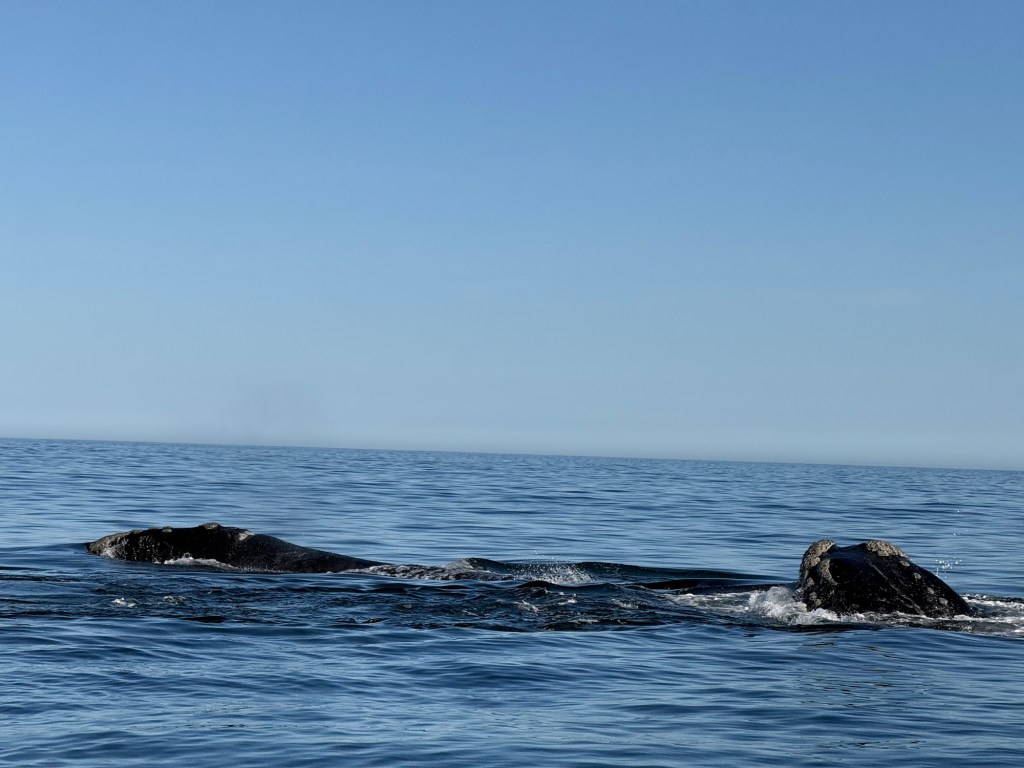
The boat glides closer to the shore, now about fifty yards away. The dolphins stay in the deeper water, but there are three Right Whales rolling around in the water- a male, a female and a calf. The whales are huge and the calf is probably fifteen feet long already, and still growing, sustained only on its mother’s milk.

They disappear briefly, then glide up, steamy breath spouting from their blowholes creating rainbows in the air. They seem to be enjoying a day at the beach.

We watch for almost half an hour, then it’s time to go back to the dock. The tour operator has a drone flying overhead, and plays video footage of the dolphins and whales as we head back.

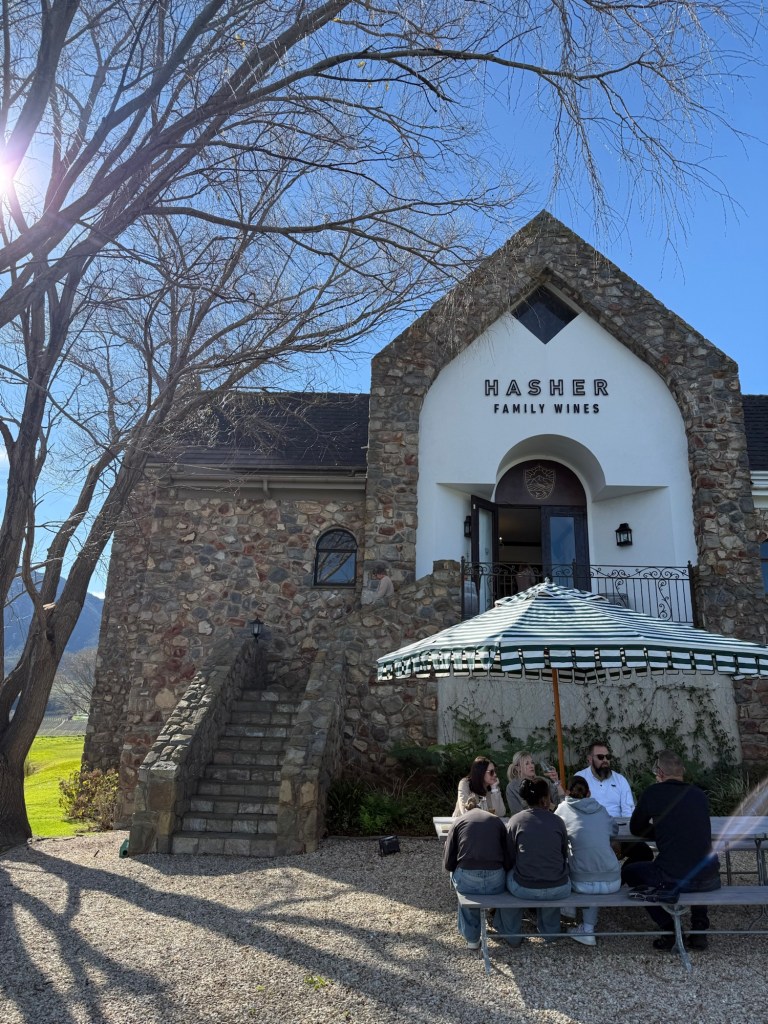
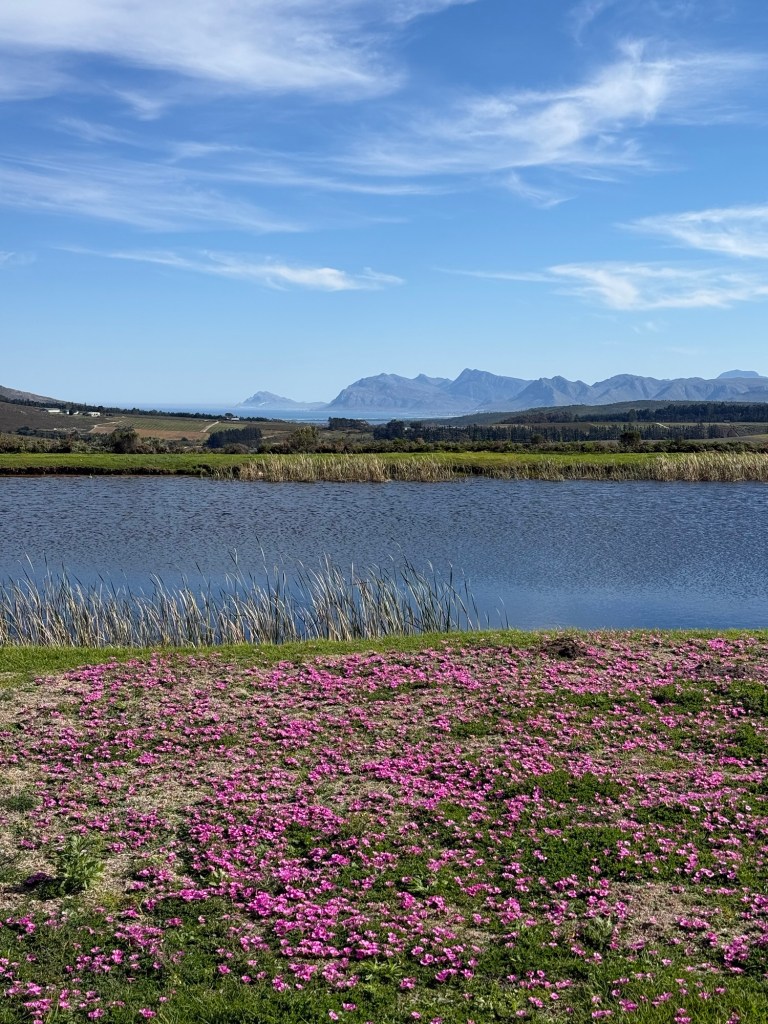
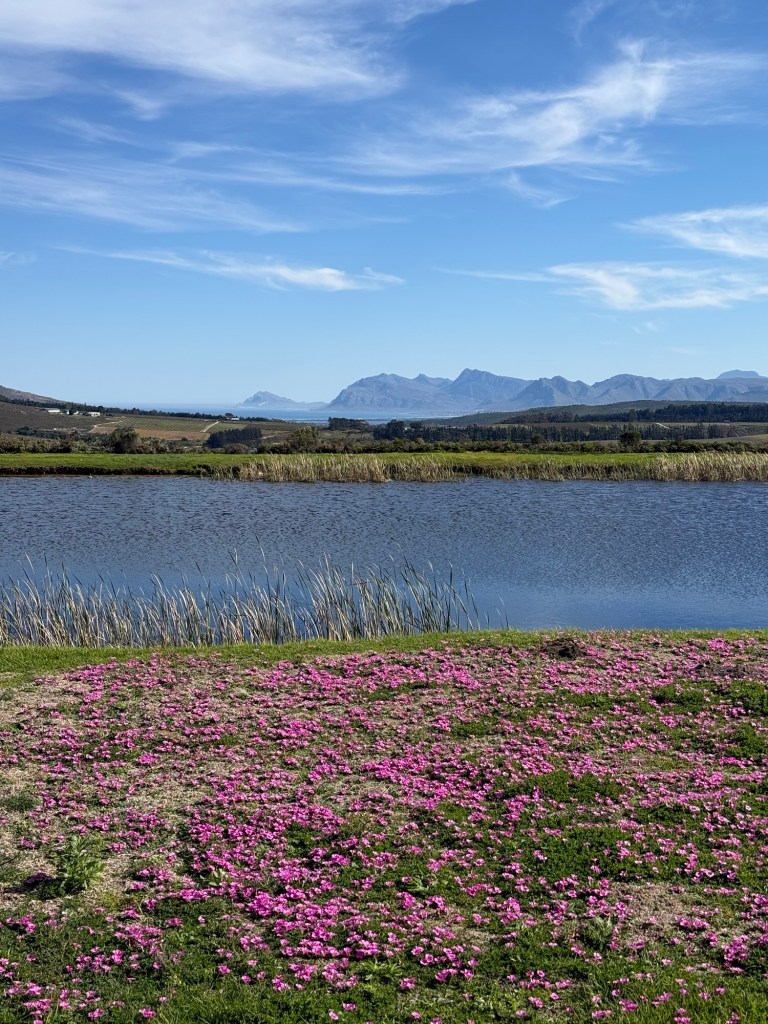
We have lunch at a harbor side restaurant called on the rocks, which is ok, but not great. After our whaling expedition, what could be better than a wine tasting on our way back to Franschhoek? We stop at Hasher Family Wines outside Hermanus. This is a cooler climate close to the sea, and they make very nice Chardonnay and Pinot Noir wines. The setting once again is spectacular.

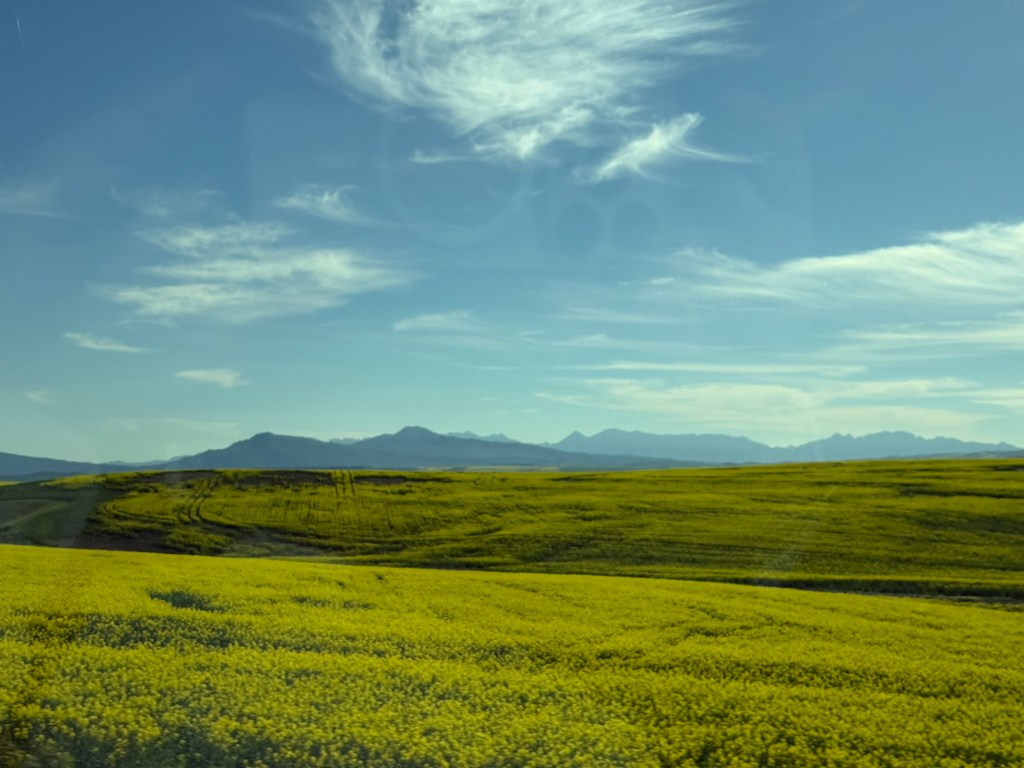
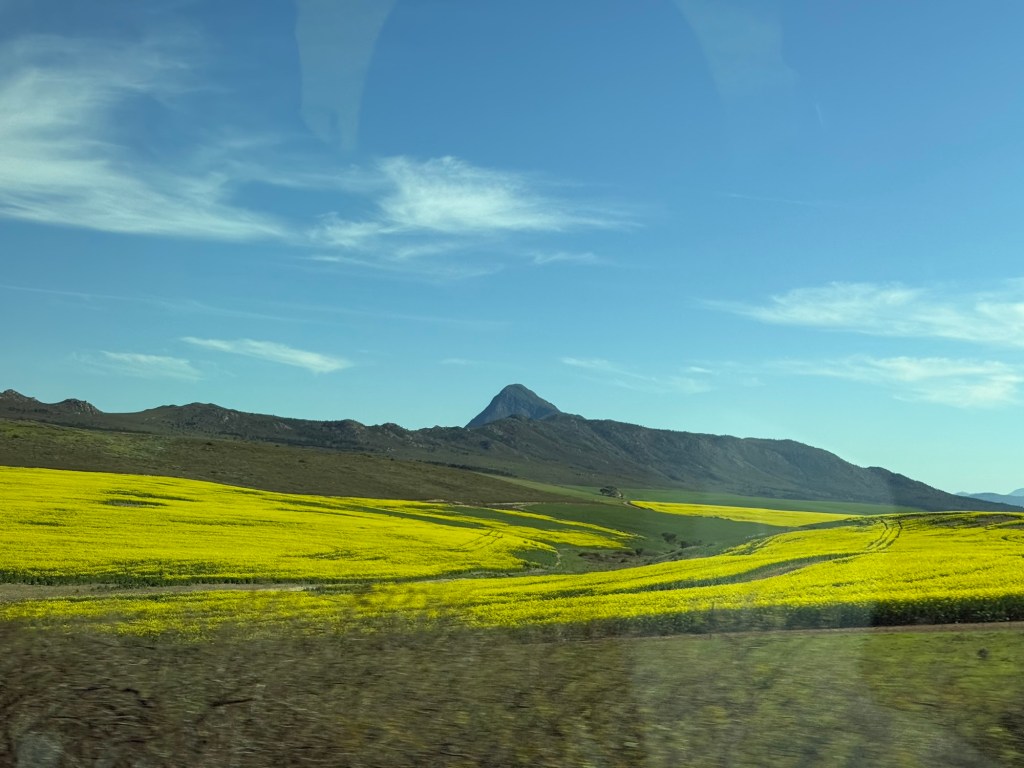
After our tasting we continue the long drive back. We drove to Hermanus along the coast, but we’re returning by an inland route through acres of farmland. We see mainly wheat fields, canola fields and sheep farms. The mountains rise in the distance.

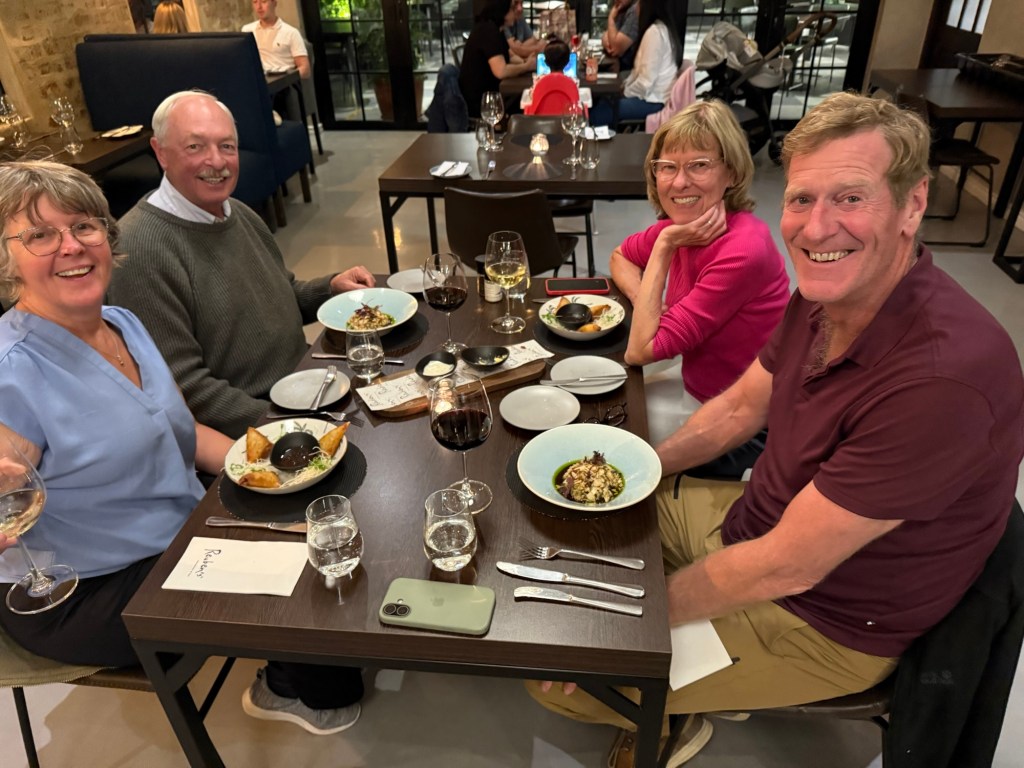
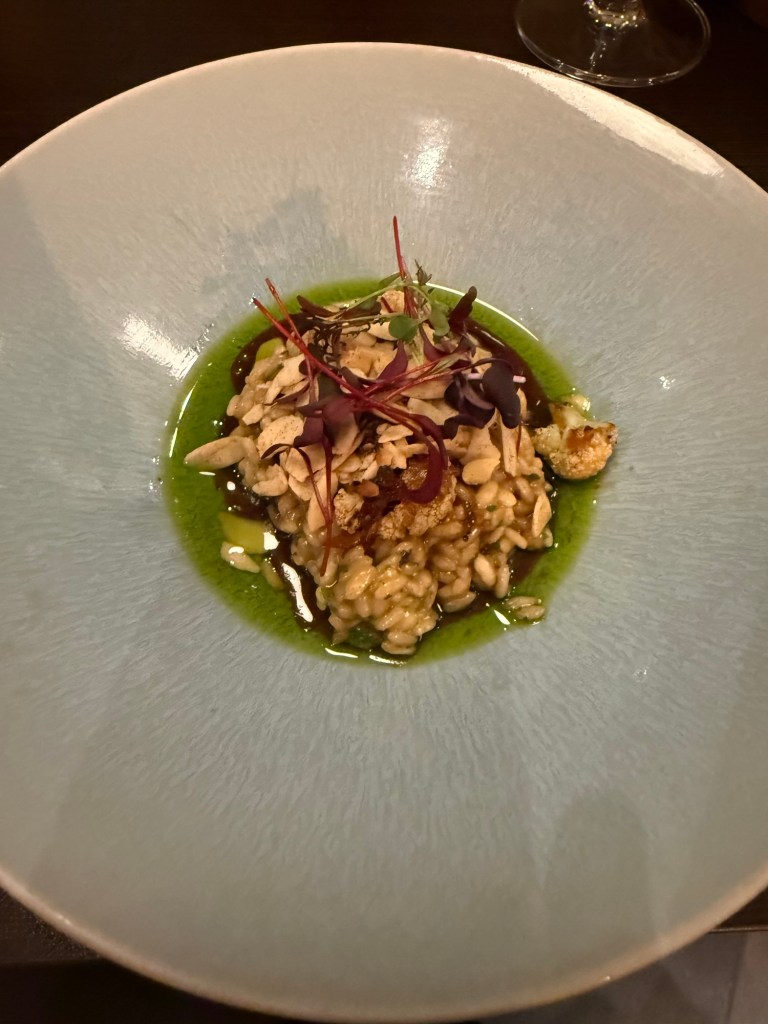
Arrived back in Franschhoek we have a dinner reservation at Reuben’s, which is owned by a local chef. It turns out to be great and we enjoy our food. It’s been a long day, and we walk back to Avondrood Guest House and off to bed. The trip is winding down, and we have a free day tomorrow. The day after, we start the long journey home.

Wine Country

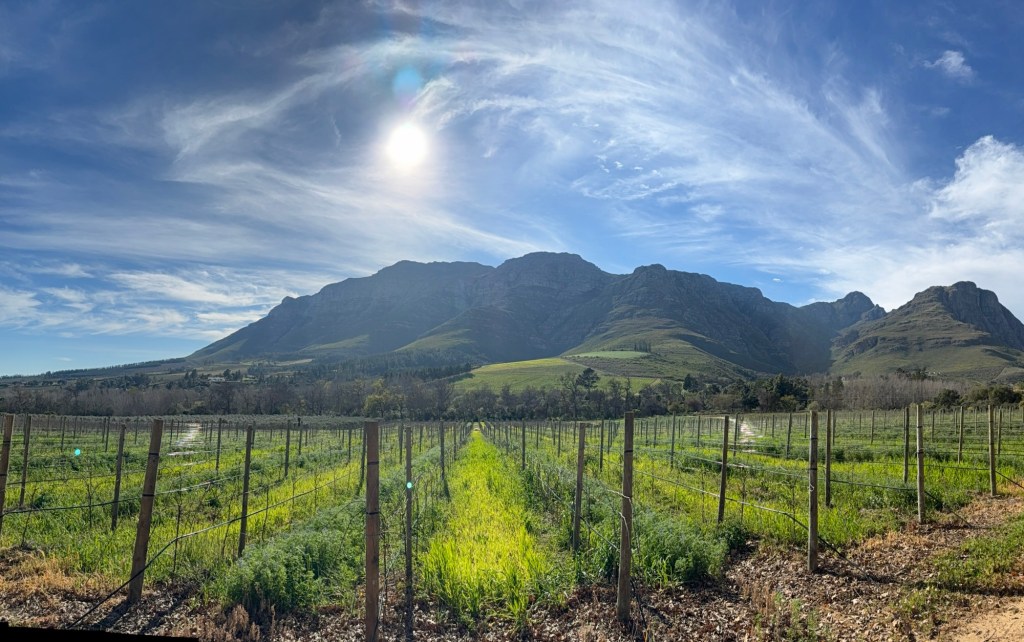
The wine region of South Africa is centered around the town of Stellenbosch, located East of Cape Town surrounded by the Boland Mountain Range, rugged sandstone peaks that rise dramatically from the surrounding vineyards.

French Huguenots were invited to the Cape in the 15th century to escape religious persecution, and brought grape vines and winemaking knowledge with them. The wine region was well established by the 17th century, making a variety of high quality wines. Most common are Sauvignon Blanc, Chardonnay and Chenin Blanc white wines, and Cabernet Sauvignon, Merlot, and Pinot Noir reds.

Kyle picks us up at the house in Cape Town for the drive to Franschhoek. During the night I heard noises downstairs which I assumed was Steve rising early. But we discover that someone has opened a window and reached through the bars to pilfer a pair of sunglasses and a coat from a nearby table. Conveniently the thief has also stolen our garbage from the outside bin, leaving only a trail of coffee grounds on the front stoop. Nothing we can do.

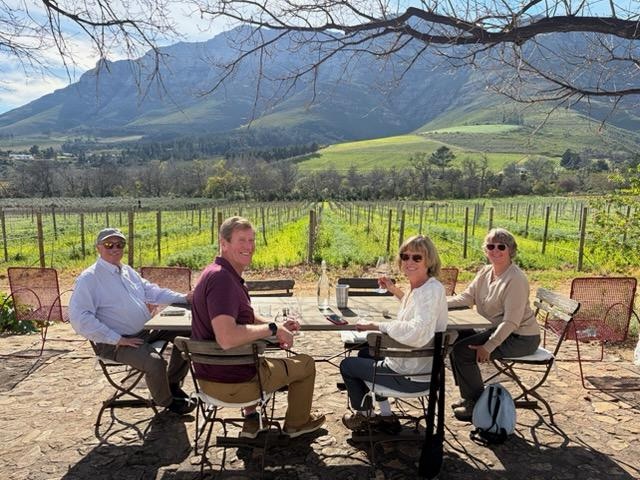
We load our bags into the van, and head toward Franschhoek, a small town near Stellenbosch where we’re staying for the next three nights. Along the way we stop at the Kleinood Winery for a tasting. It’s delicious wine, and we place a shipping order.

Next we stop at Tokara Wine Estate for lunch. They have a nice restaurant overlooking the vineyards where we have pizza, burgers and red lentils to eat. Then it’s a brief stop in Stellenbosch, which is not only a wine center but also a college town, home to Stellenbosch University, the second largest school in South Africa, with arts and sciences, engineering, and a law school. The campus encompasses much of the town.
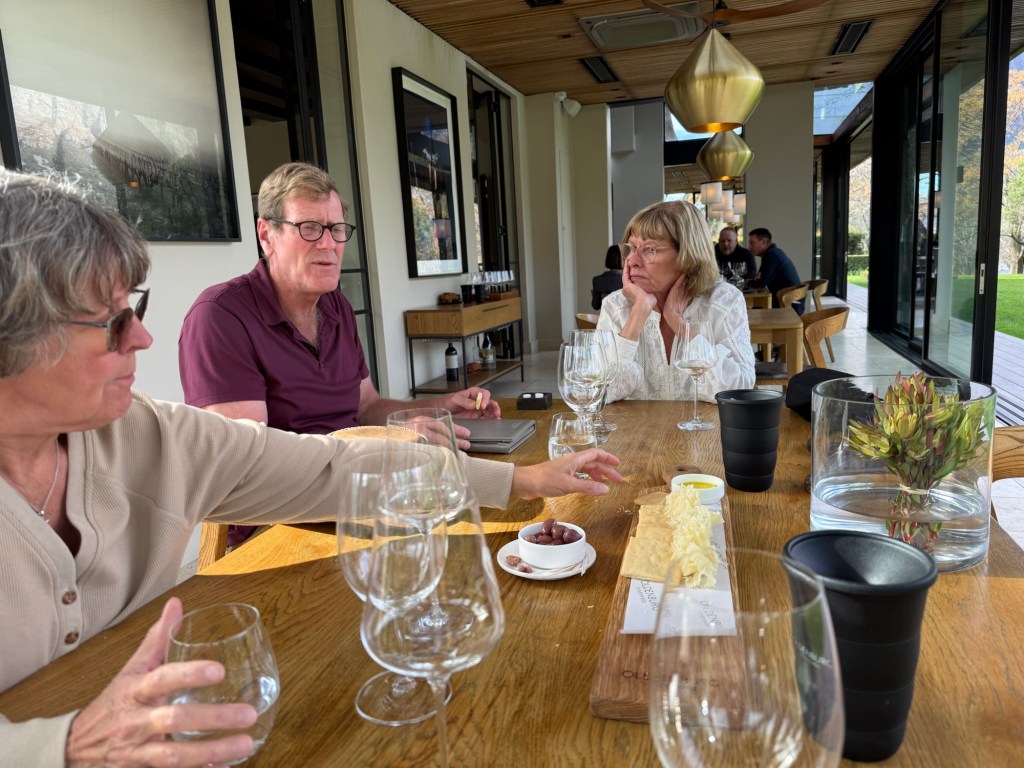
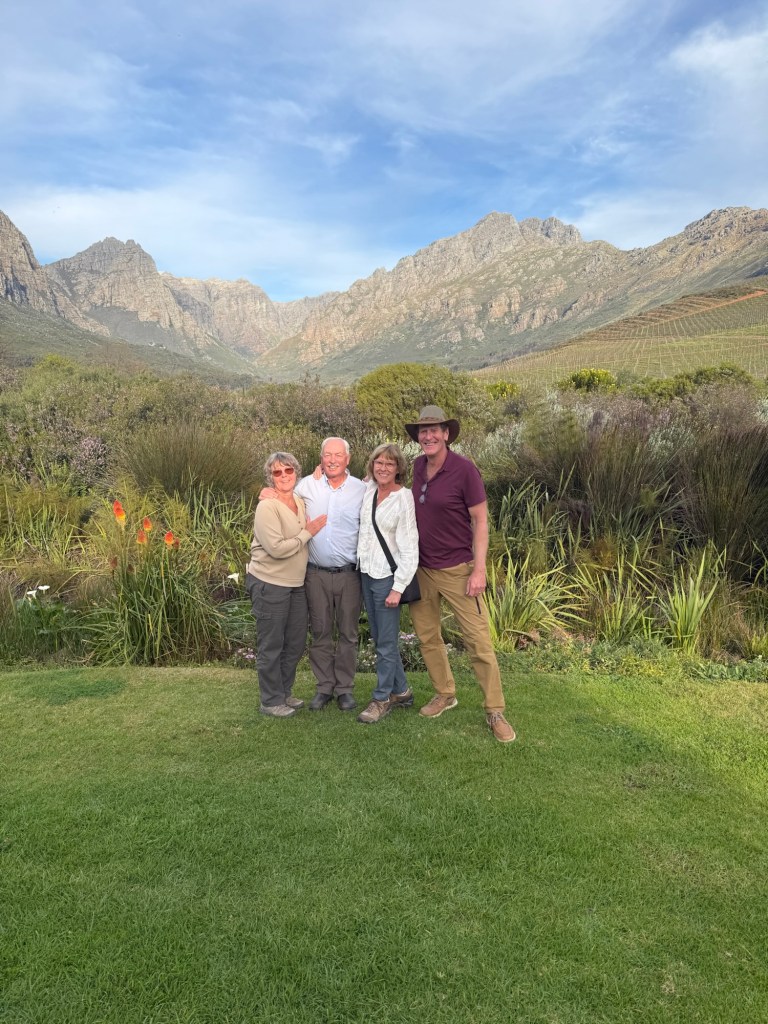
After another wine tasting at Oldenburg Vineyards, also very nice and with another gorgeous setting, we arrive at our guesthouse in Franschhoek.

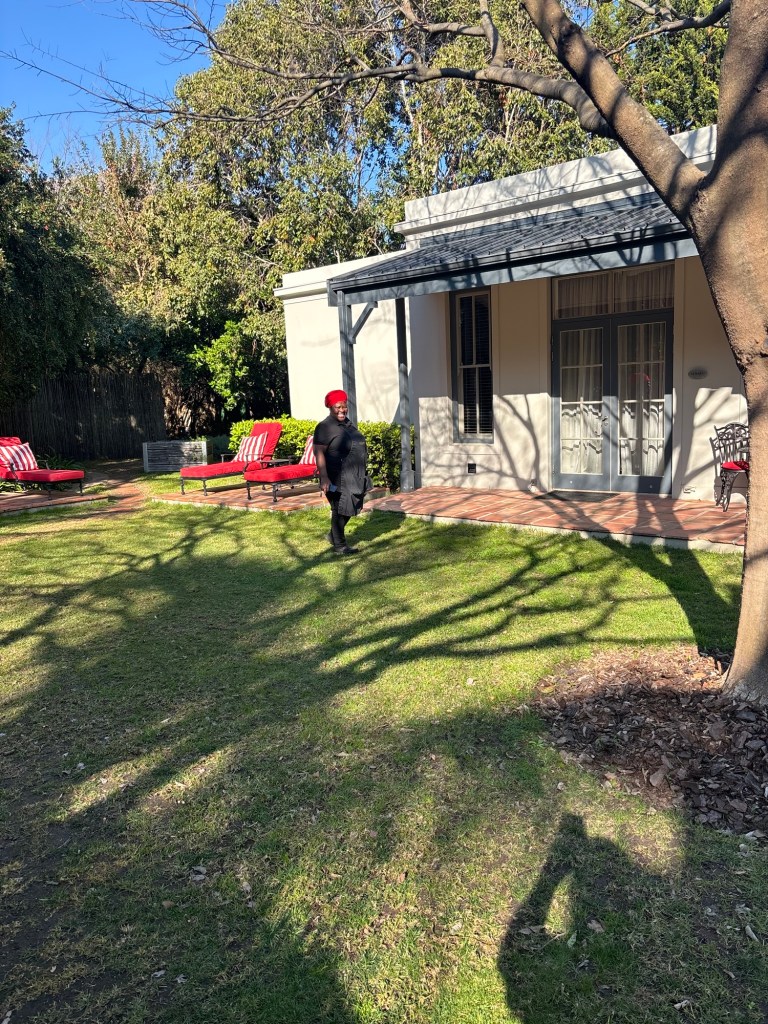
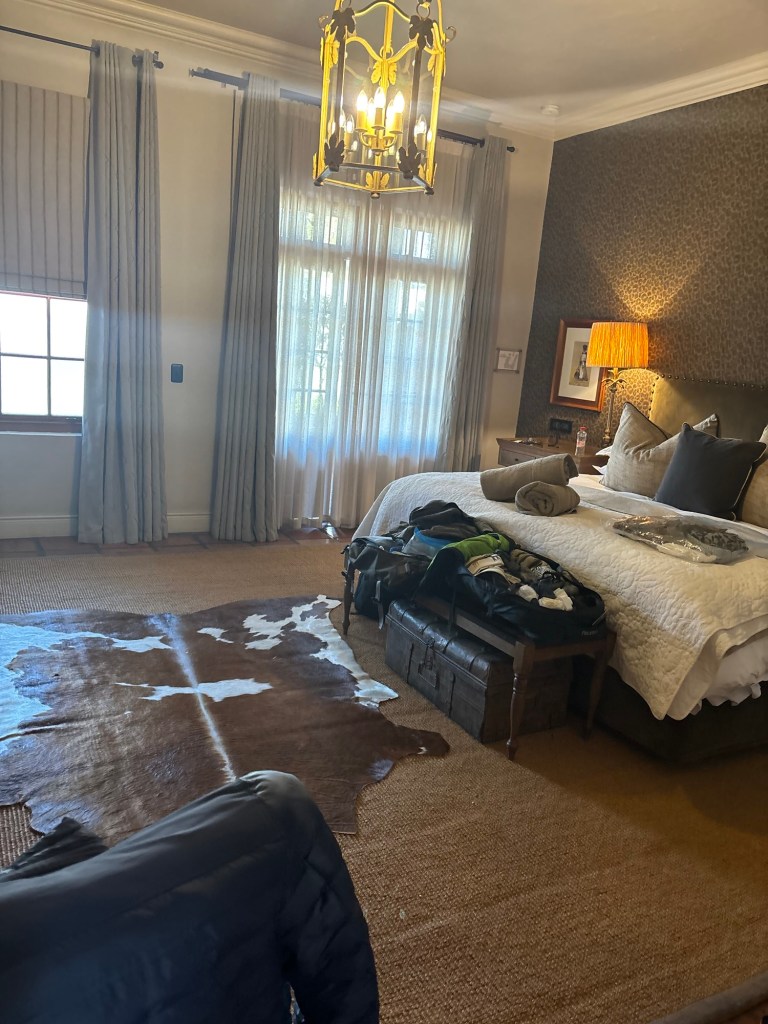
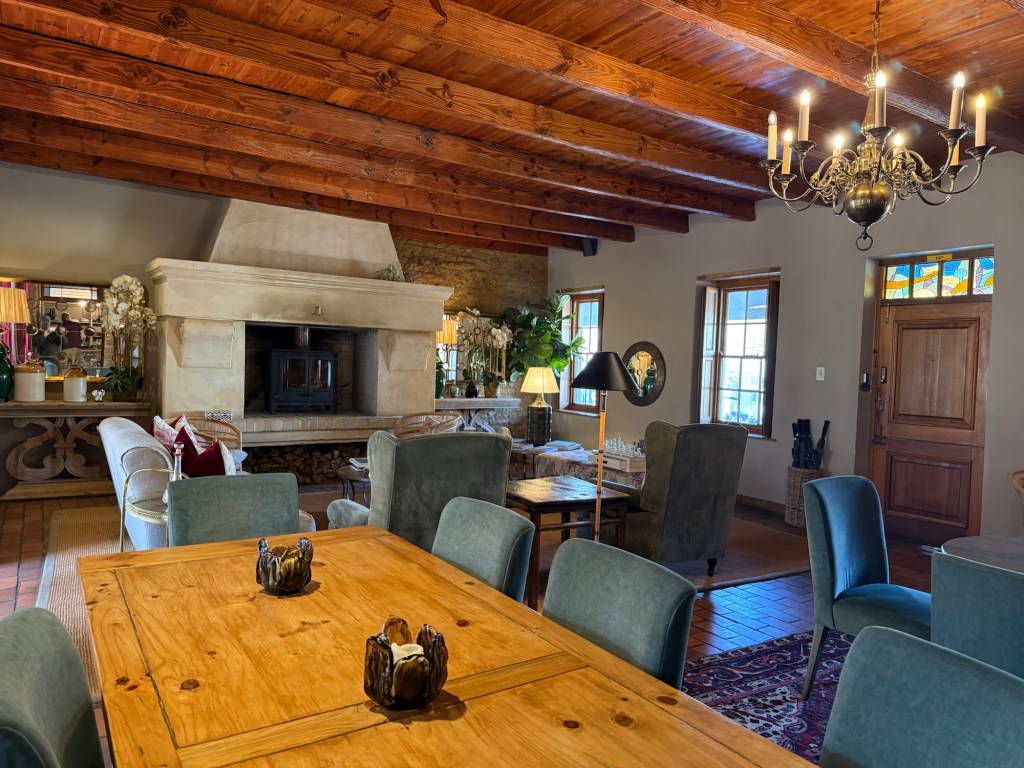
The Avondrood Guest House is an 1870 Cape Dutch farmhouse with beautiful gardens and a welcoming staff. Our rooms have unglazed tile floors and cowhide rugs on the floor. We settle in and have a glass of sherry before bed. We have an early start in the morning. We’re going whale watching.

The Mass of Men . . .

“The mass of men lead lives of quiet desperation“. Thoreau

We’re visiting a township today. Our guide for the tour is Chippa, who is a member of the Xhosa tribe, as were Nelson Mandela and Desmond Tutu. The Xhosa language is one of a very few in the world that uses clicking sounds in their language.

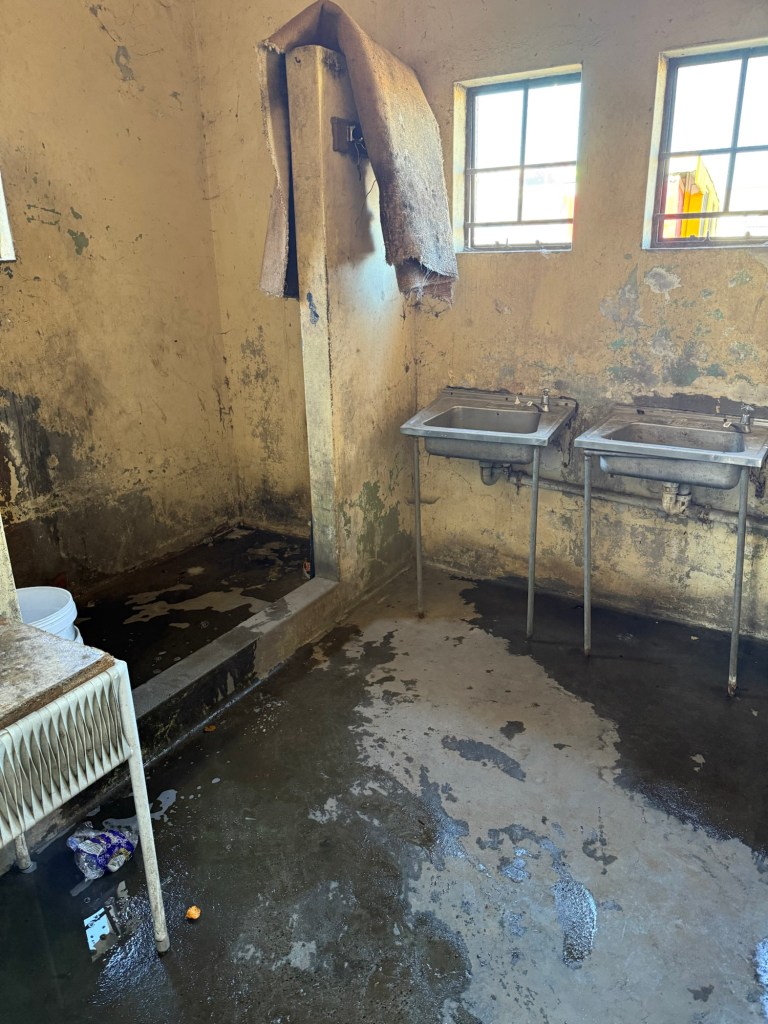
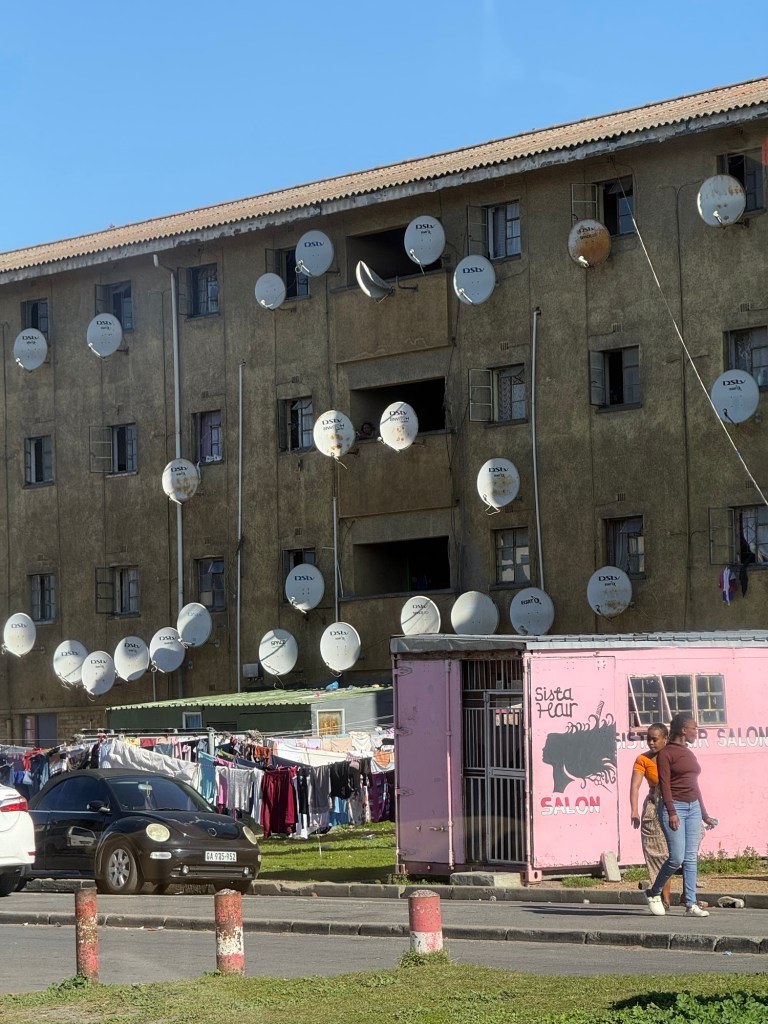
Chippa grew up and still lives in the Langa township about twenty miles outside Cape Town. It’s one of the oldest townships in South Africa, established in 1923 and originally built to house workers coming in to the city from the countryside. Dormitory style buildings with communal cooking and toilet facilities housed the male workers, while their families stayed in their home villages.

Eventually families started moving into the townships, and then followed the informal townships- tin shacks which gradually grew up on the outskirts of the official townships. All of this occurred before apartheid became official government policy in 1948. Under the apartheid system racial groups were segregated and it became illegal to have mixed race neighborhoods. Some mixed neighborhoods were bulldozed and the people relocated.

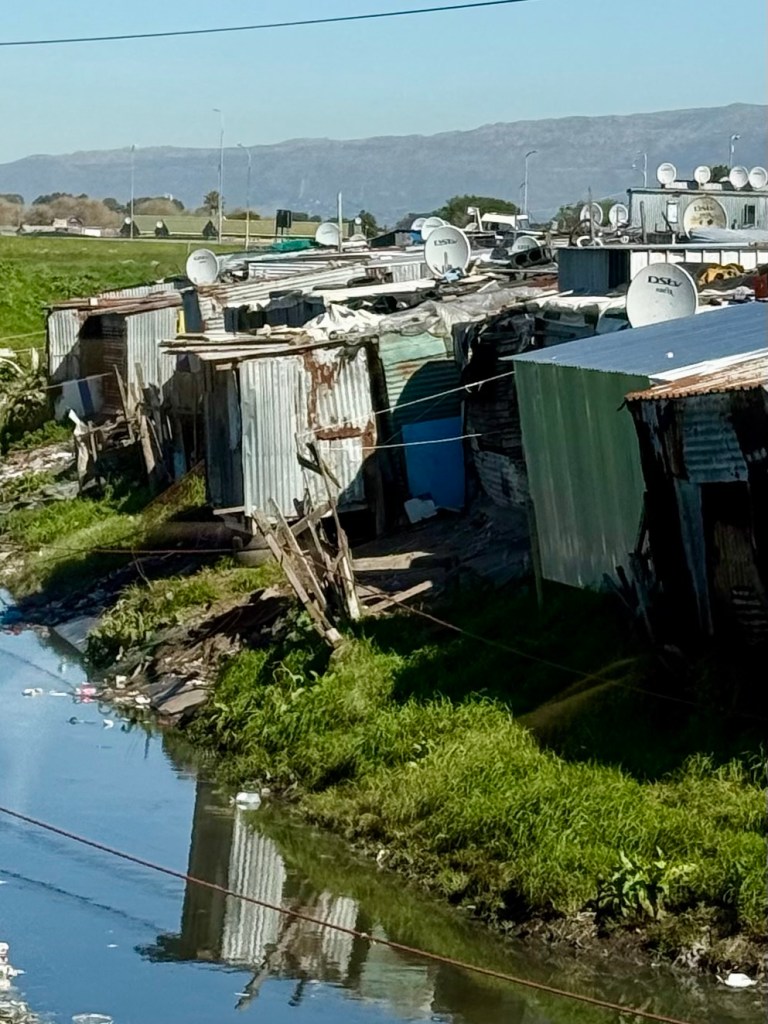
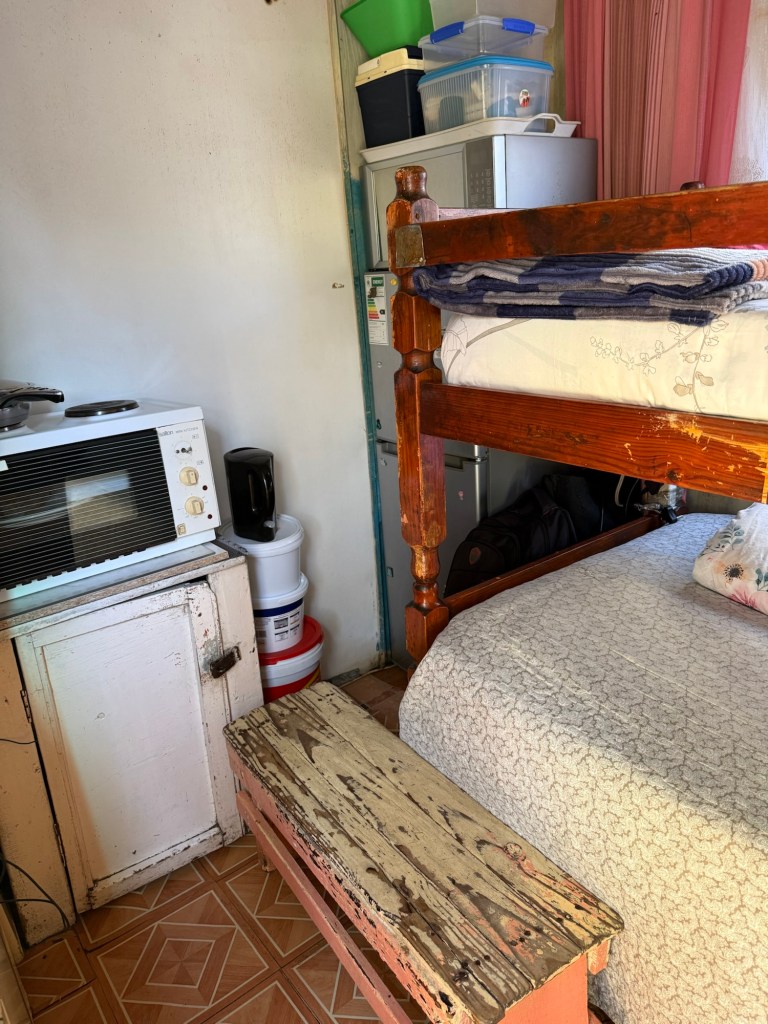
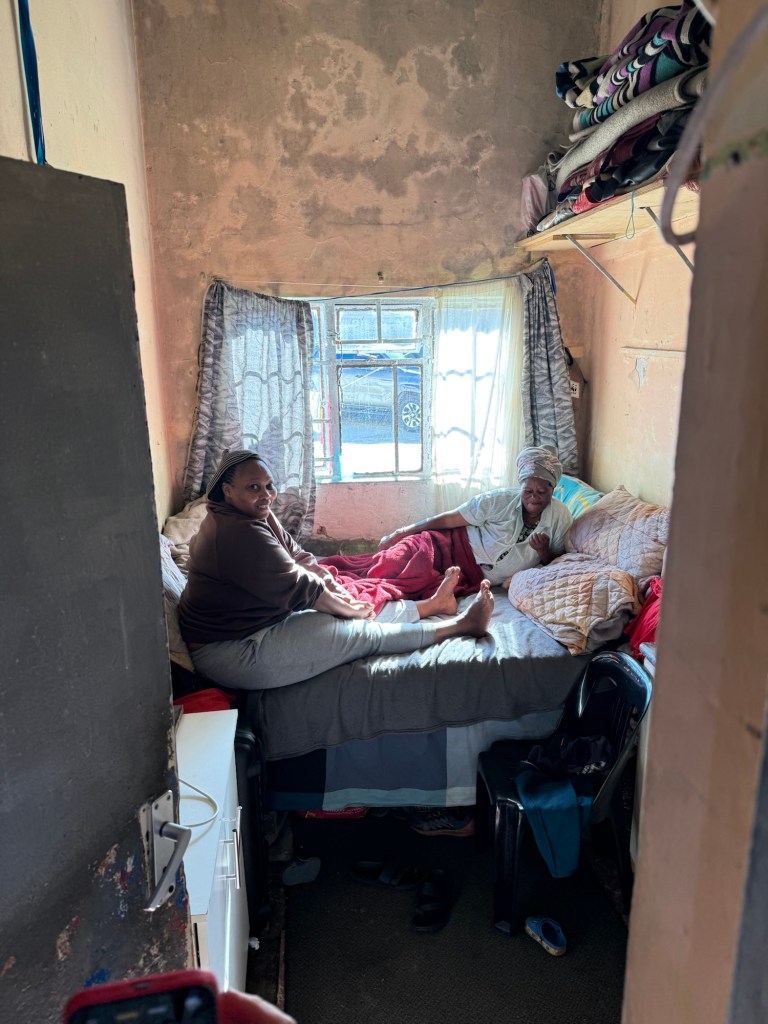
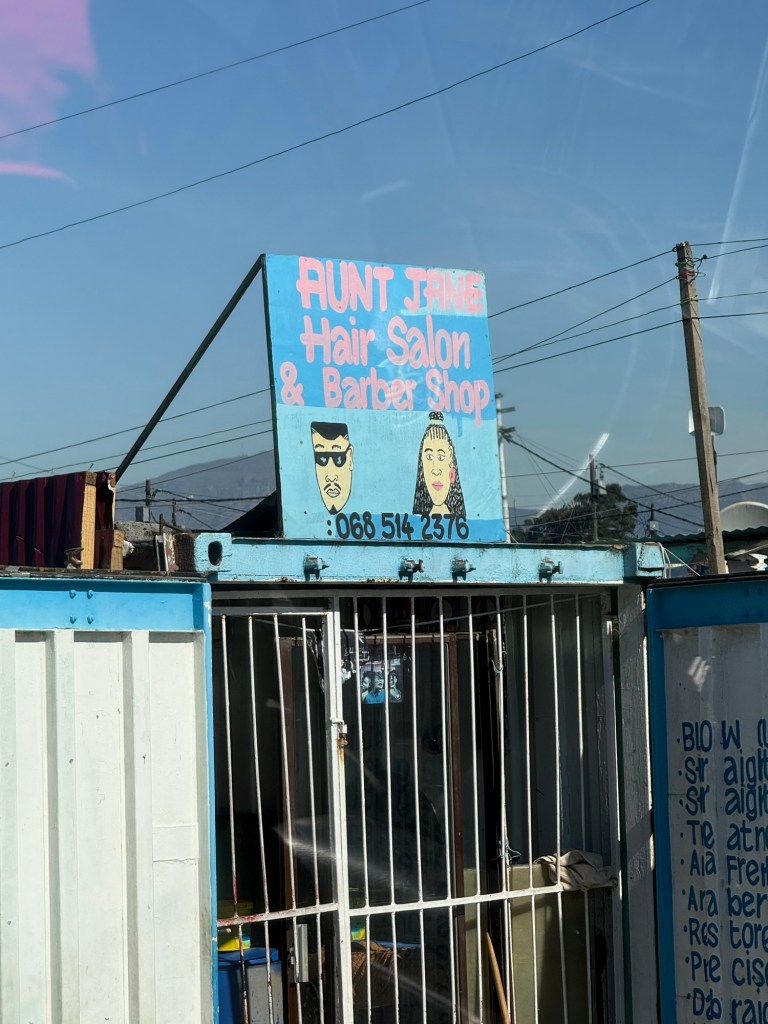
On the outer edge of Langa township, the unofficial township is a warren of tin shacks, many without windows. There is no water or sewer. A nearby canal serves as garbage dump and toilet. Rats run through the streets. Electricity is provided by makeshift wiring. Electrical fires and burns are common. But within that space many people live their lives. There are shops, barbers, internet companies, restaurants. And there are gangs. Crystal meth is a huge problem. Education is non-existent for many children.

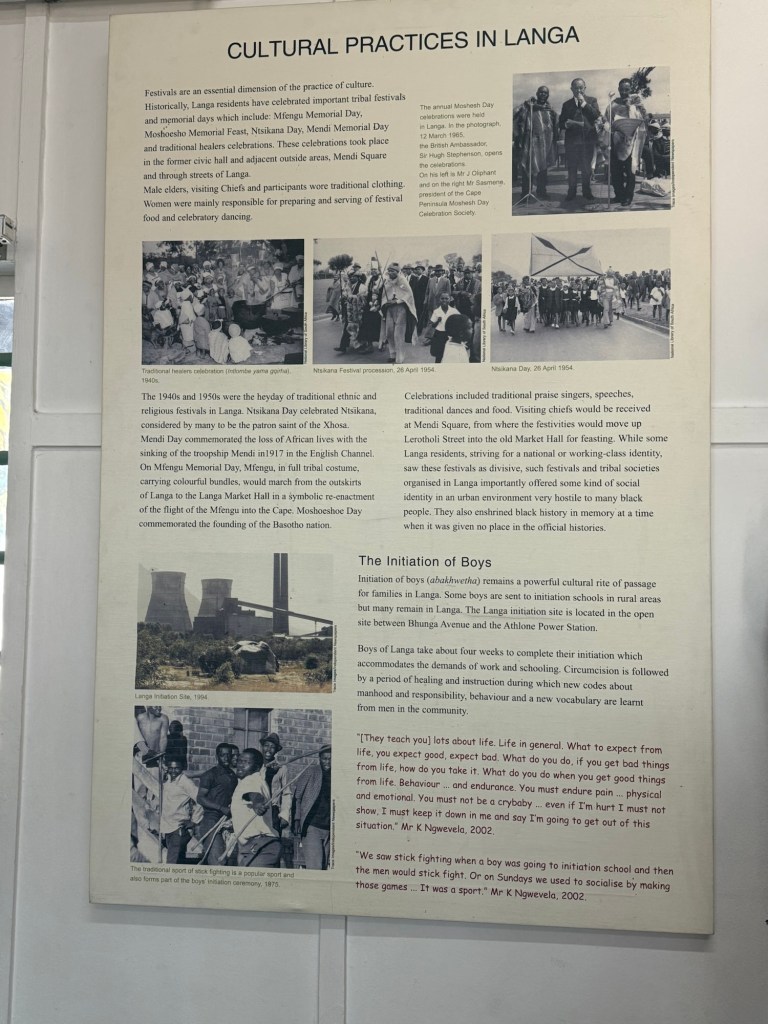
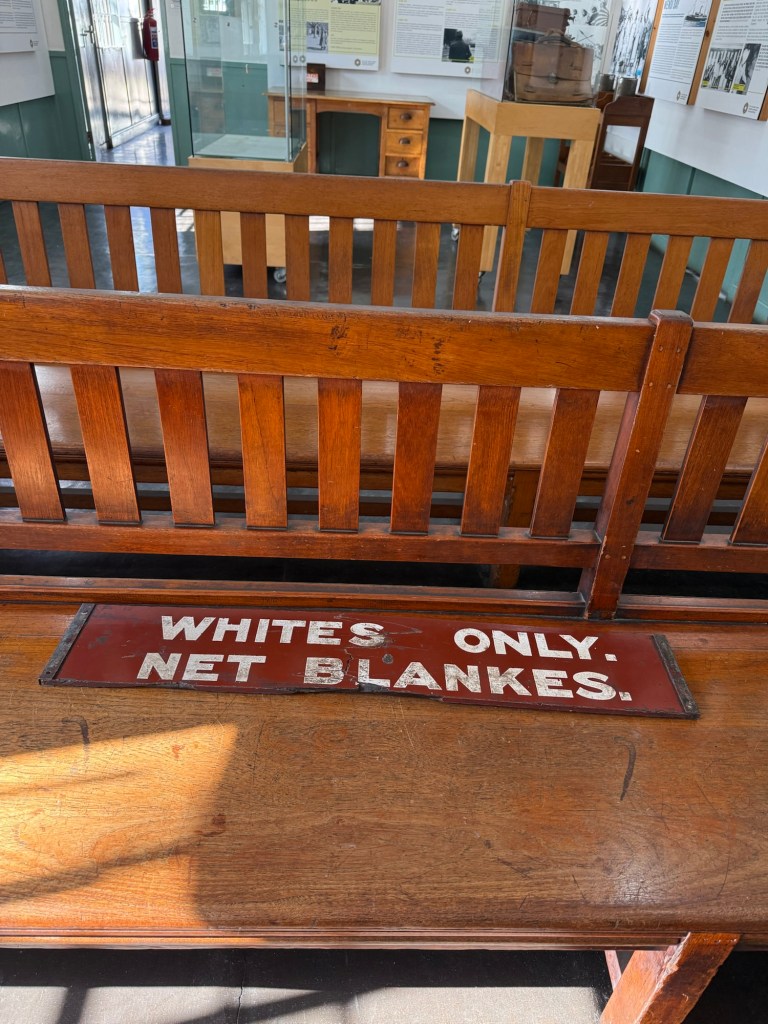
The apartheid system and the Group Areas Act of 1950 divided people into four groups: whites, Africans, colored and Indian. It became illegal to own property or live in an area designated for another group. Many people were forcibly relocated. Under apartheid, a person’s job, housing and even wages was determined by their race. It was a brutal system, and protests against it started soon after it was implemented. The African townships were the worst in terms of living conditions and wages, and many of the protests began there. We visited a small museum with a history of the Langa township.

Sustained protests and pressure from the outside world finally ended apartheid in the early 1990’s. But the neighborhoods and townships remain divided along racial lines. One side of a highway will be a colored neighborhood and the other side will be an African neighborhood. Only the formerly white only neighborhoods have much mixing of races, but there the division is largely economic, since these tend to be the most desirable areas.

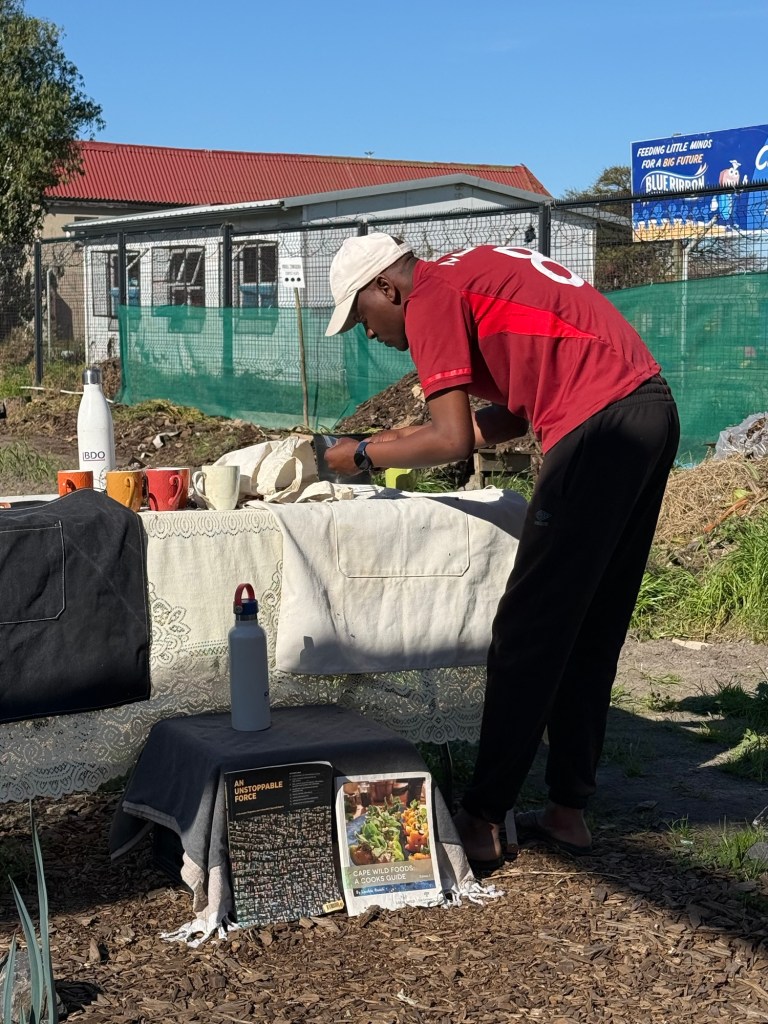
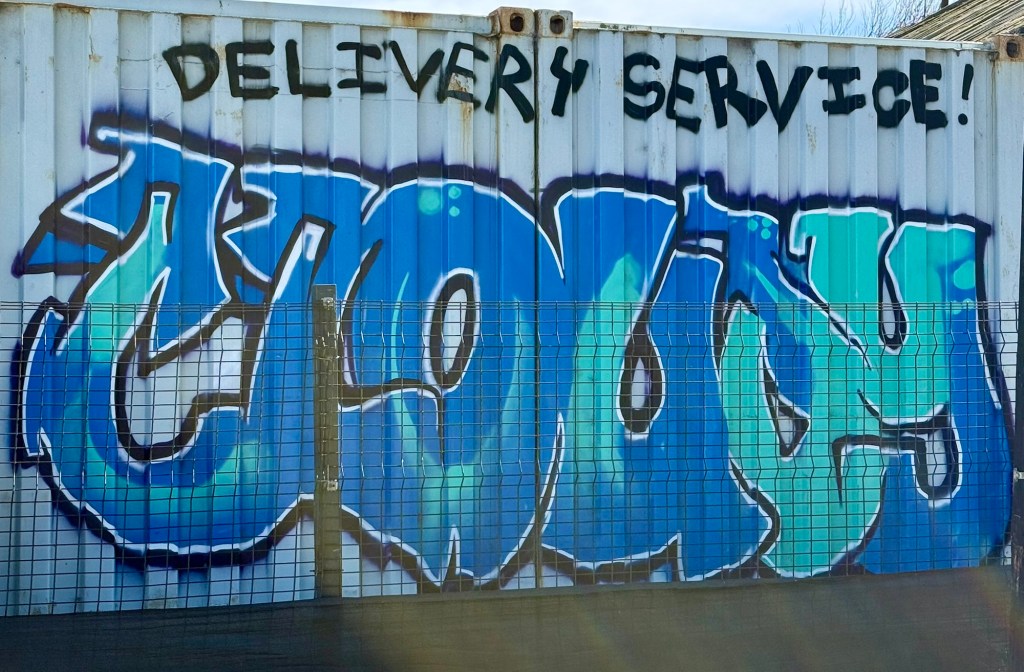
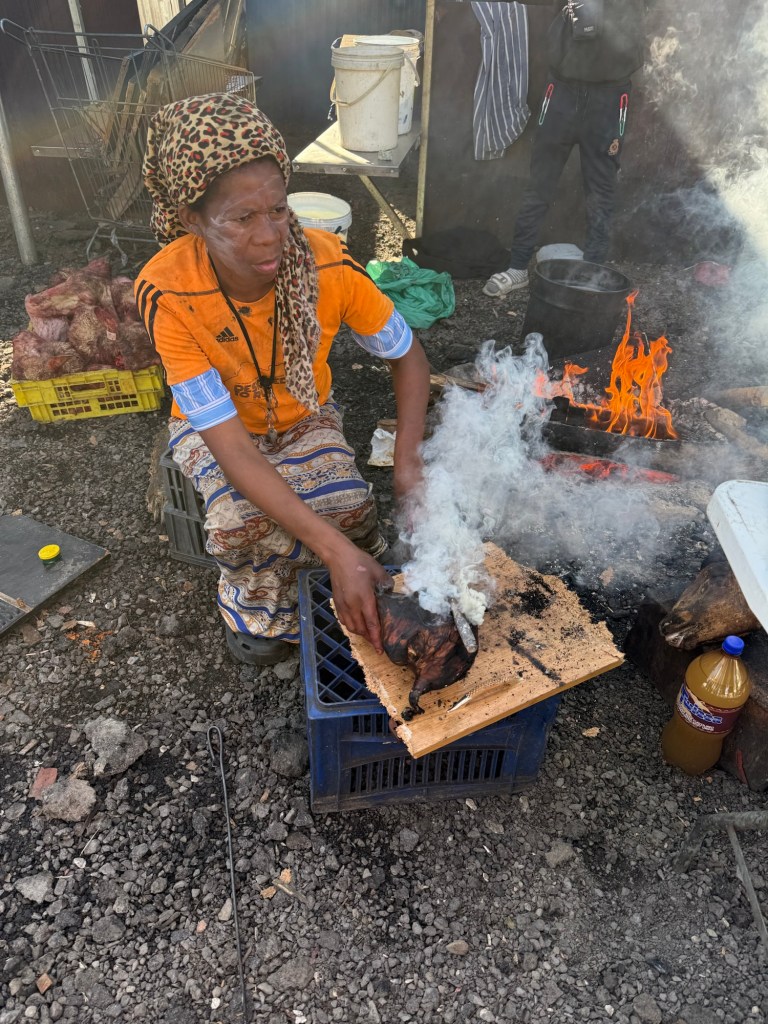
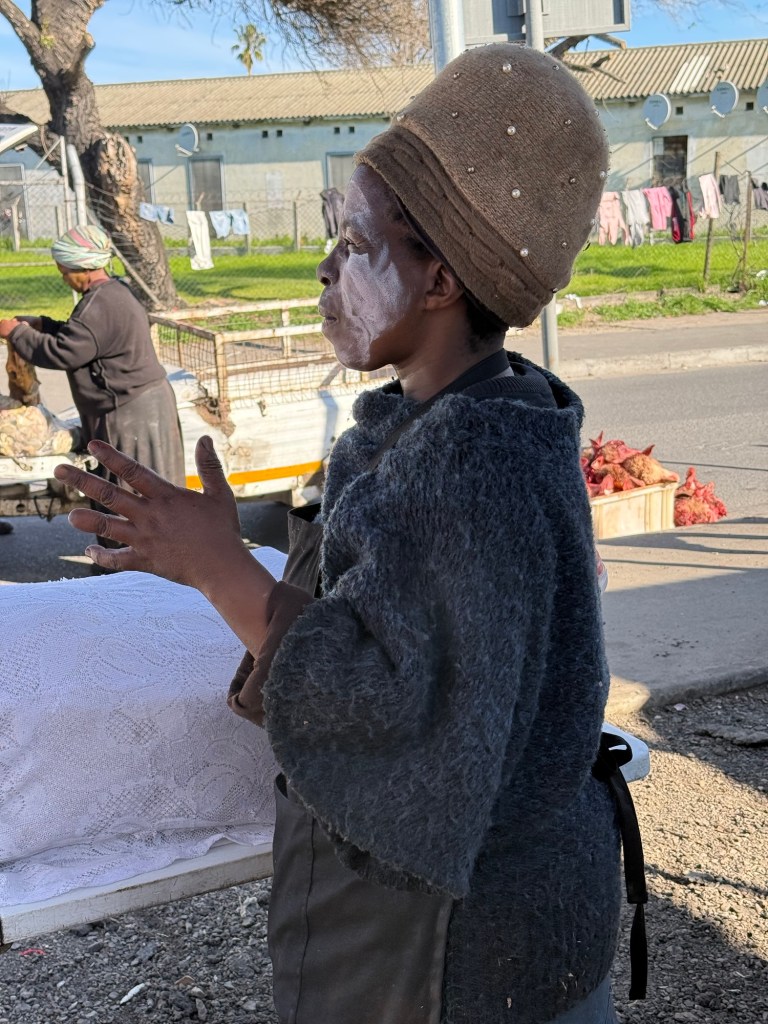
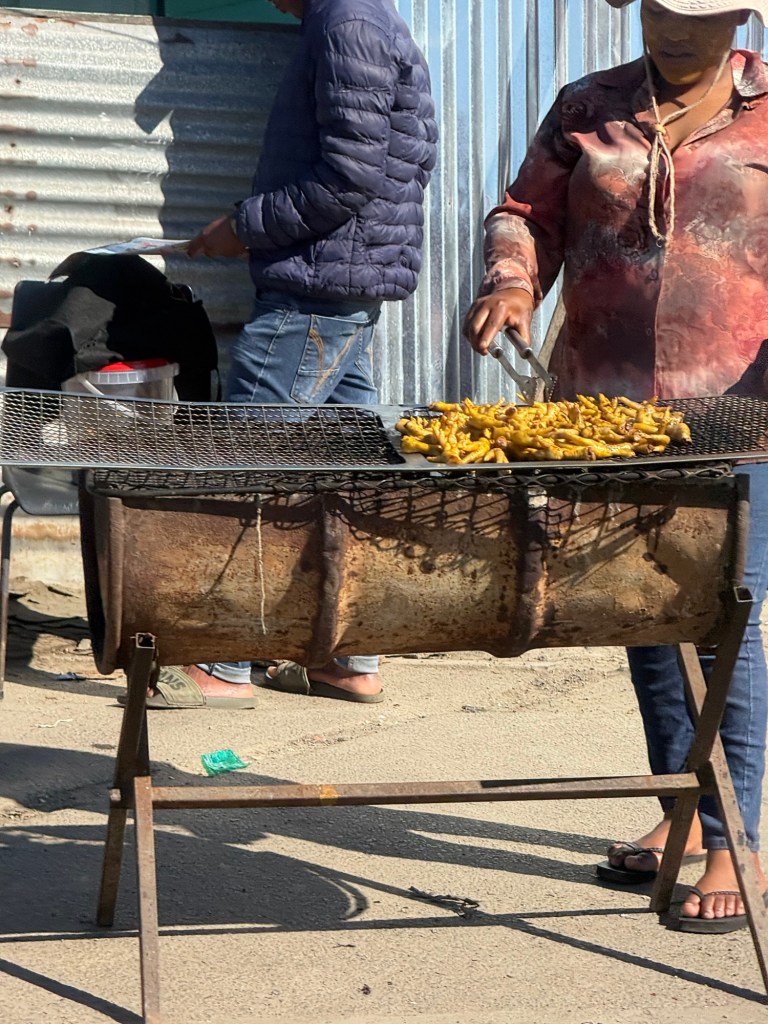
Our tour of the Langa township was a sobering experience. The fact that people still live in these communities, many for generations is hard for us as Americans to comprehend. We did see some young entrepreneurs in Langa, including a coffee stand, and a delivery service called Cloudy. A group of women process sheep heads for food by first burning off the wool, then removing the brains, and finally boiling the split heads before sale. The tongue is a delicacy. The workers were smiling and proud of their work. Hope abides.

At the end of our tour of Langa, we asked Chippa for a demonstration of his native language and he gave us this :

Chippa speaking Xhosa

A Fun Day in Capetown

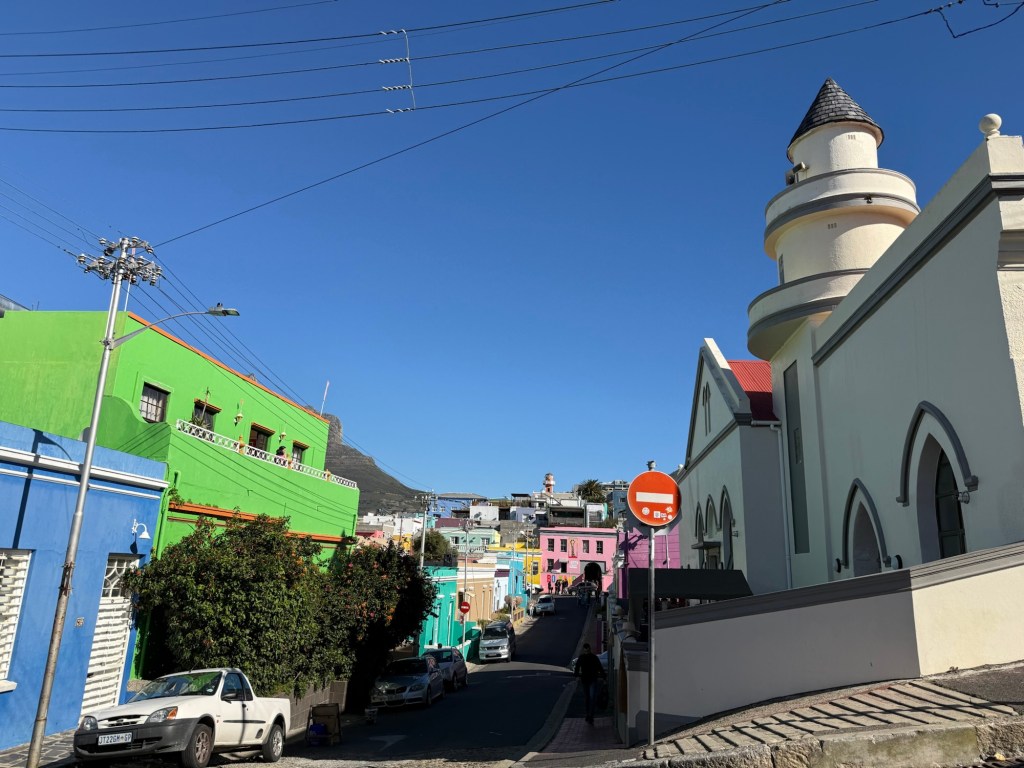
After our early evening the night before, we’re all rested and ready to go. We’ve got a cooking class scheduled at 11:00 a short walk from the apartment in an area called the Bo-Kaap neighborhood, which is traditionally a colored area, with descendants of the enslaved Malay and Indonesian people, along with Indians and mixed race people.

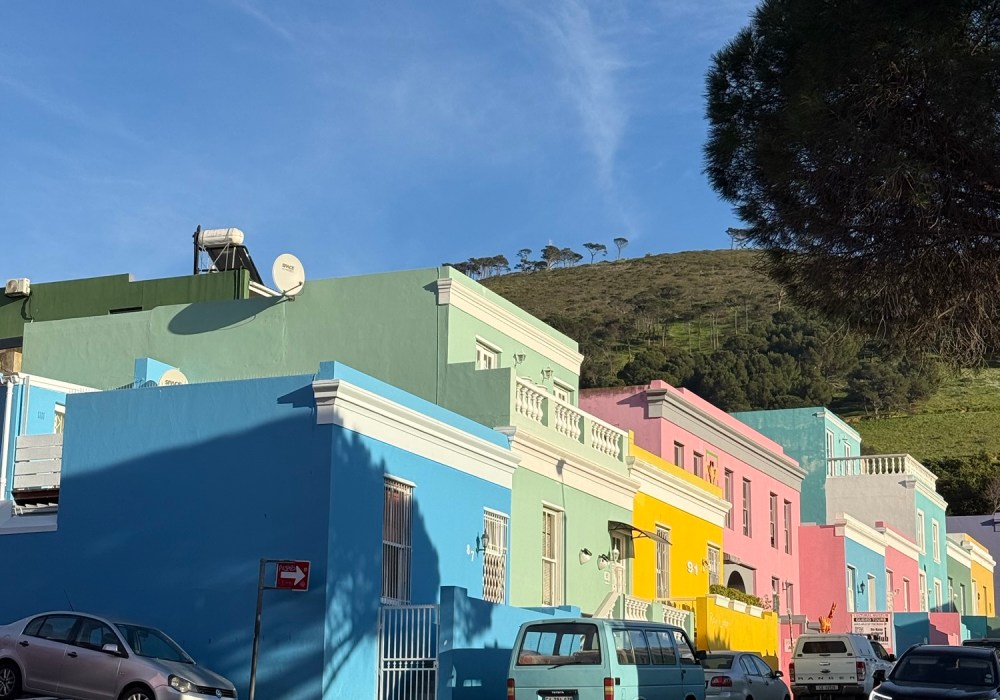
The Bo-Kaap area is brightly painted and colorful and a popular tourist destination in the daytime. Many inhabitants of the area are Muslim, and the adhan can be heard broadcasting from a neighborhood mosque five times a day.

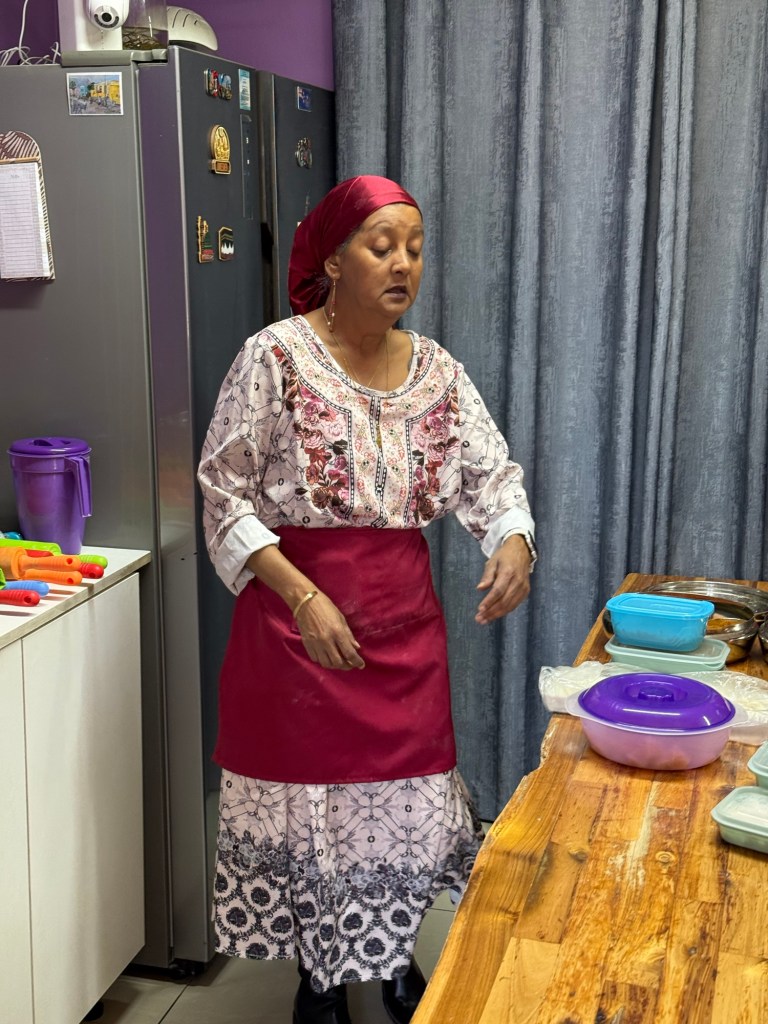
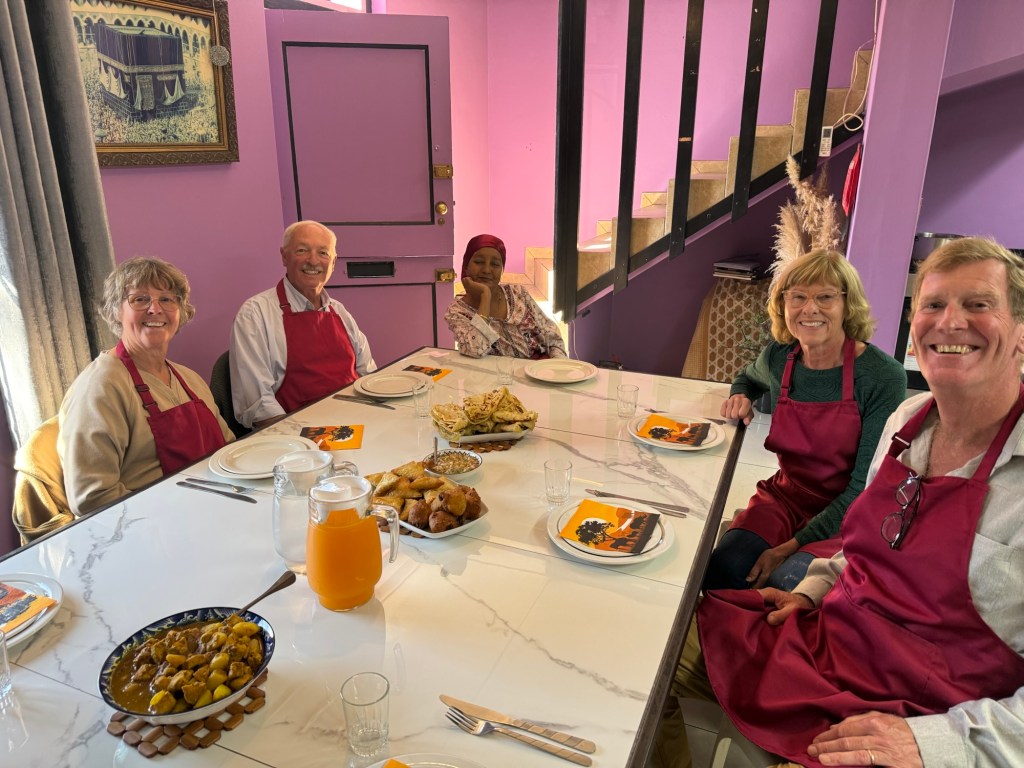
Our cooking class is taught by Faldela, a petite woman who swears like trooper. She has opinions on everything, and likes to share. She’s very entertaining. Today we’re making a spicy stew of chicken and potatoes, daltjies or chili bites, samosas and roti.

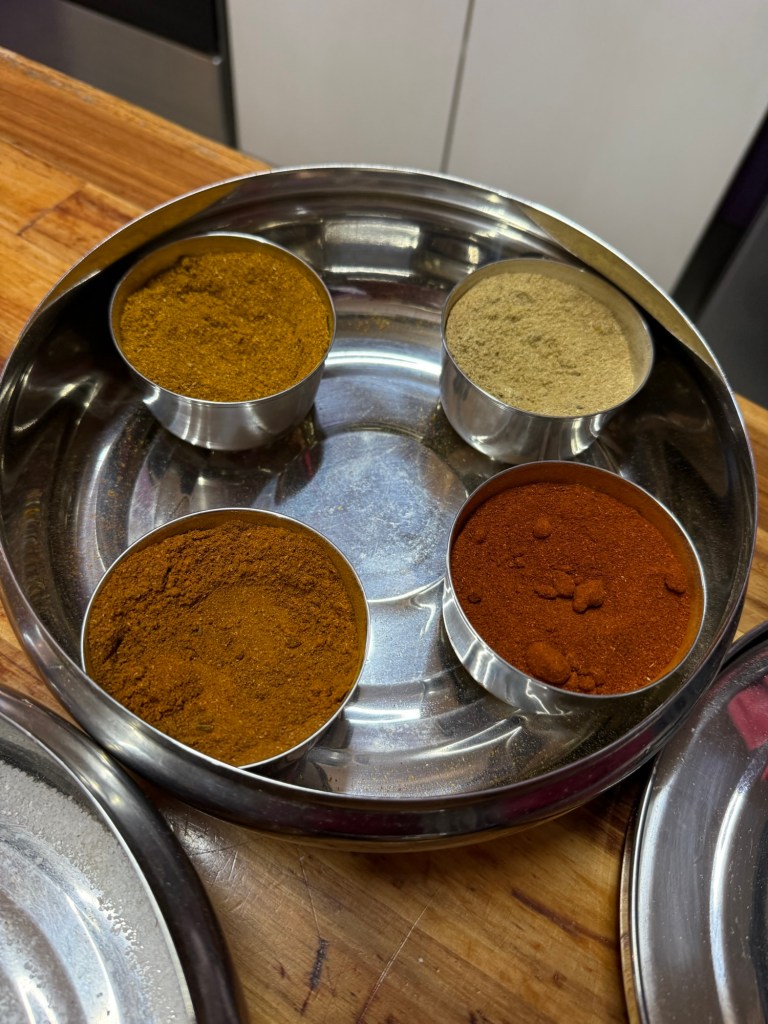
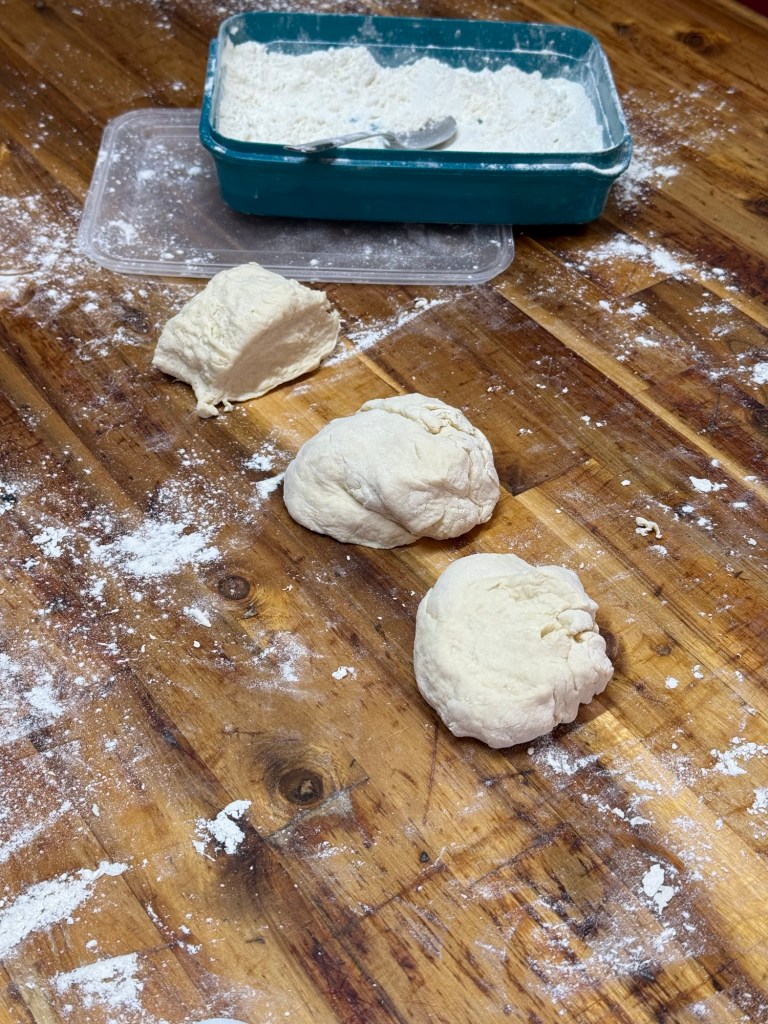
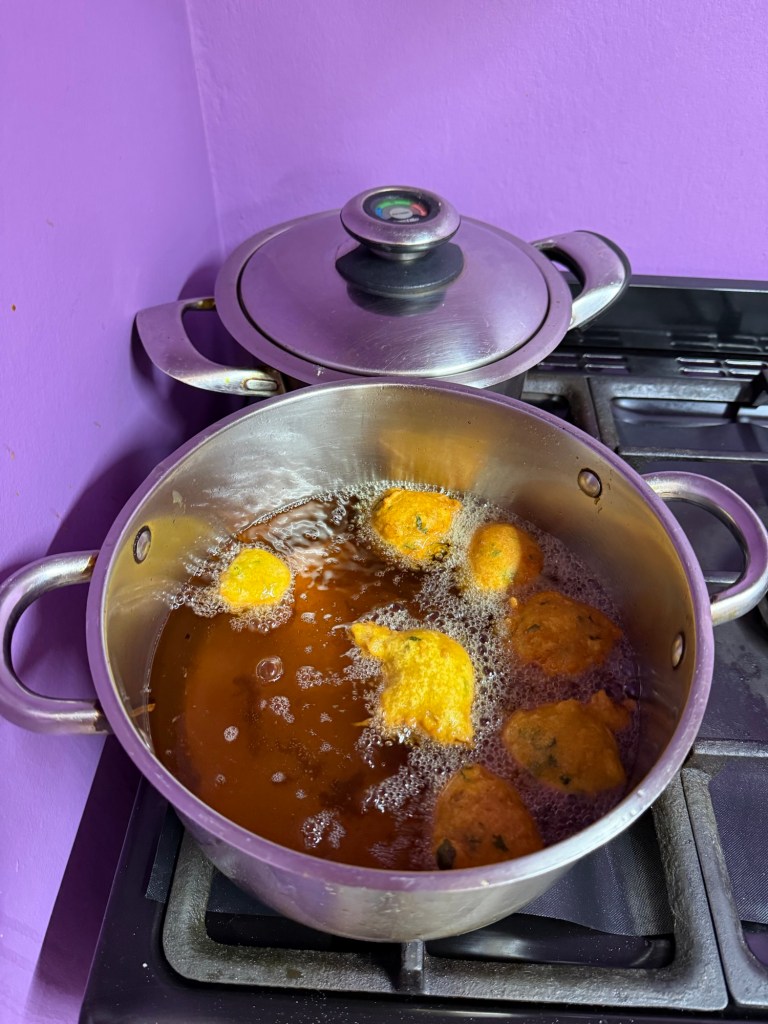
Under Faldela’s instruction we mix flour, baking powder and water to create a dough, which is then rolled out, smeared with butter, rolled and shaped into the roti. We mix chickpea flour with wheat flour and spices for the daltjies. Mounds of spices, garlic and onions along with some water begin the stew.

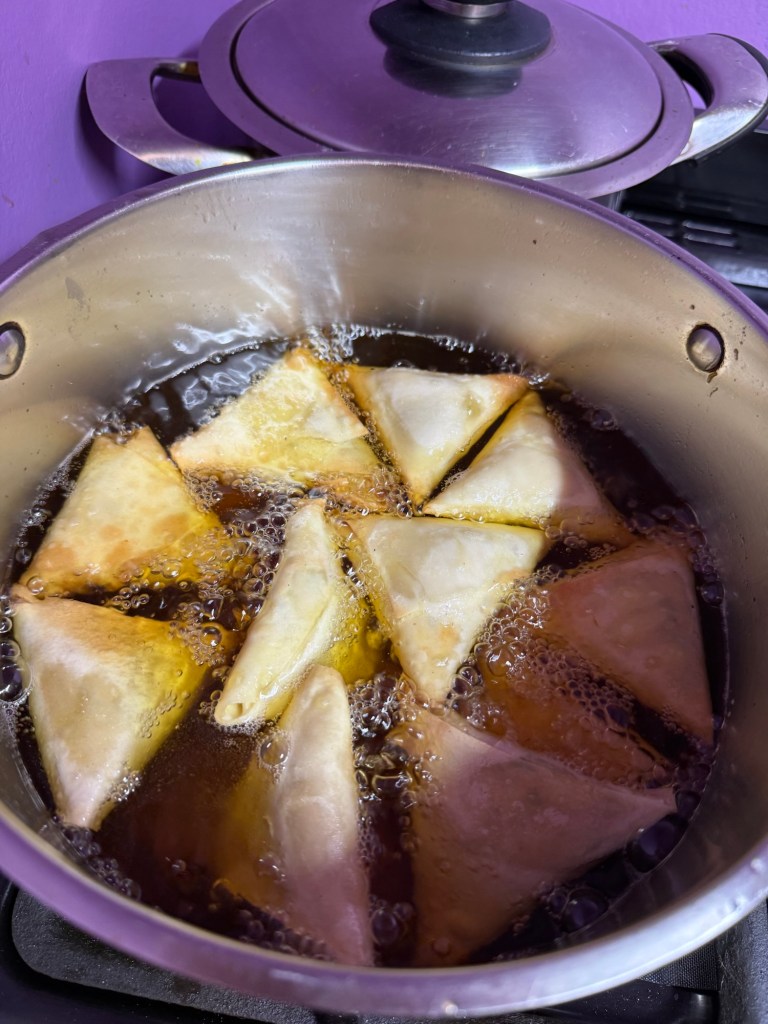
We make a chicken and vegetable filling for the samosas and learn to fold them. Some look better than others. Oil bubbles on the stove, and we drop the daltjies in to cook. Chicken and potatoes are added to the stew.

Faldela informs us that she doesn’t like air fryers because they can explode. Her husband emerges from a back room and overhears her comment and softly says that cell phones can explode too. She rolls her eyes.

When everything is done we sit at the table. Faldela says a Moslem prayer, and we eat. The food tastes great. Plenty of spices, but not too hot. Our roti is flaky and delicious. We drink water or mango juice. Sated, we stroll back to the apartment. Time for a nap.

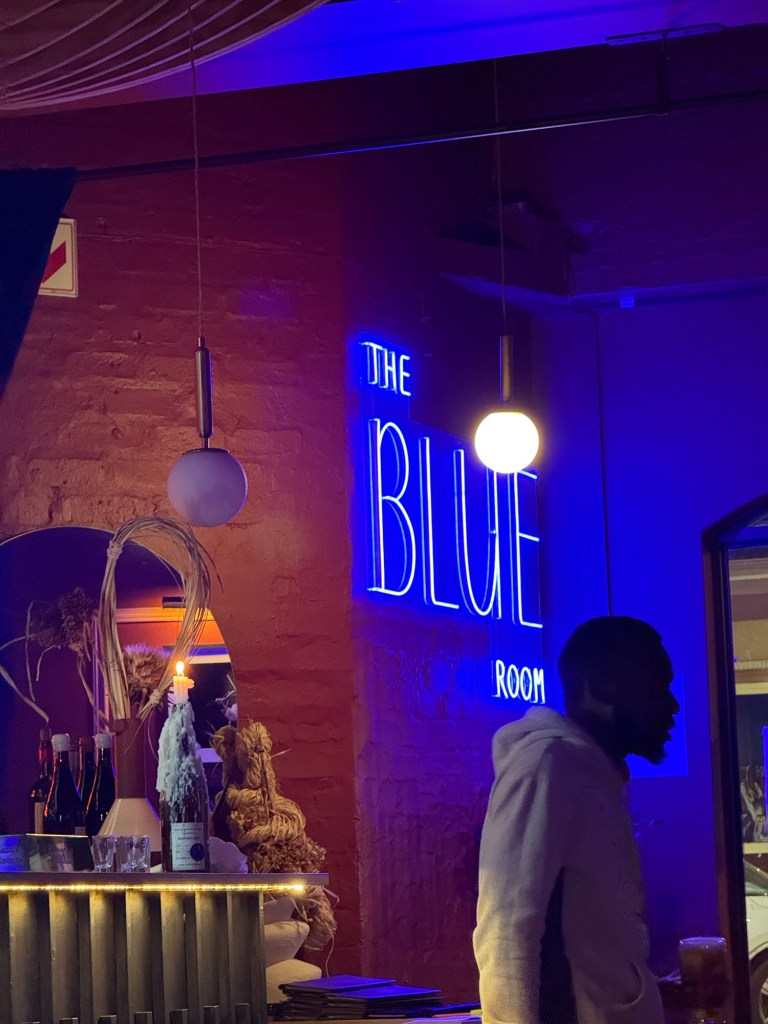
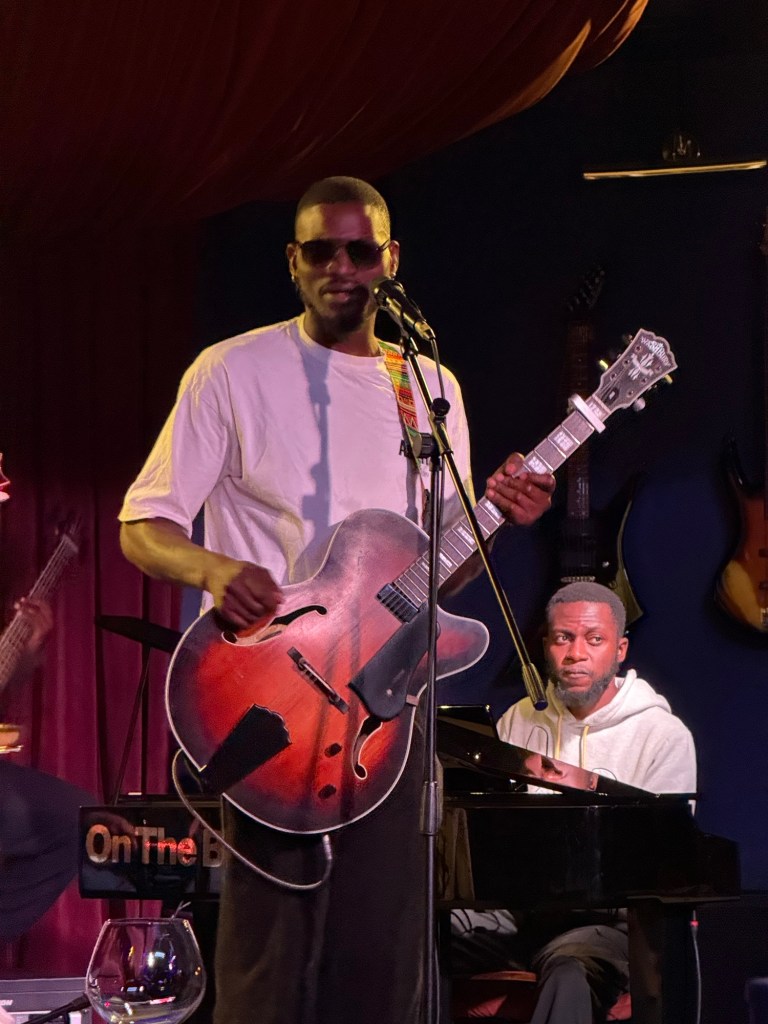
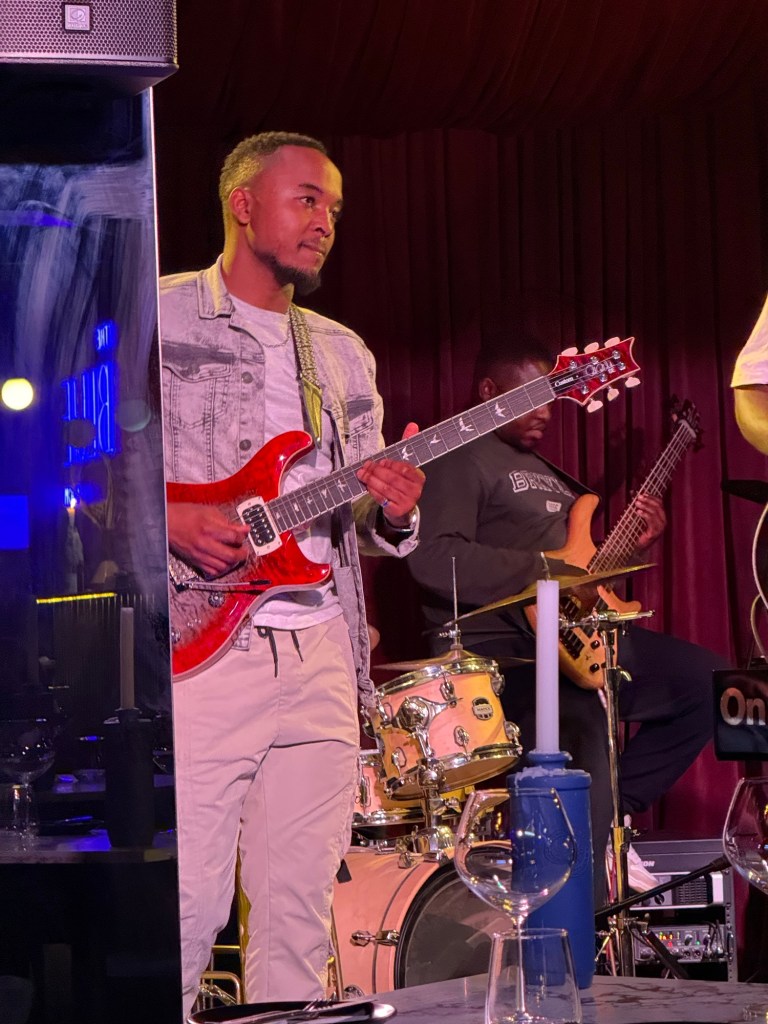
Nap time over, we’re going out on the town. We’ve booked a reservation at The Blue Room, a nearby nightclub with live music and dinner. We arrive before the first show and are seated quickly. We’re the only people there. The band is warming up. Their singer has yet to arrive. We order drinks. A few more people wander in.

We order a light dinner and wine. The band begins their first set, and the lead singer strolls in, tall, thin and wearing sunglasses. Looking very cool. A man in a blue fedora sits in the front watching the band; Maybe their manager, or the local godfather.

The band is good, and the lead guitarist is great. They’re called The Blaq Band(with a Q) and they play a mix of light jazz and reggae. We eat our meals and enjoy the show. Some young women stroll in and sit near the band, probably either girlfriends or groupies.

We stay for the second set, then call an uber for the ride back to the house. It’s been a busy day. Tomorrow we’re going to a township.

On the Waterfront

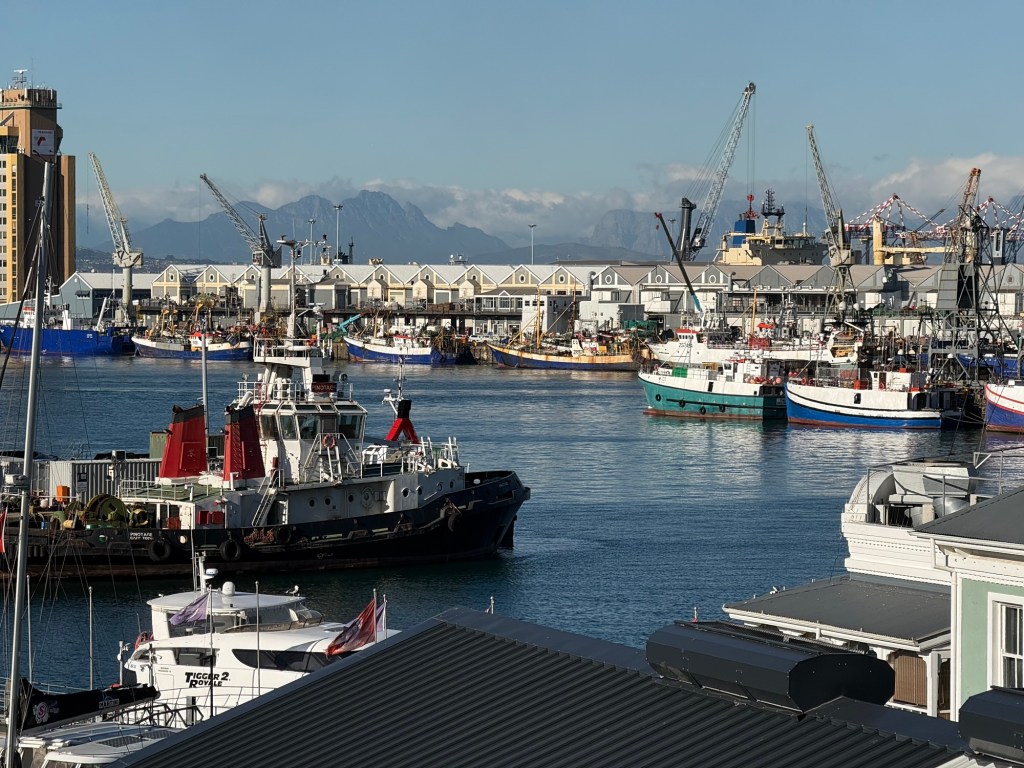
The Victoria and Albert waterfront in Cape Town is a vast sprawl of shopping malls and restaurants. Buskers play and sing. The V&A is a ten minute walk from our apartment, and Kyle has told us it’s safe to walk to in the daytime, “but definitely Uber at night.”

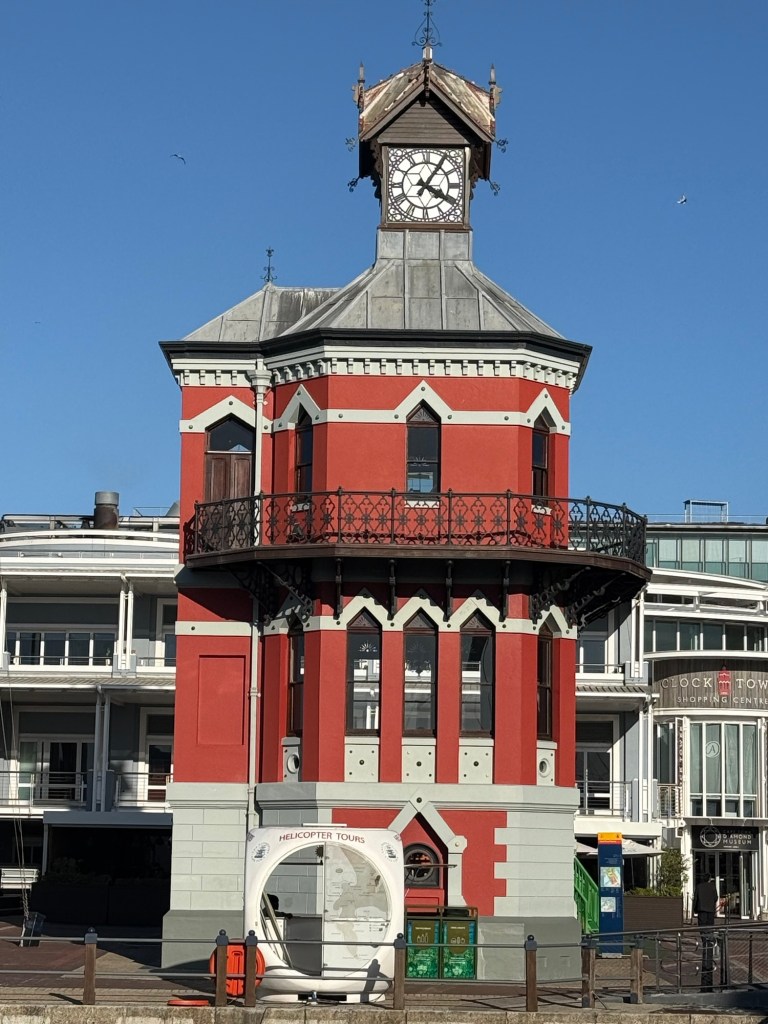
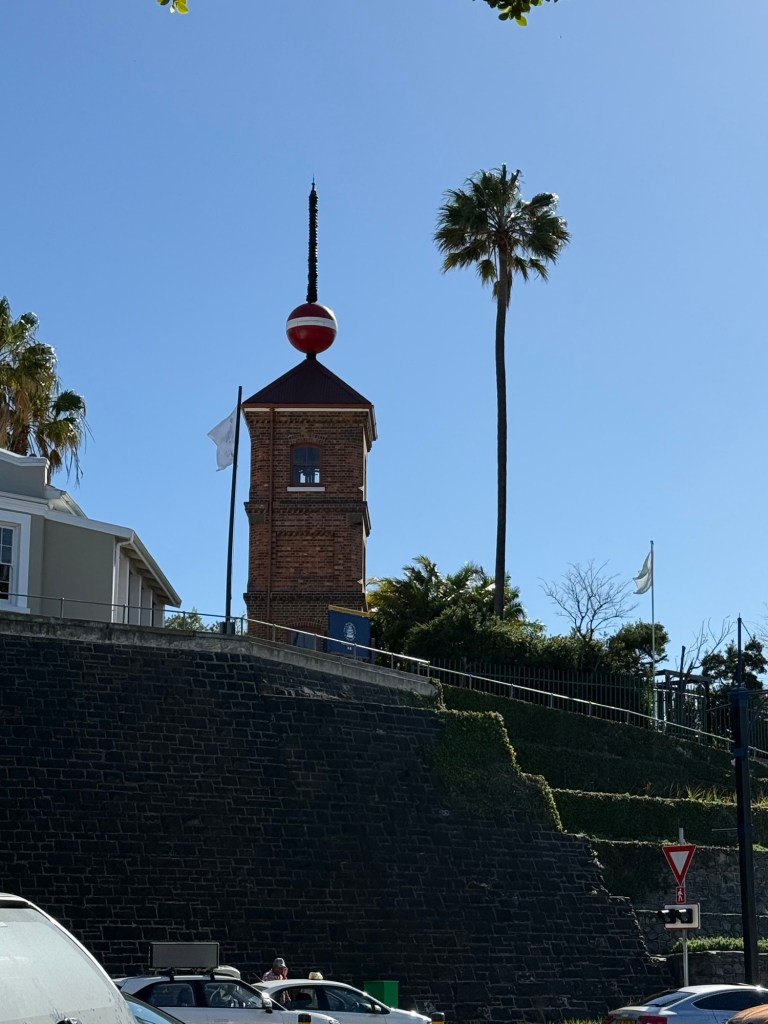
We walk over and wander through the shops. We’re already laden with souvenirs and not really in a buying mood today. there are some interesting historical buildings on the waterfront, including a clock tower, and a chronometer tower that was used by sailors to accurately set their ships chronometer to aid in navigation.

Each day at a set hour, the ball on the chronometer building would be lowered. Ships in the harbor could see the ball and set the time accurately.

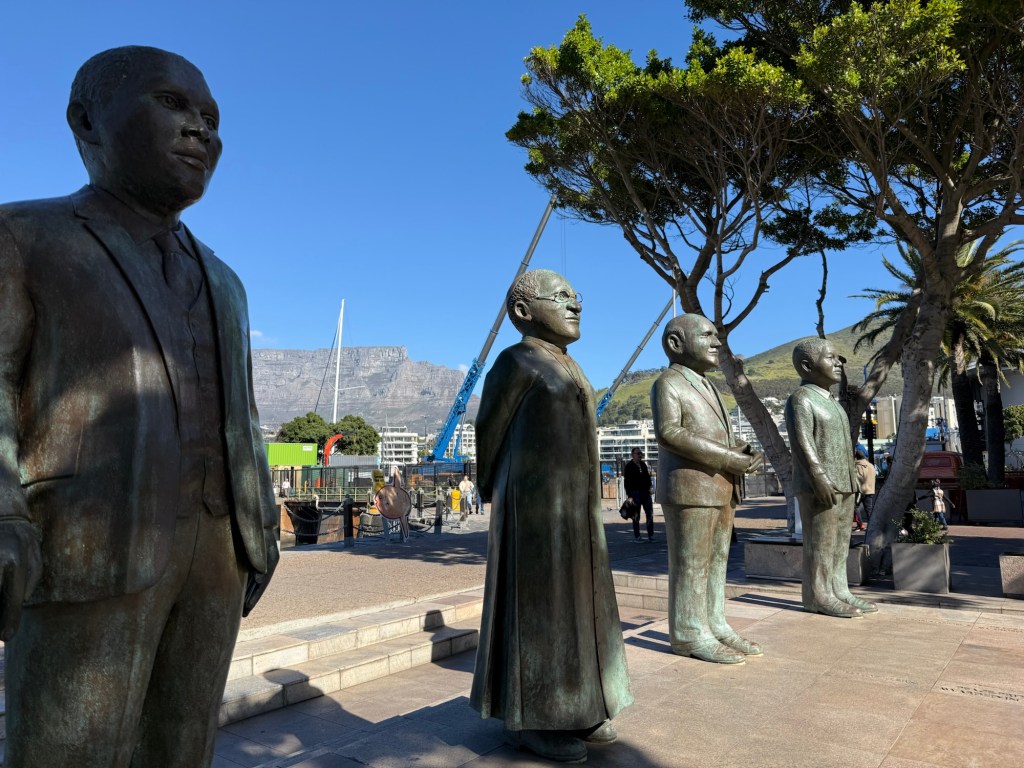
There are also statues honoring South Africa’s four Nobel Peace Prize winners: Albert Luthuli in 1960, Desmond Tutu in 1984, and Nelson Mandela, and F.W. de Clerk who shared the honor in 1993. All of the winners were in some way involved in ending the apartheid system in the country.

We’re getting peckish by now, and decide to have an early dinner. Marble restaurant is nearby and looks like a good spot. It’s mid-afternoon, so no problem getting seated. Steaks, pork belly and paella are on the menu and we order accordingly. Everything is delicious, and we have a nice view of Table Mountain and the city as we eat.

Sated, we walk back to the apartment for a nice afternoon nap. We’ve been on the go since we got to Cape Town and it’s a good day to relax. Tomorrow we have big plans, including a cooking class and some live music.

Howling Wind and the Cape of Good Hope

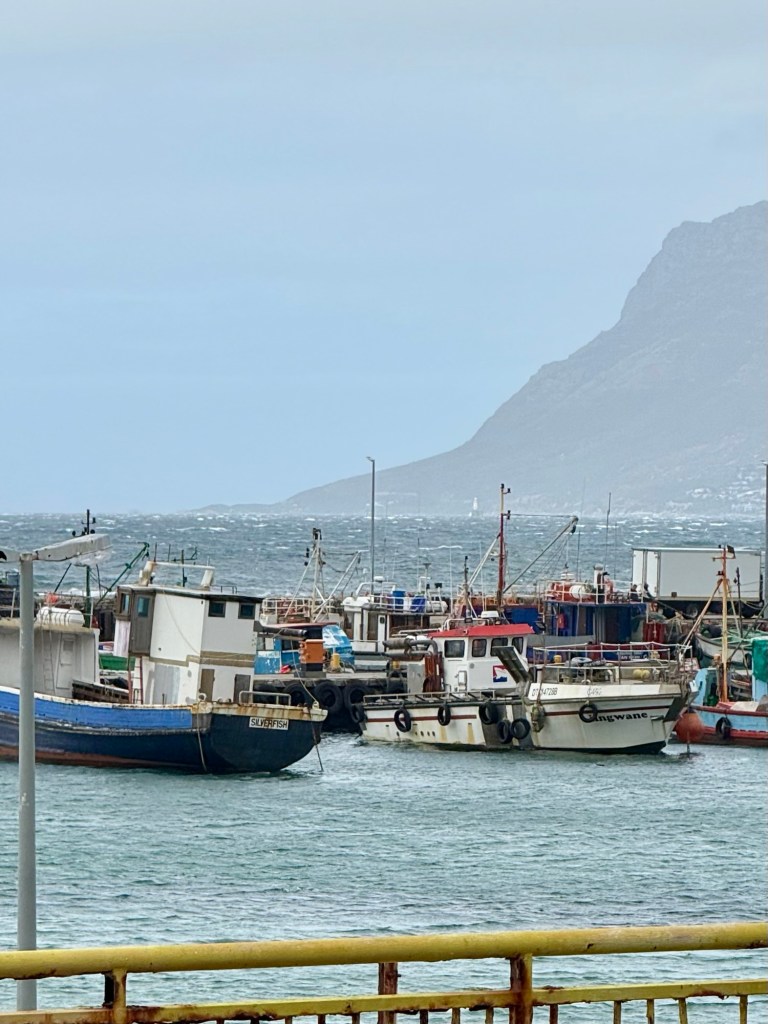
The day starts cloudy and breezy. Kyle picks us up at 9:00, and we head to the Deep South. There are numerous beach towns along the route, it’s starting to rain, and we decide to stop in Kalk Bay for some browsing. We’re hoping the weather will improve.

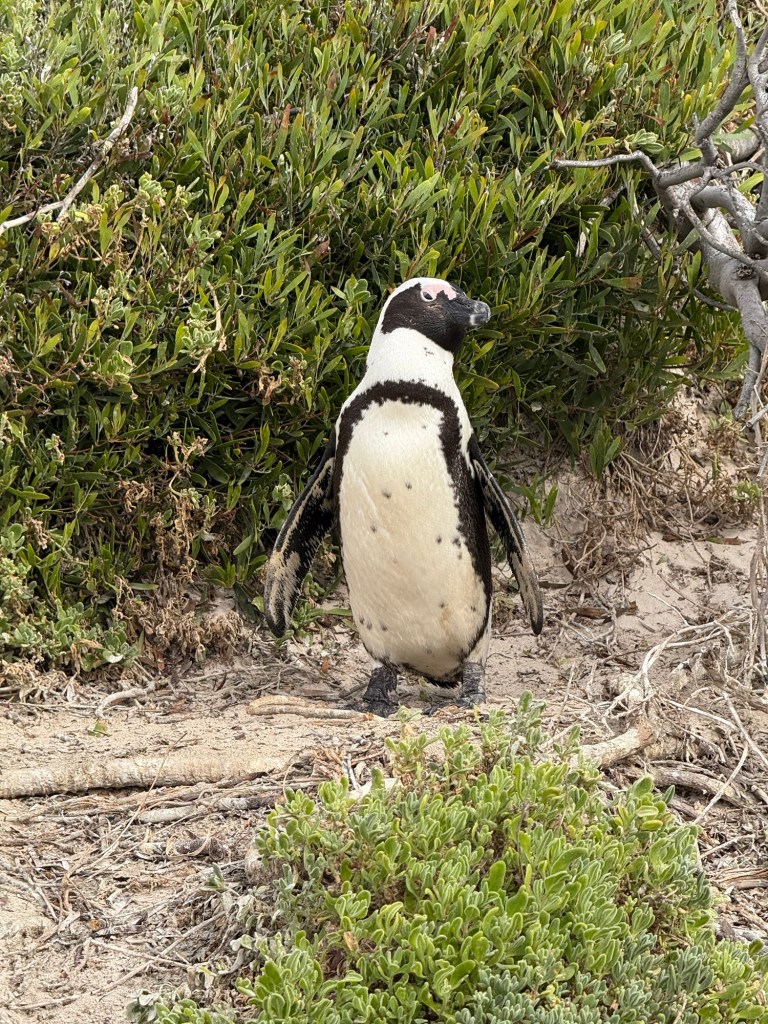
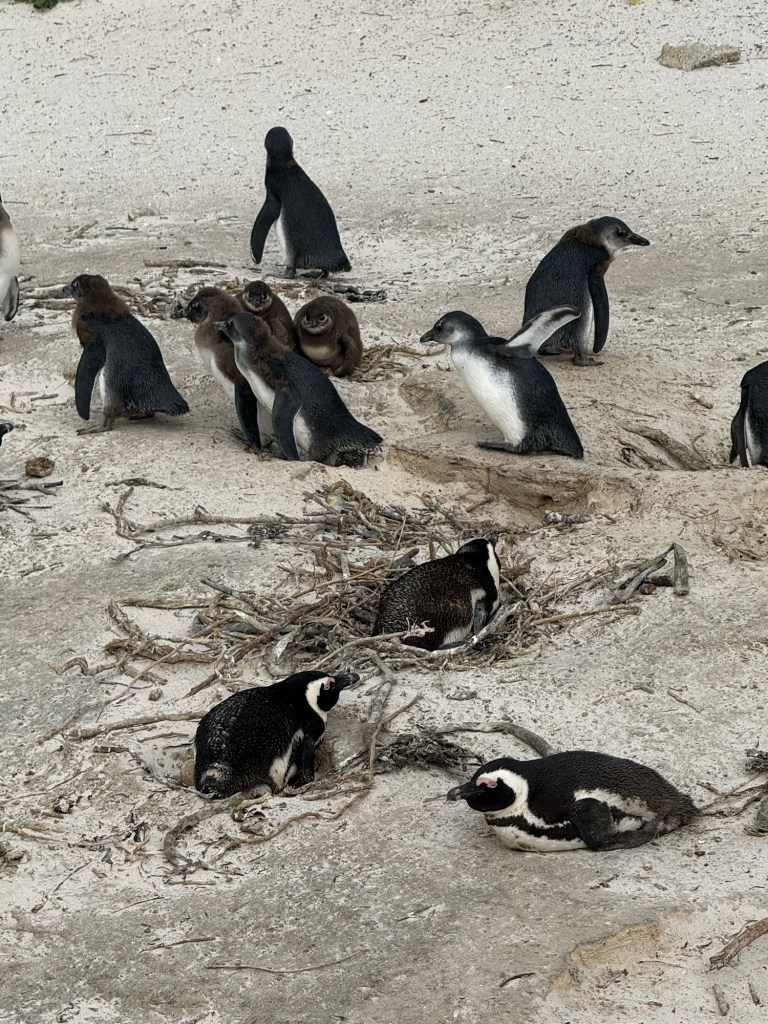
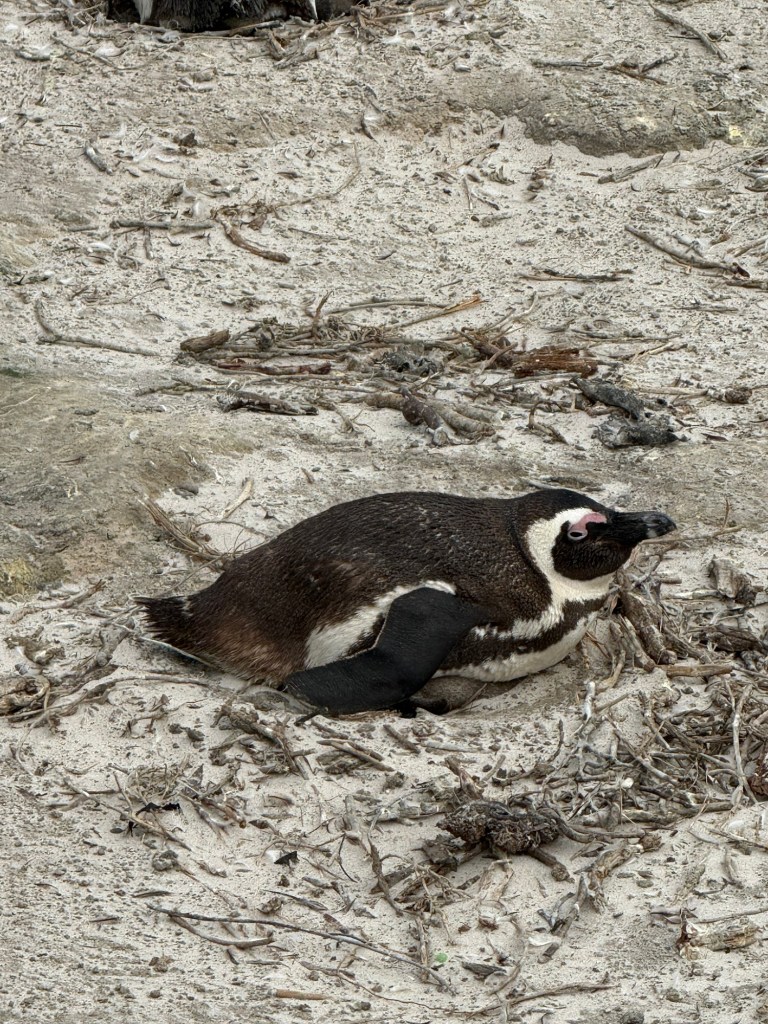
The rain stops, the wind doesn’t. Our next stop is Boulders Beach, where there is a colony of African Penguins roaming the beach. The penguins are unfazed by the wind or the crowds of people. They wander comically in the dunes, some of them even sliding downhill on their bellies. They build nests on the shore and some young penguins are still in their downy coats.

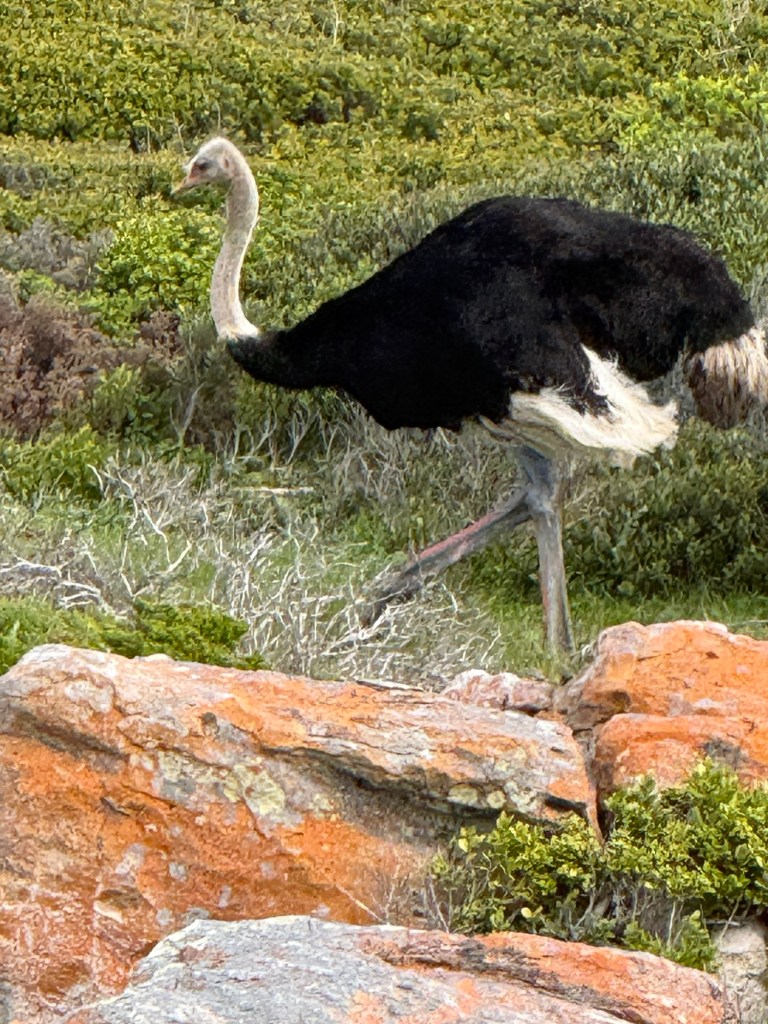
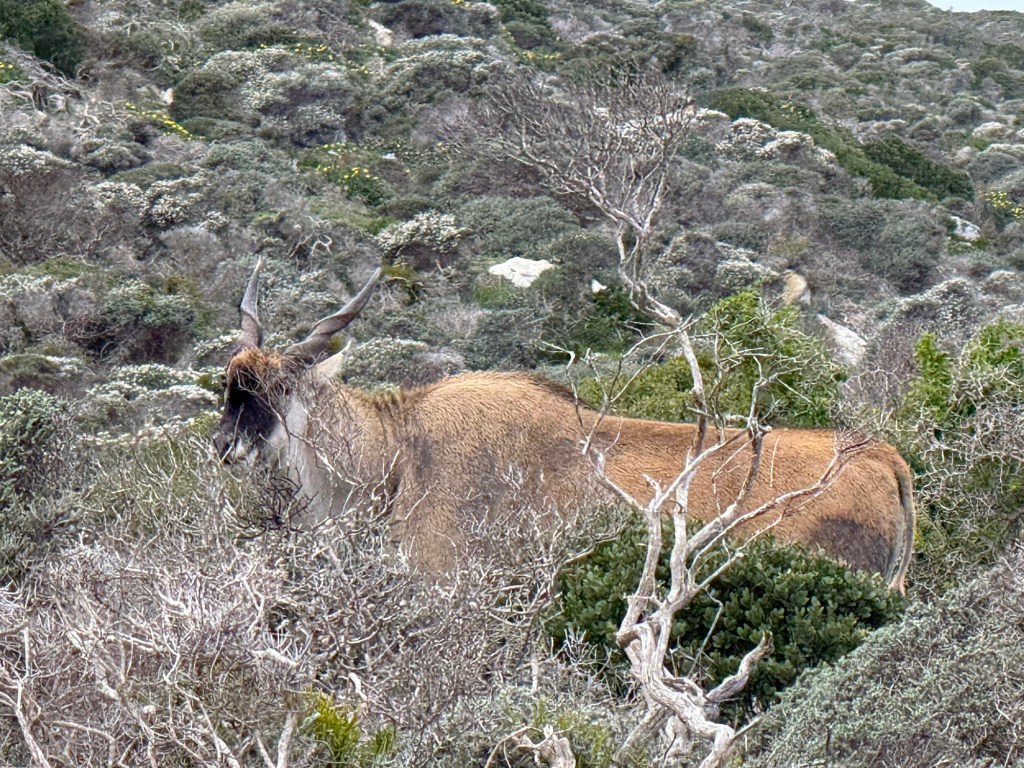
After visiting the penguins we stop for lunch in Simonstown at Saveur restaurant. It turns out to be a great spot, with delicious seafood. The dollar goes a long way here, and we leave full and happy. The weather is finally clearing, and we head to the Cape. Along the way we see several ostriches pecking through the dunes, as well as a large antelope called an eland. The eland is one of the largest antelopes and can weigh up to 2000 lbs.

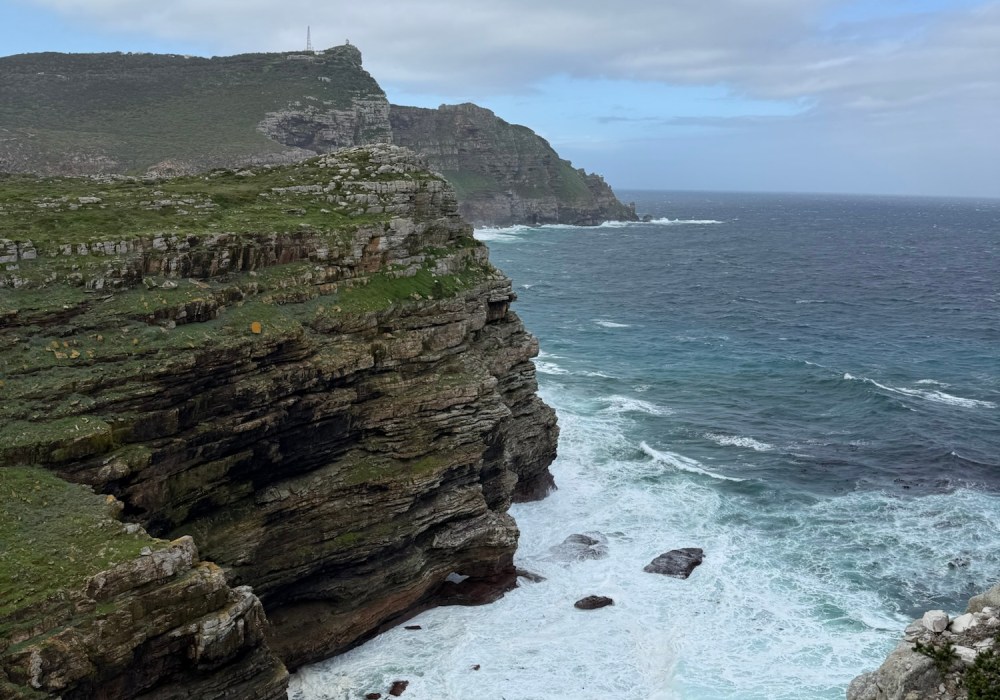
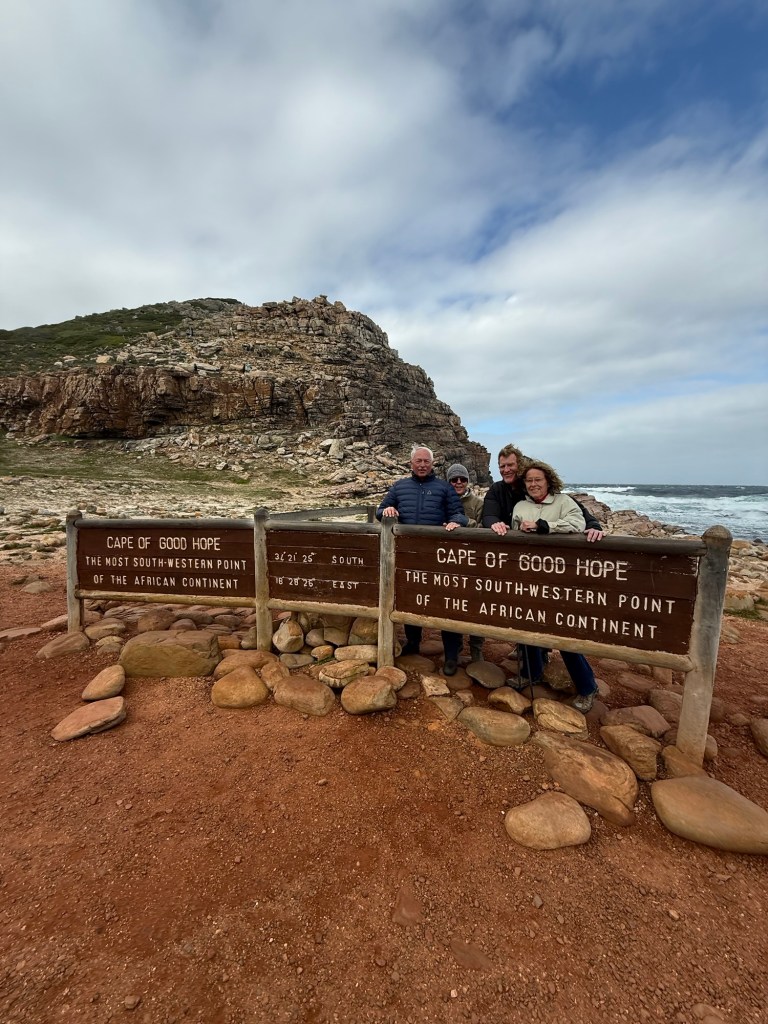
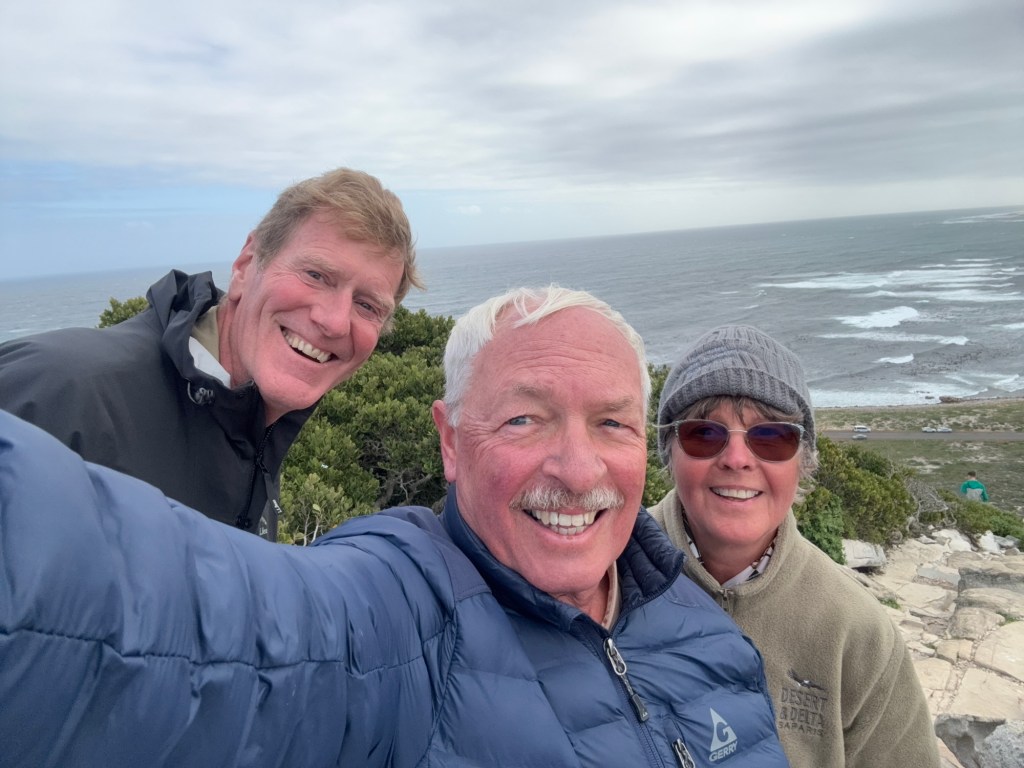
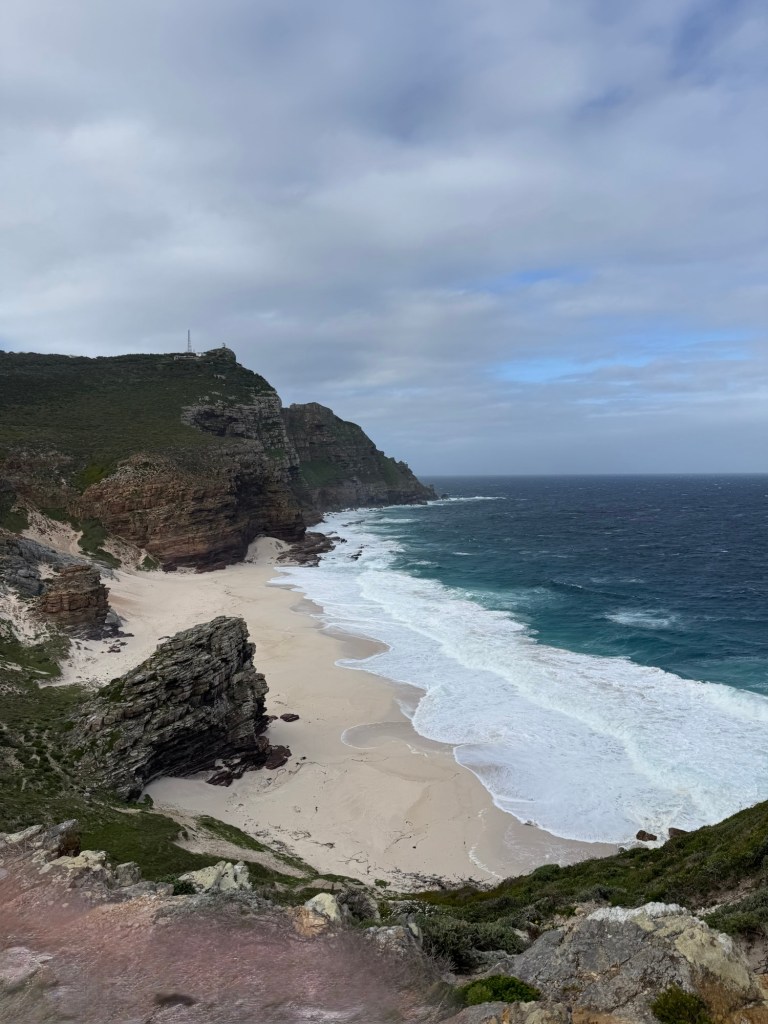
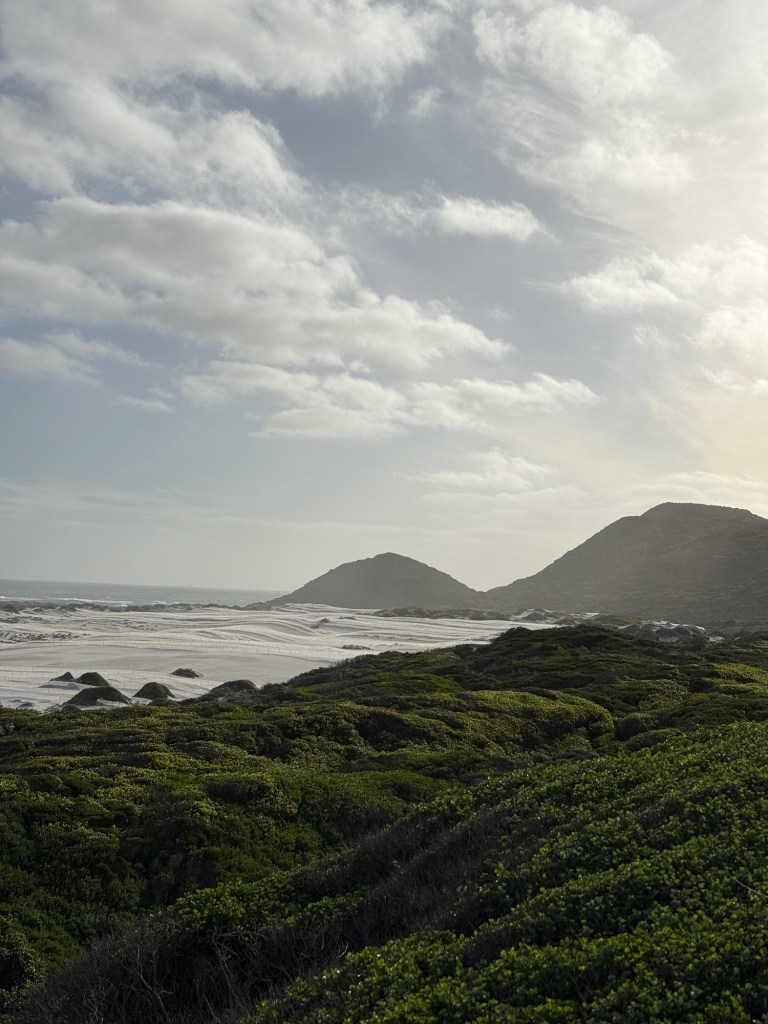
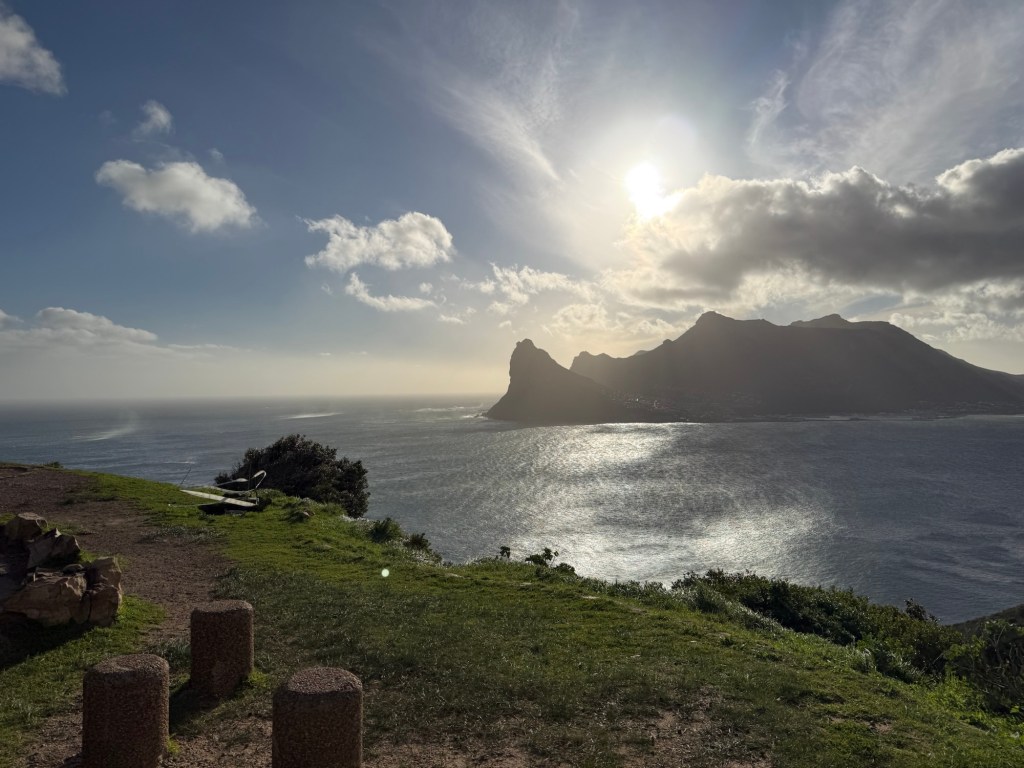
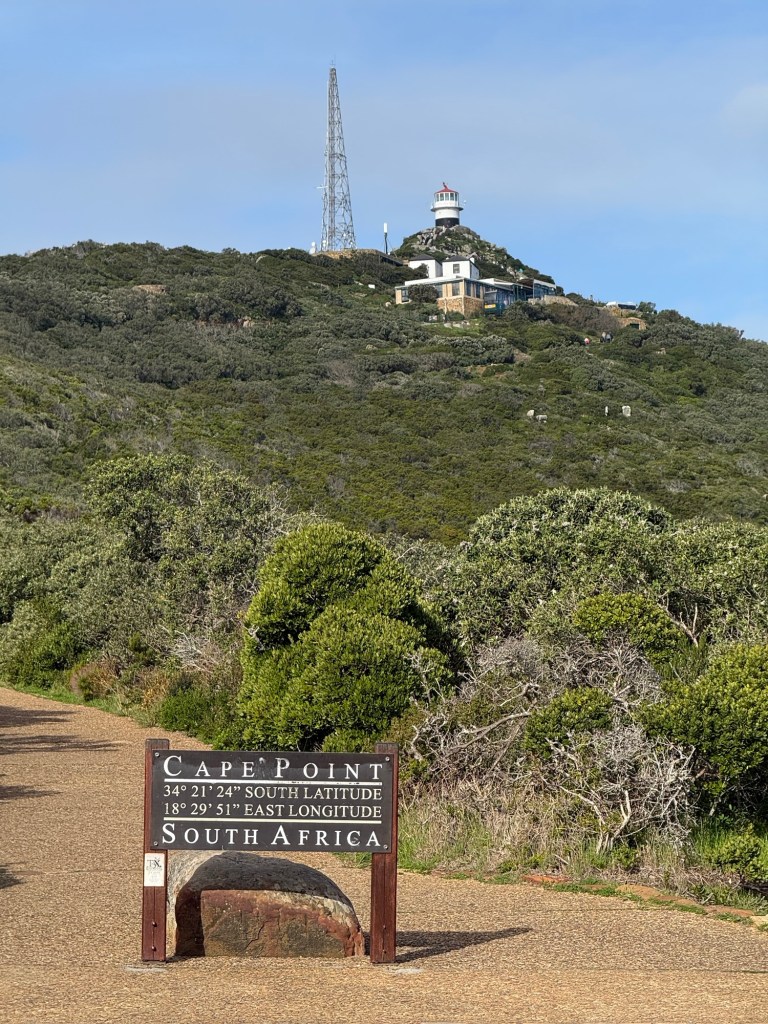
There’s a hiking trail along the coast, and we set off in the driving wind. In some of the most exposed places we’re almost blown off the trail. The views are spectacular, even with the wind. We pass families with small children and I worry they’ll be blown away.

The warm waters of the Indian Ocean coming from the East mix with the cooler waters of the Atlantic just past the Cape. There are sub-surface rocks extending far offshore, making this a treacherous area for ships, and there have been many maritime disasters off the Cape.

After our hike we resume our drive up the west coast of the Cape. They call this area the Deep South, and I have visions of rebel flags and sweet tea, but the towns in this area are some of the priciest in all of South Africa. Incredible beach homes hug the hills, with sunset views over the Atlantic Ocean. we stop for photos, then head back to town. We have a couple of days on our own in Capetown and tomorrow we’re taking a cooking class.

A Hike on Table Mountain

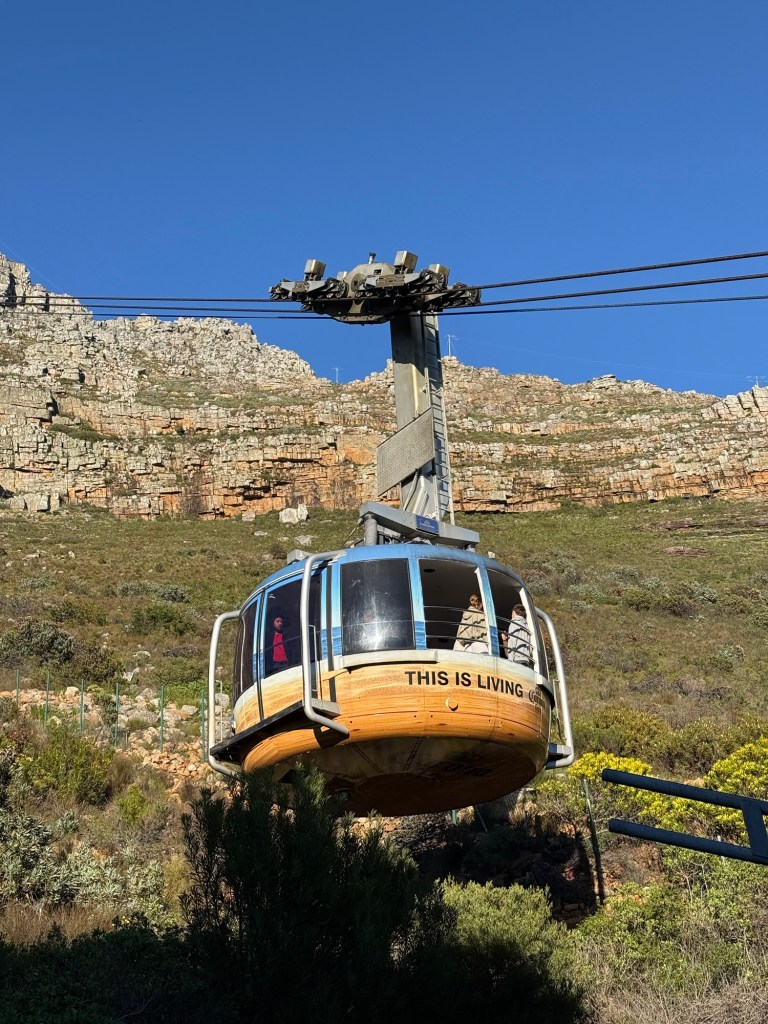
It’s a beautiful Sunday morning, and we’re going to hike Table Mountain. We’re doing it the easy way. There’s a tram to the top, and we’re taking it, as are many others. This is the last day the tram will be open before a two week maintenance shutdown. Kyle picks us up at 9:00 and we get to the tram station in about twenty minutes. We have fast track tickets, so skip the queue.

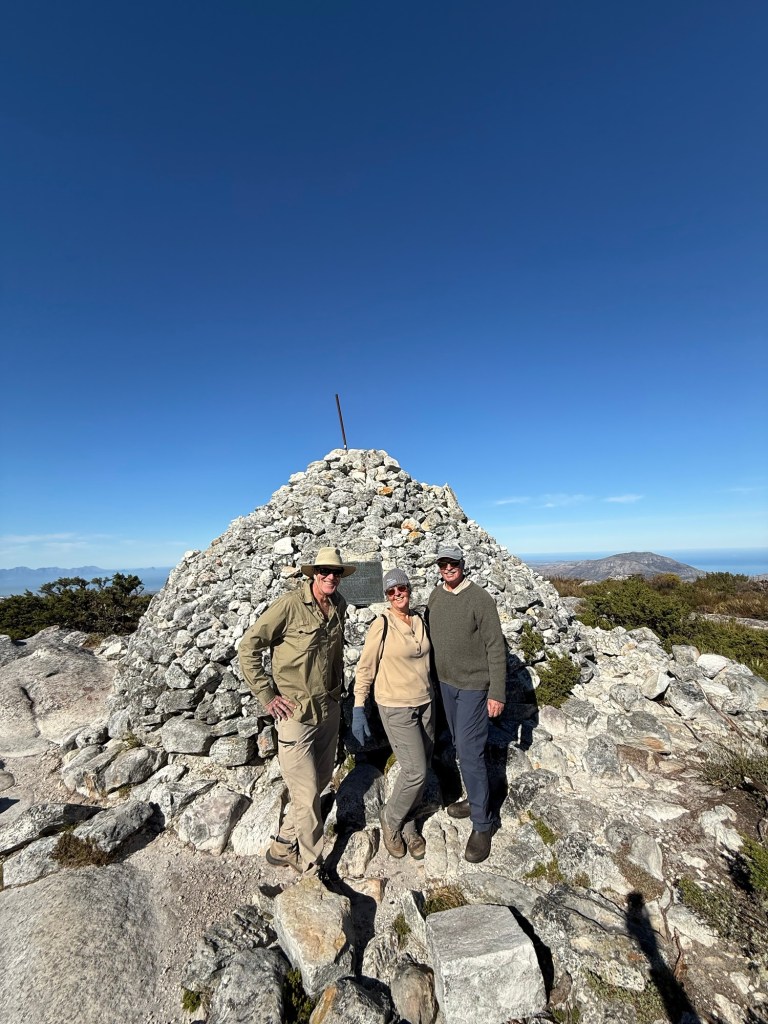
The tram holds about sixty passengers, and it rotates as you ascend, giving everyone a chance to enjoy the view. At the top we disembark and set off on our hike. Our objective is the Maclear Beacon, a fifteen foot high pile of rocks built in 1844 to help Capetown’s Royal Astronomer Thomas Maclear in calculating the circumference of the earth.

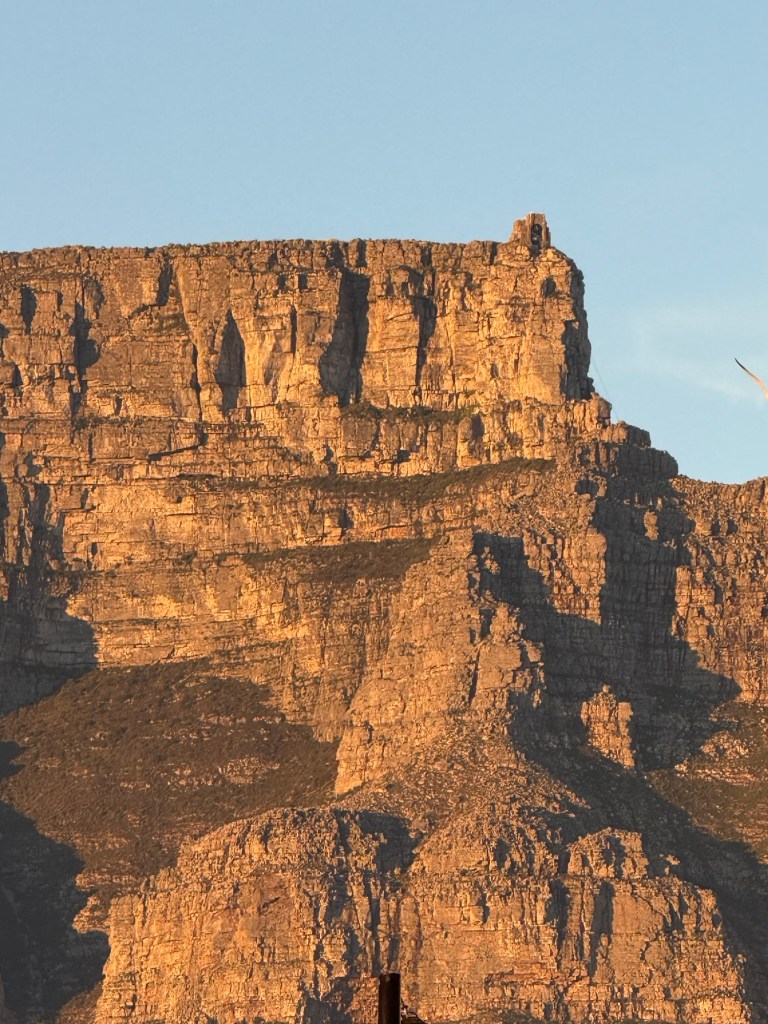
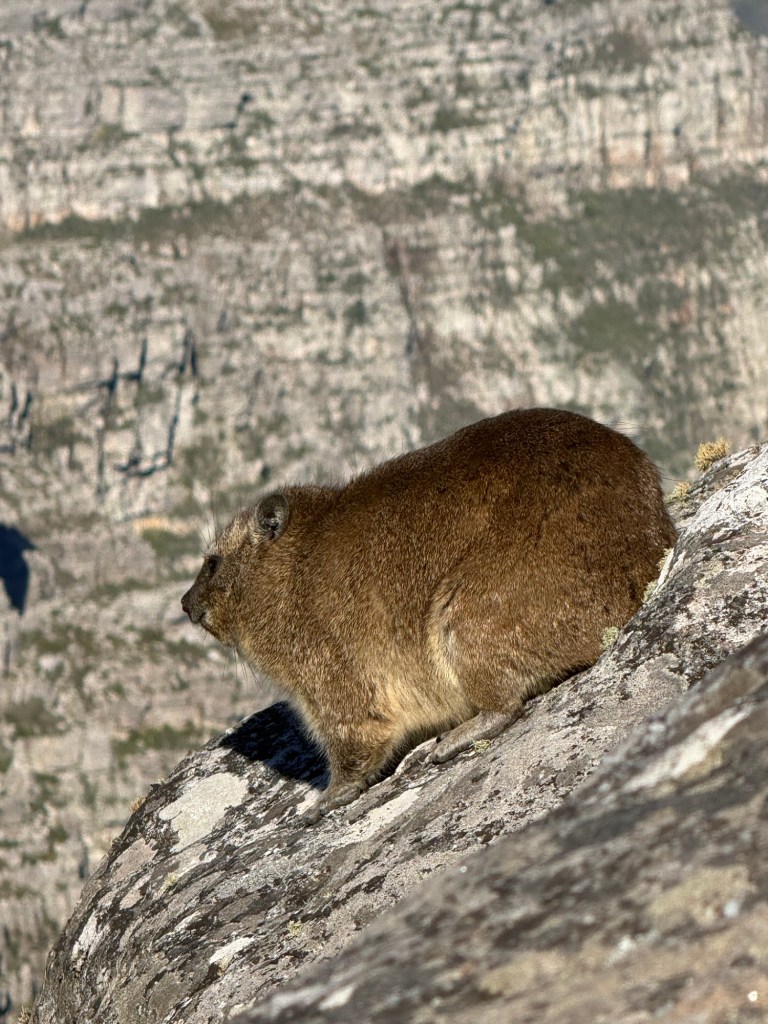
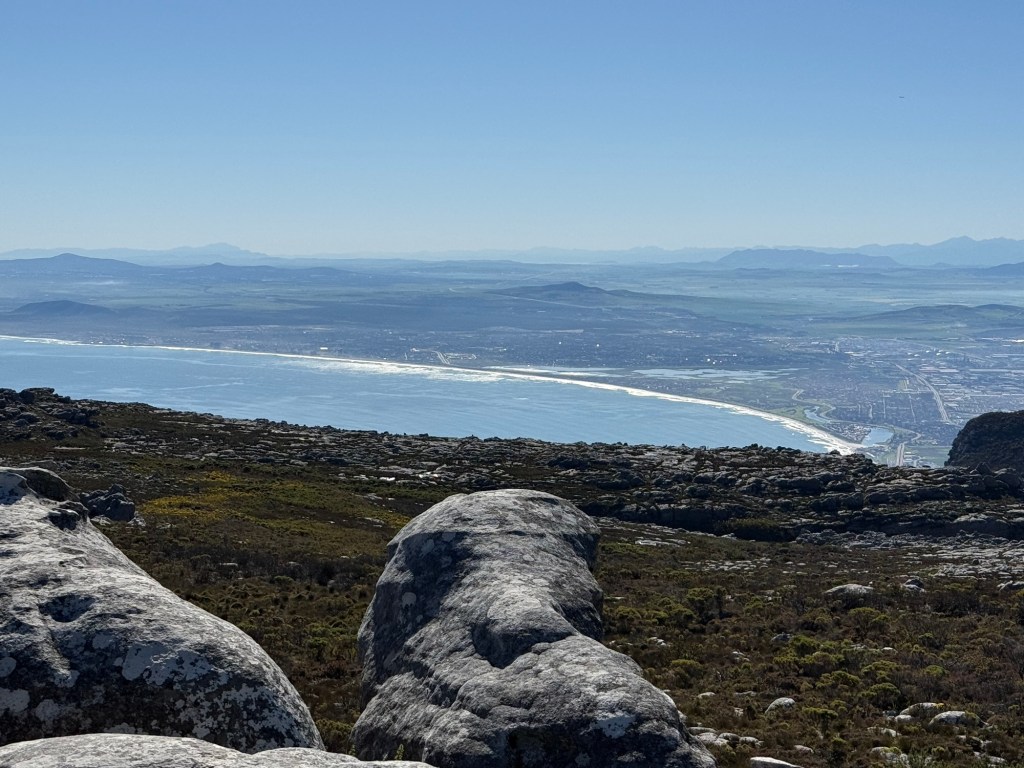
The view from the top of the mountain is spectacular, with all of Cape Town spreading out below us. The beacon is a two mile hike from the tram station. We spot a football sized mammal sitting on a rock just off the trail. This is a Dassie, or Rock Hyrix, which Kyle tells us is the closest living relative of the elephant. I really can’t see any resemblance.

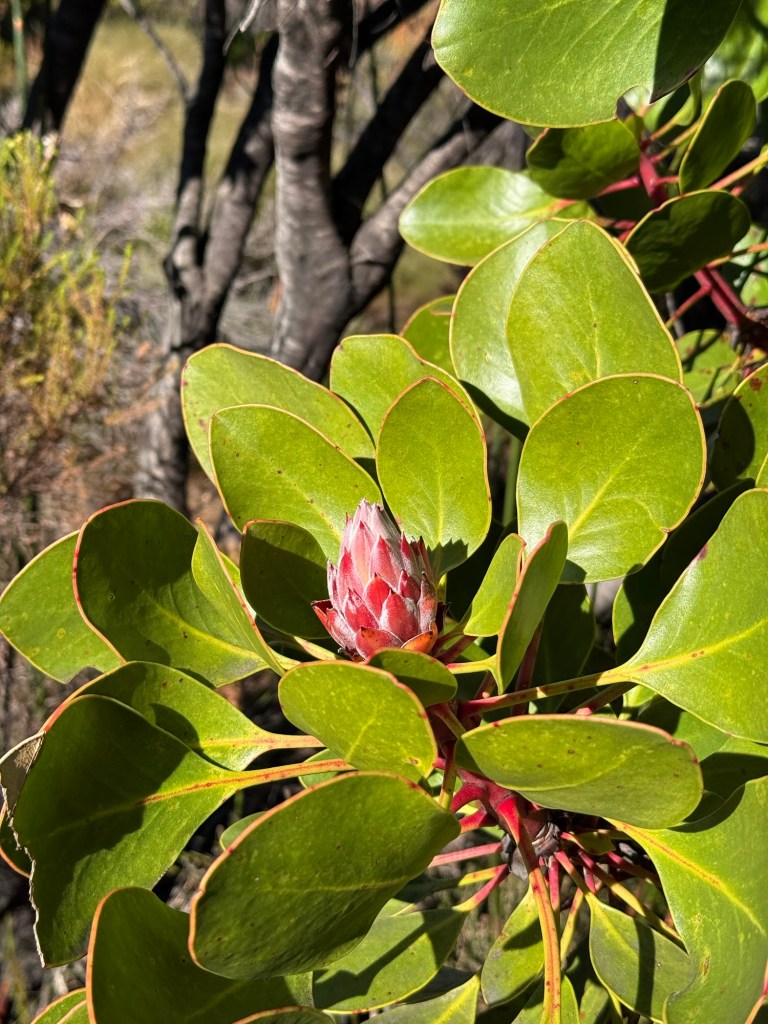
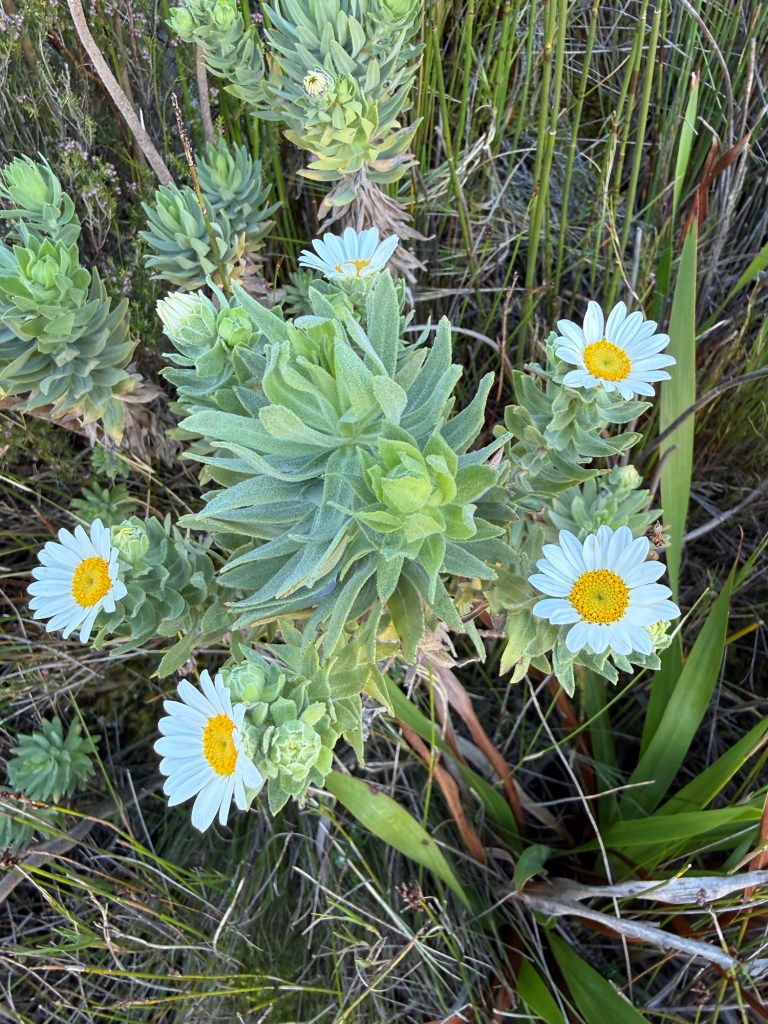
The ecosystem of the mountain is unique, with over two thousand species found nowhere else. Most are moisture loving plants, and the orographic clouds created as warm moist air meets the cooler air on the mountain often create a “tablecloth” cloud that sits atop the mountain. Protea species are an ancient form with leathery leaves and beautiful flowers. The King Protea is South Africa’s national flower.

As we hike down the trail we pass marshy areas with reeds and hear the chirping of Cape Peninsula moss frogs. There are several species of venomous snakes on the mountain, including the Cape cobra and the Boomslang, but it’s winter here and the snakes are in hiding.

A last scramble up a rocky slope and we can see the Maclear Beacon; a pile of rocks with a bronze plaque affixed to one side. This is the highest point on the mountain. And visible from below.

After a short break to enjoy the view, we head back toward the tram. There were few people at the beacon, but numbers increase as we approach the tram. Some hikers have taken one of several trails from the bottom- a serious trek.

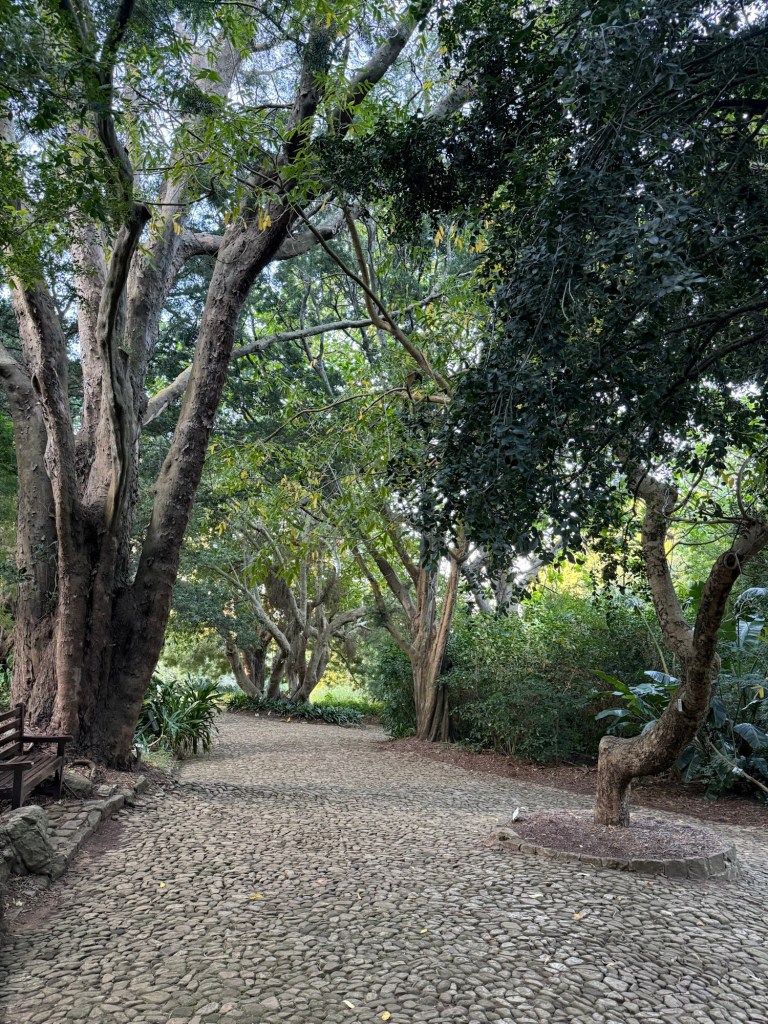
We stop for lunch at the Old Biscuit Factory, and then we’re off to the Kirstenbosch National Botanical Gardens for a tour. We wander the trails inspecting the gardens, many of the flowers in bloom even in the winter. The highlight of the gardens is the Boomslang trail, a steel and timber walkway elevated above the tree canopy to allow close up views of the many trees in the gardens.

The sun is setting by 6 PM, so we wind our way out toward the car park. A very enjoyable day in Capetown. We eat pizza from a shop around the corner for dinner, and it’s pretty good. Tomorrow morning we’re going to see the Cape of Good Hope and some African penguins.