Driving to Chile

After our last night in El Calafate we set off for Puerto Natales, Chile and Parque Nacional Torres del Paine. Our route out of El Calafate on Argentina route 11 headed directly east and climbed a series of long switchbacks before meeting route 40, the primary north/south route through the country. We were now driving through the Patagonian steppes, with hundreds of kilometers of barren treeless desert around us.

There are no interstate highways or four lane roads in Patagonia. The two lane roads are narrow and with minimal gravel shoulders. There are four foot high wire fences set back about 200 feet from the road, and native guanacos, similar to llamas, often get caught on the fences. We saw numerous skeletal remains during our drives.

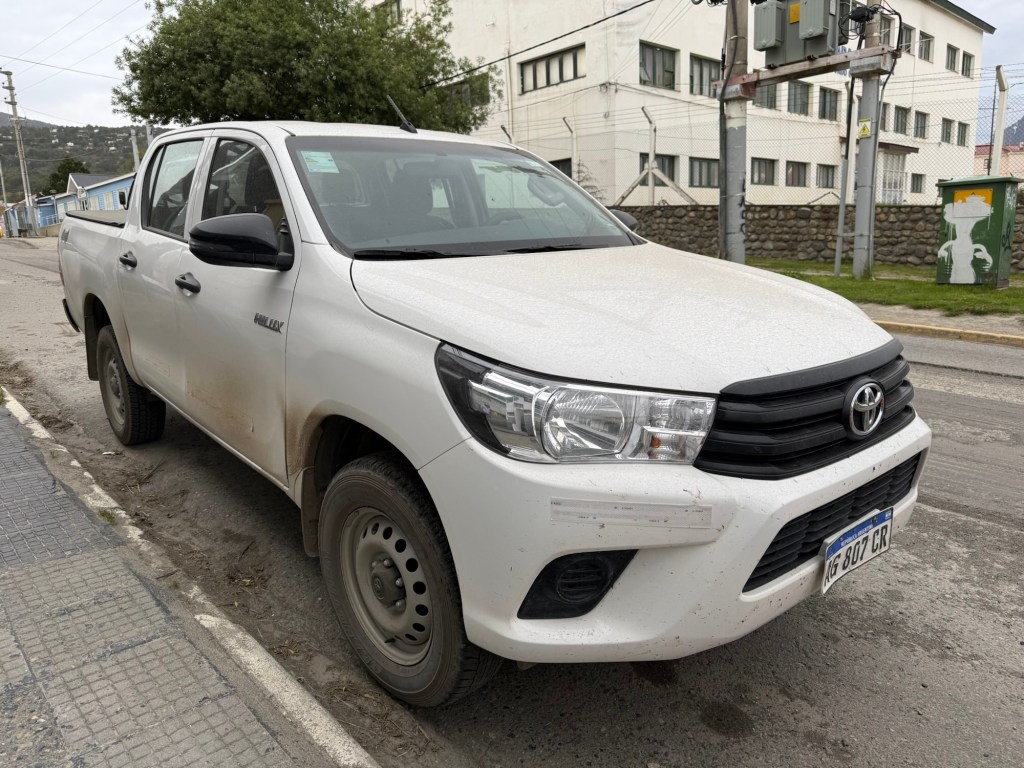
Traffic is light, mostly other tourists, trucks and occasional motorcycles. The wind is ever present and at times the Hilux is forced across the road as we drive. Scattered clouds and intermittent rain follow us across the steppe.

Guanacos

We began the long descent into Chile, and crossed the border near Rio Turbo, Argentina , a grim coal mining town with surly border guards and a forlorn aspect.

In contrast, the Chilean border guards, who we had been told were so strict and severe, were quite pleasant and very helpful. After declaring our bag of trail mix, our passports were stamped and we drove down a road with huge fields of lupines into the green valleys of Chile.

During the short drive into Puerto Natales it was evident that Chile is more prosperous than Argentina, at least in Patagonia. It is greener, there are more shops and restaurants, and more cars. People in both countries are generally pleasant and friendly, although fewer people in Chile speak English. Fortunately for us, Doug is quite fluent in Spanish, and that made a huge difference in getting around town and in ordering food in the restaurants.

Our hotel in Puerto Natales, Aquaterra, is small but clean and comfortable. The water in Chile, as in Argentina, is generally potable. The city sits on the eastern edge of the Queen Adelaide Archipelago and is accessible to the open sea via byzantine channels between the outer islands. Snow capped peaks of the southern Andes are visible in the distance. Seafood is plentiful, and a welcomed change after weeks of Argentine lamb and beef.

The Andes from Puerto Natales

Puerto Natales

Perito Marino Glacier

80 kilometers south of El Calafate the Perito Marino glacier slowly grinds its way down a mountain valley into Lago Argentino. Its face is over 70 meters high and at its thickest point is over 700 meters of solid ice. Icebergs are continually calved off the front and into the milky lake . After paying the entrance fee we drove along the lake and saw the first ethereal blue icebergs floating in the water.

Iceberg in Lago Argentino

We arrived before the crowds and had the extensive walkways nearly to ourselves. The glacier is massive, and we could hear sporadic groans, cracks and occasional crashes of ice into the water. Perito Moreno moves at nearly two meters per day toward the lake, and the noise is continuous

Perito Merino Glacier

Tour boats and kayakers could be seen approaching the glacier, but kept a safe distance away to avoid the calving icebergs. As the tour buses began to arrive, the walkways began to fill with people, and a light rain began to fall, so we grabbed the Hilux and headed back to El Calafate. Tomorrow we’re off to Chile.

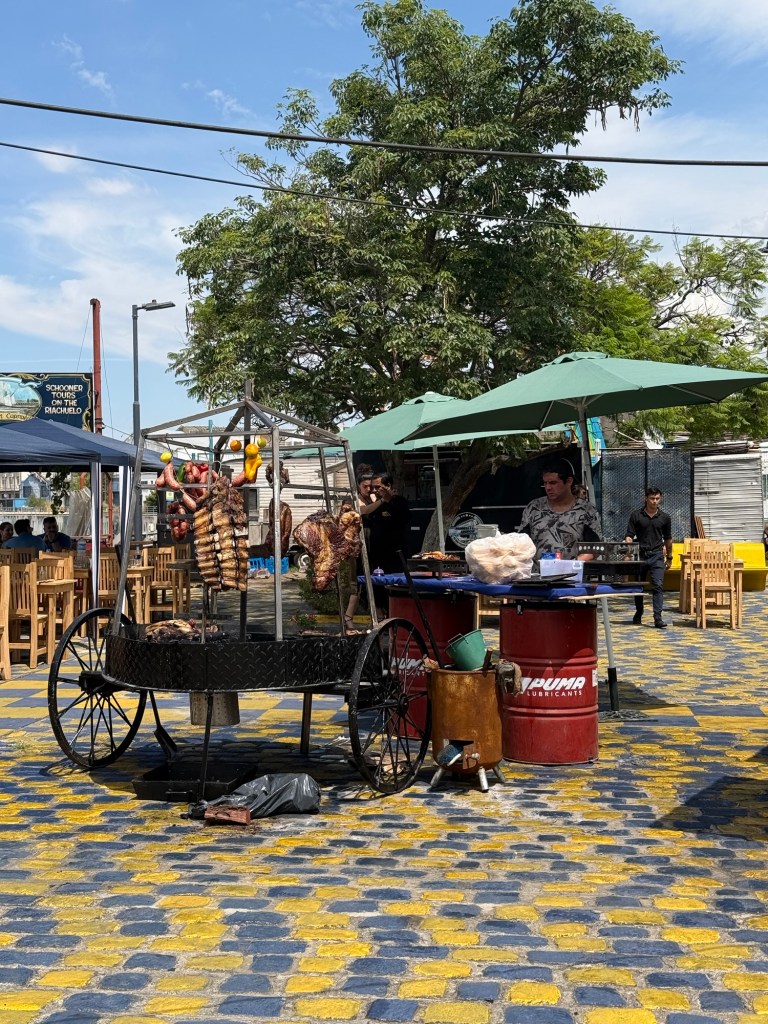
Just Another Argentine steak

Laguna Capri

Mount Fitzroy is one of the iconic landmarks of Patagonia. The distinctive peak and the surrounding smaller mountains create the jagged trademark of the region. At the northern end of El Chalten the trailhead for Laguna Capri is one of the busiest places in town. Everyone here is either hiking, trekking or climbing . After two days of rain the ground is muddy, but the sun is shining and the parking lot is packed with cars and trucks. There are two trails that draw most of the visitors, a thirteen mile hike to Mt. Fitzroy itself, or a six mile hike to Laguna Capri.

The Laguna Capri trail starts uphill through wind tortured trees and low brush on a series of switchbacks, then through a notch in the mountains to a small blue lake .

We started with sunny skies, but as the hike progressed the clouds and wind gradually picked up, and a misty rain hung in the air. The trail was in good shape, and quite wide except a few spots where rocks or trees funneled everyone into a single file.

We got our first view of Fitzroy as we emerged from the trees near the top of the climb, a canine tooth of rock swirled with mist

Mt. Fitzroy

We walked to the lake, where the full beauty of the mountains was on display. A large bird that looked like an eagle landed on a nearby tree and began begging scraps from the hikers. Someone tossed a crust of bread but he looked at it dismissively. This was a Crested Caracara, which seems to have found an ecological niche somewhere between a regal eagle and a begging seagull.

Crested Caracara

Laguna Capri

The hike back to the parking lot was uneventful and we headed back to the hotel for a nice nap before dinner. Tomorrow we’re going to see a glacier up close.

A Hike to Glaciar Huemul

Lago del Desierto is a glacial lake formed by the runoff from Glaciar Huemel. The hike to view the glacier is not long, only about three miles, but first you have to drive twenty miles of bad dirt road. The Hilux is up to the task and we find the last spot in the small parking lot. Despite its remoteness this is a popular hike.

After paying our 15000 peso entry fee (about ten US dollars) we start up the trail. The recent rain has made things muddy, and the trail is covered in tree roots and rocks, so the footing is tricky. As we climb higher there are ropes to help us up the treacherous path until we reach the top,

Glaciar Huemul narrows to a small tongue, and ice melt descends into a milky blue lagoon, before draining into the larger Lago Desierto. People picnic at the top despite the increasing rain, before heading back down the narrow trail .

Back at the trailhead there is a small lodge selling food and drinks. A hot chocolate tastes great after the cold and muddy hike. Tomorrow is our last day in El Chalten, and we have a hike to Laguna Capri on the agenda, which is supposed to have great views of Mt. Fitzroy.

Hiking in Los Glaciares

We woke our first morning in El Chalten to cloudy skies, drizzle and 50 MPH winds howling around us. The receptionist at the hotel told us she had to walk the five blocks from her house mostly backwards and bent over to avoid blowing sand and gravel and to make headway in the wind. She said this was fairly typical at this time of year .

After our hotel breakfast we decided on a short hike that began just across the Las Vueltas River from the hotel. The route was mostly protected from the wind and rain except for the start and the mid point of the out and back trail. As we crossed the river wind nearly blew us off the bridge, wailing down the valley at gale force. Melissa turned back.

Once we reached the trees the wind was more manageable, and with a light drizzle coming down we set off on the Canon Rio de Los Vueltas trail, which promised beautiful views of the town of El Chalten and the surrounding mountains. As we ascended the mountain the footing was treacherous, with fine gravel and dust that would not hold the trail. Hiking poles made the way easier. The hills are covered with low growing shrubs with yellow flowers and thorny leaves called Neneo bushes. In protected areas there are conifers with wind tortured trunks.

As we reached the peak of the trail we emerged from the sheltering trees and the wind blew us sideways. Other hikers had taken refuge behind a rock outcropping, but there was no room for us. A weather station with solar panels was the best option for us, and we huddled behind it. There were no views.

The nearby mountains were shrouded in clouds and mist. The higher, snow covered peaks were ghosts. We could just see the village below.

After a few minutes at the top, we turned and headed down the trail as the rain intensified. Footing remained treacherous and the steeper areas were difficult even with poles. One of our group fell, but without injury. We reached the river and crossed the bridge to our hotel. The wind had subsided, now maybe 30 MPH. The rain was still increasing.

We gratefully reached the hotel, wet muddy and cold. But we had done our first hike in Patagonia.

Off to Patagonia

After our stay in Mendoza, we’re off to Patagonia for two weeks. From Buenos Aires it’s about 1600 kilometers to El Calafate. The flight is about 3hours, or you could take a bus with lie flat seats and get there in 42 hours. Flying seemed like the better option.

After an overnight stay in El Calafate we picked up our Toyota Hilux truck and headed north to the town of El Chalten which is the gateway to Parque Nacional Los Glaciares with numerous hiking trails for views of the jagged peaks of Mt. Fitzroy and Cirro Torre. If you’ve ever seen the Patagonia clothing logo, these are the mountains they represent.

Our drive from El Calafate was beautiful, along the shores of milky blue Lago Argentina and Lago Viedma, both filled with icy and sediment rich glacial runoff. Each turn in the road brought another spectacular view.

After checking in to our hotel, we walked down the street to the main drag, with numerous restaurants catering to the hikers, treckers and climbers who fill the town. We could see the mountains in the background, but ominous clouds were rapidly filling the sky, and the wind blew ever stronger. Weather reports for the next three days were not good. After a mediocre dinner in town we walked back and headed to our beds

Mendoza

Wine grapes

Mendoza is Argentina’s most important wine producing area, comparable to the Napa Valley in California. It is an arid region to the east of the Andes Mountains, first inhabited by the native Huarpes people, who created an extensive network of irrigation canals for agricultural production. The Inca empire conquered the Huarpes and expanded the irrigation system, and when the Spanish supplanted the Inca they further developed the irrigation canals, which they called acequias.

The acechias carry water from impoundments in the Andes foothills out into the dry flat plains to the east, where 300 days of sunshine yearly creates ideal conditions for all sorts of crops. In addition to grapes, Mendoza produces olives for oil and eating, and fruits and nuts.

After our fishing on the Limay River, we flew back to Buenos Aires for a night and then flew out the next day for Mendoza, where we had booked an AirBnB called Casona Medrano. Our host Marta shared the history of the beautiful house with us ; it was built by her husband 50 years ago, and he used many of the same materials and techniques to build the house that he used in his business building wineries in the region, including vaulted brick ceilings and thick masonry walls. In the yard is a pool, a large wood fired oven and a grill.

The pool enticed us on our arrival in 100 degree F heat, but the next two days were uncharacteristically cool and wet, so we didn’t get to use it until our last day in Mendoza. Instead we visited wineries, rode horses and toured the city of Mendoza.

Casona Medrano
The gauchos
Antigal Winery

We had a wonderful lunch at Antigal winery that included a tasting of four different wines. Our favorites were the Malbec and the Chardonnay, and the owner of the Antigal restaurant spent quite a bit of time with us explaining both the menu and the wine.

The horseback ride into the foothills of the Andes was incredible, and taught me one thing that I will always remember – I am not a horseman. Sore does not begin to describe the pain I experienced after riding for three hours. Apparently there are some muscles in our bodies that we did not learn in medical school.

Smiling through the pain

After the riding was over we finally got to jump in the pool at Casona Medrano. It felt great ! Tomorrow we are off to El Calafate to begin our drive through Patagonia.

Fogon Asado and an evening stroll in BA

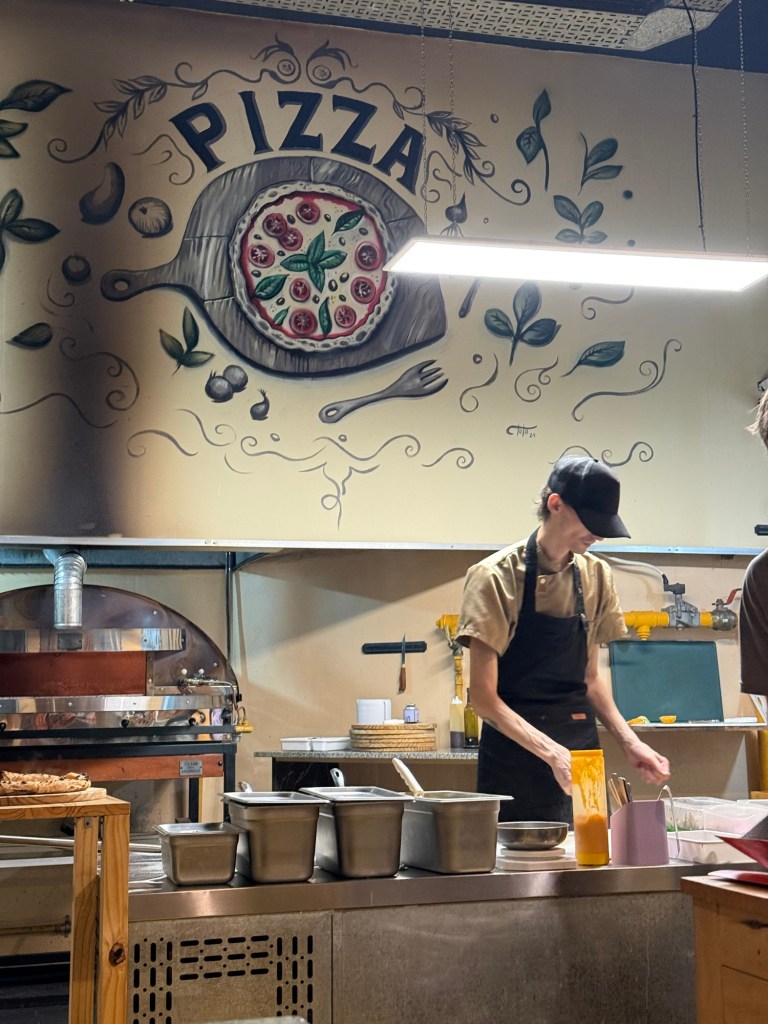
Our two hour flight from San Martin de Los Andes back to Buenos Aires was uneventful. We checked in to the Magnolia Hotel and had dinner reservations at Fogon, a trendy single seating restaurant that specializes in meat cooked over a wood fire. They serve a nine course dinner featuring smoked meat, broiled meat, roasted meat, sweet meat and more meat. It was delicious and the meal took over three hours including dessert (not meat)

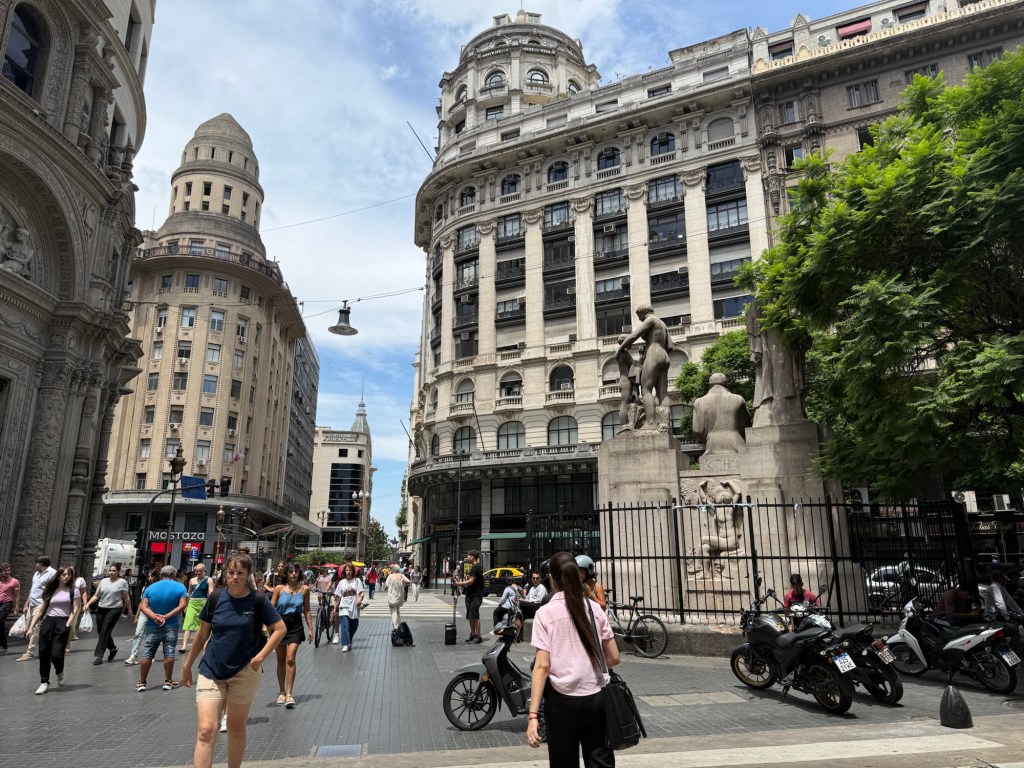
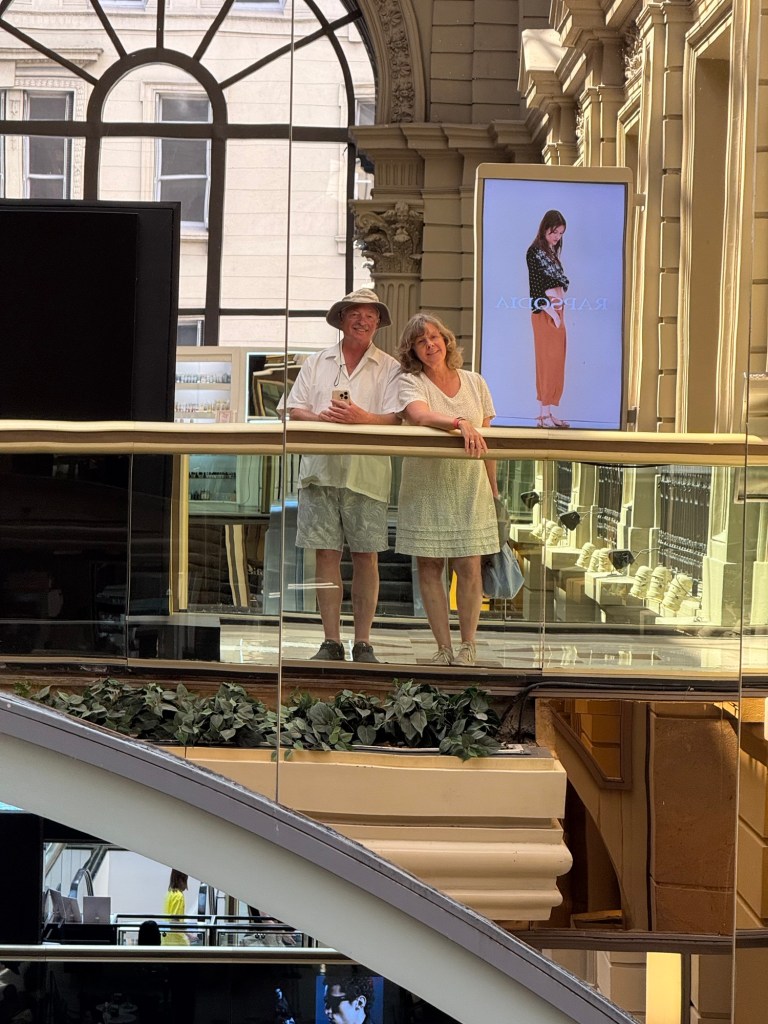
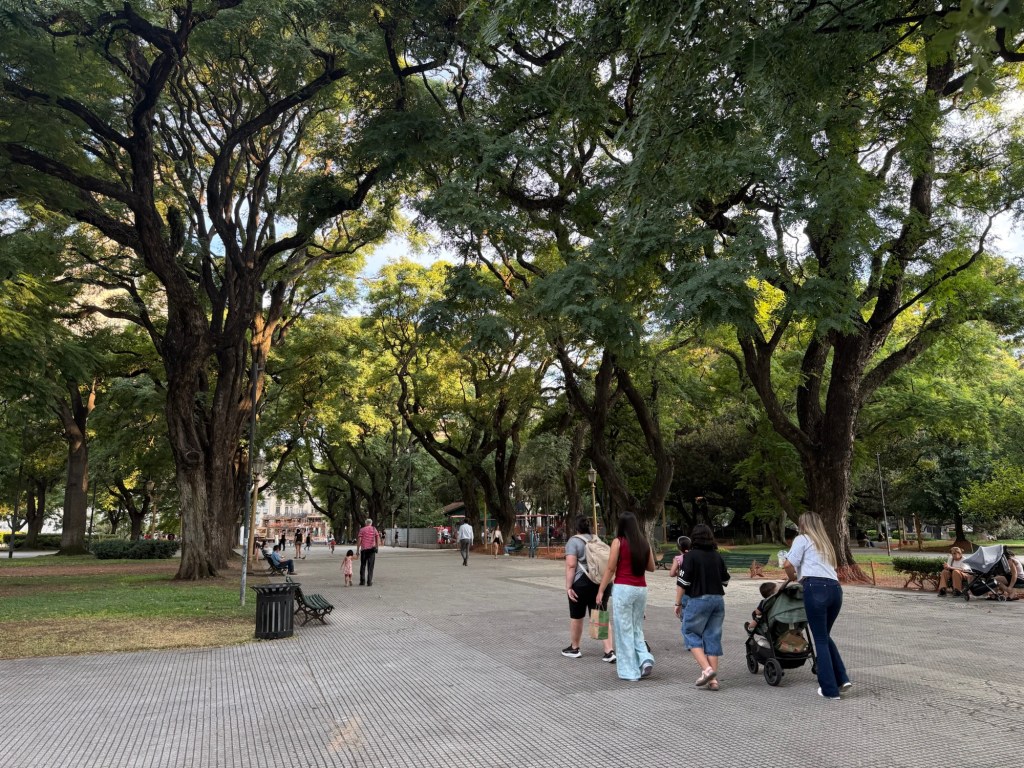
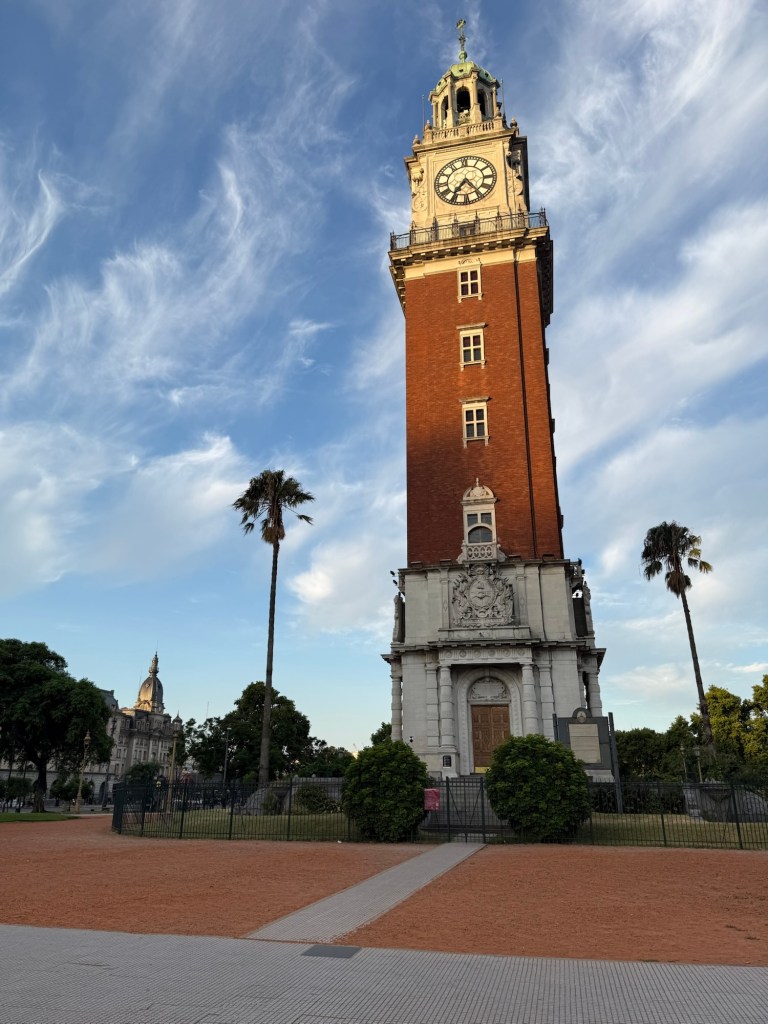
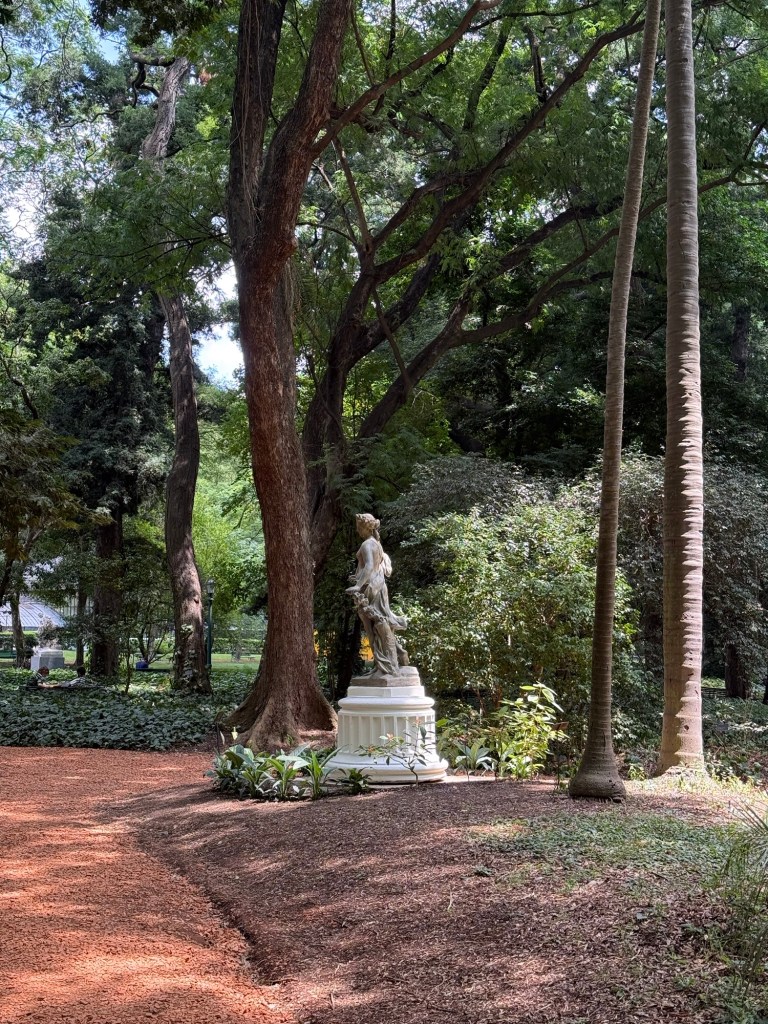
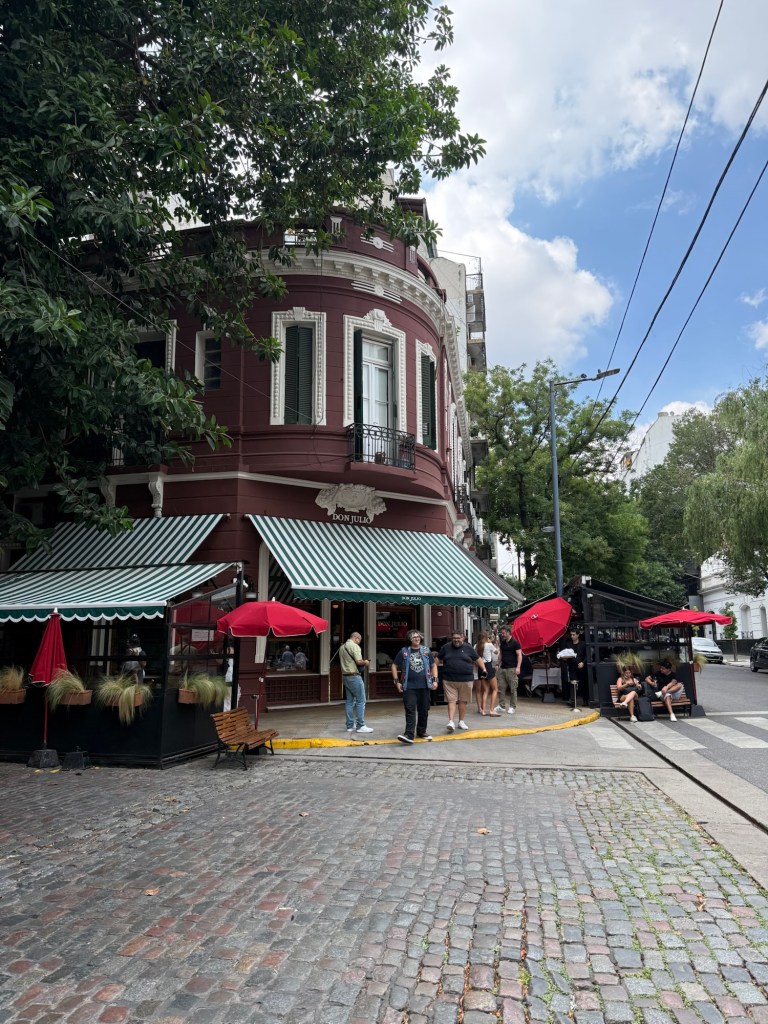
After dinner the walk back to Magnolia was welcomed to help digest all that meat. The air was warm and humid but felt good. Buenos Aires has been called the Paris of South America, and it’s easy to see the similarities. Plain trees line the streets with their distinctive peeling bark and large leaves. Statues dot the landscape, and numerous parks are full of people enjoying the green space and sunshine. Outdoor cafes are everywhere, with diners eating and drinking as the heat of the day slowly fades with the light. If they were all speaking French you would be in Paris.

Breakfast at the hotel and a ride to Aeroparque in the morning and we’re off to Mendoza, a short flight from Buenos Aires for the next leg of the journey .

Fly Fishing in Patagonia

San Martin de Los Andes may have the smallest airport I have ever flown into. There is one gate. The town itself is popular as a tourist destination because of a nearby ski resort and because of Lago Lacar, and has numerous restaurants and shops. After our too short sleep at Hotel Viejo Esquiador, we were met by our guides from the Limay River Ranch and drove the two and a half hours to the ranch.

Ron Sorenson has been our fishing guide in Montana for over twenty five years. He married Vanessa, an Argentine woman from San Martin de Los Andes and dreamed of creating a fishing lodge near her home town. Five years ago his dream came true with the opening of the Limay River Ranch, which has exclusive fishing access to a large and productive stretch of the Limay River below the Pichi Picun Leufu hydroelectric dam.

Limay River Ranch

The camp is entirely off grid, with solar power and battery storage and consists of six guest cabins and a main dining hall. Each morning of our stay we set out after breakfast with our guide and drift boat to fish a section of the river. The big prize is brown trout that can exceed 28 inches long and fight like mad. We didn’t catch any of these, but got plenty of rainbow trout that were 18 to 20 inches long, leapt from the water and left your arm sore from the fight. Everything is catch and release.

We would stop mid afternoon for a shore lunch, and then fish into the evening. With the long summer days it was still daylight when we got back to the ranch for cocktails and dinner, and the food was excellent. One night featured a barbecue of a whole lamb, with good Argentine Malbec and Chardonnay to complement the menu.

Lamb al asador

Feliz Ano Nuevo

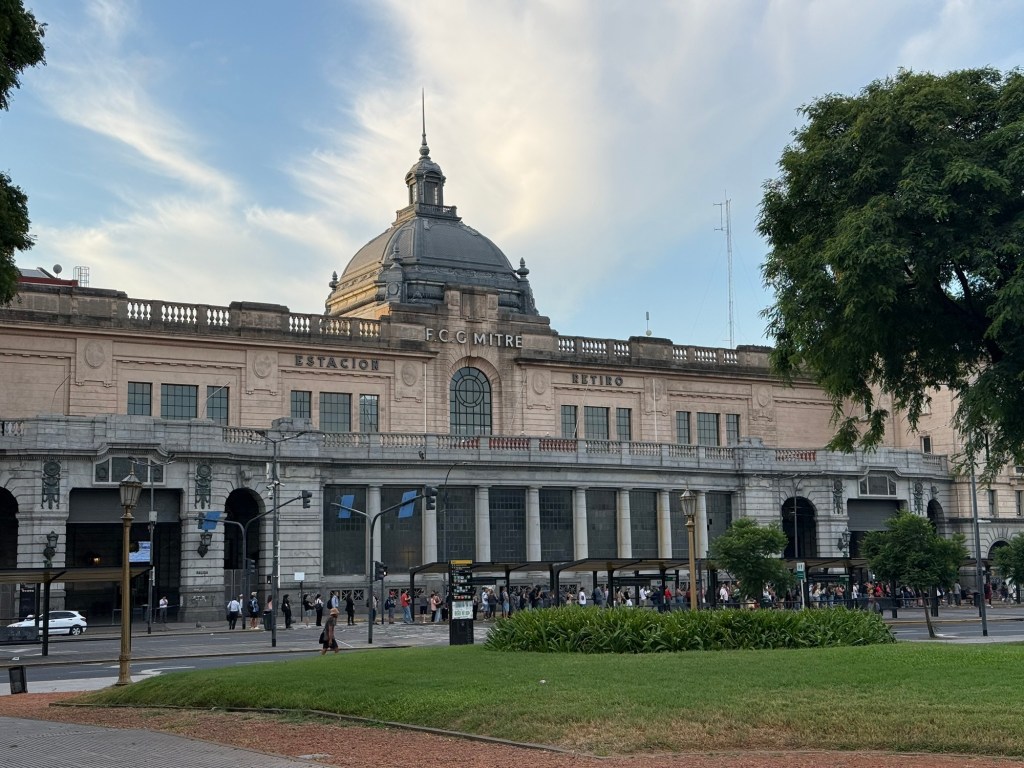
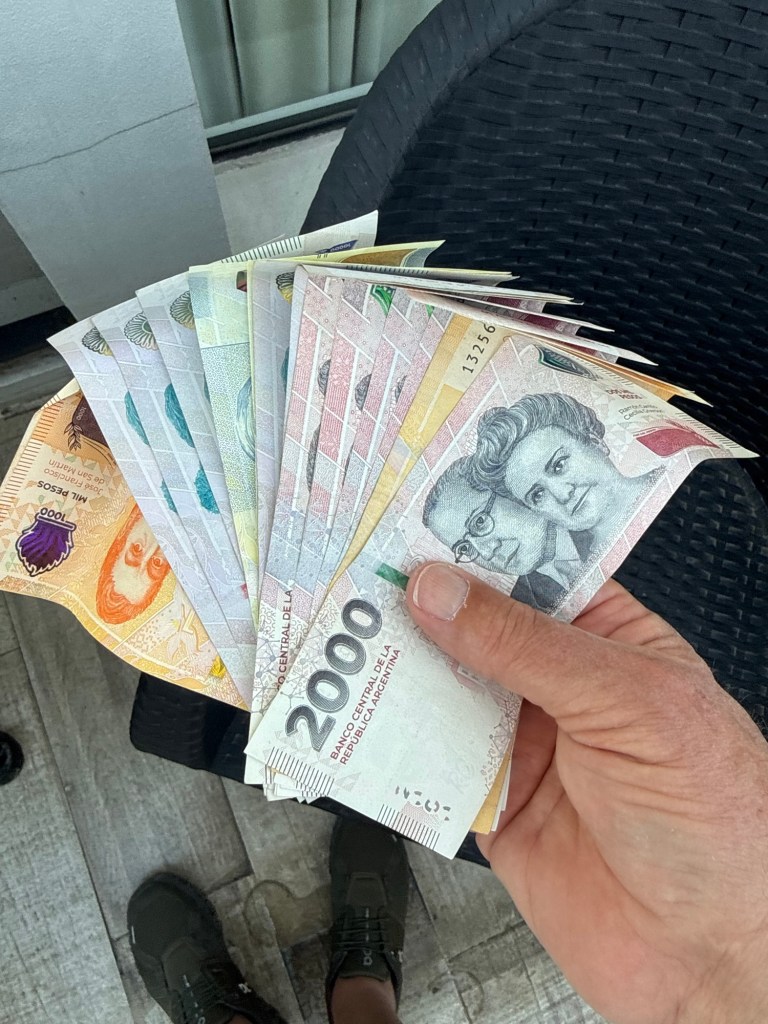
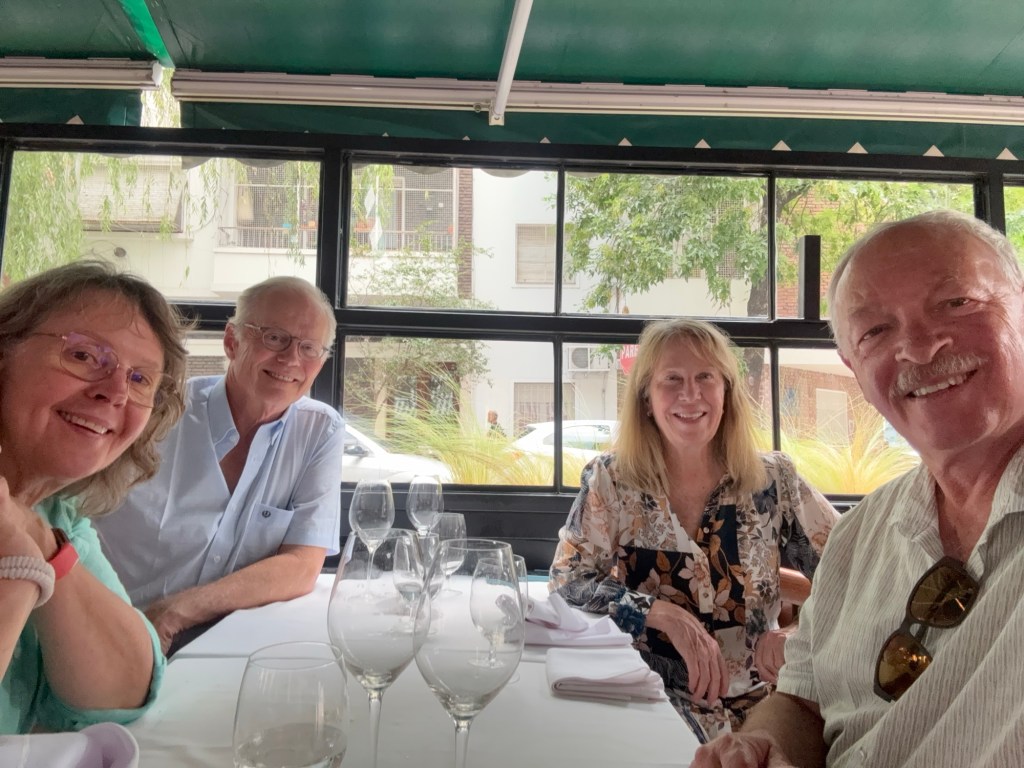
With our truncated stay in Buenos Aires due to our travel delays, we were unable to do any of our scheduled tours. We got to our hotel, caught up with our friends Doug and Kip, showered, ate and went to bed. The dinner at the hotel was a multi course New Year’s Eve special, complete with wine and champagne and cost an astounding 150000.00 pesos per person (about one hundred dollars each).

Portenos, as residents of Buenos Aires are called, have a low key approach to New Year’s Eve . They tend to eat dinner very late, and a celebratory dinner is usually it for the evening. We didn’t see or hear any fireworks or other signs of celebration, so we fit right in.

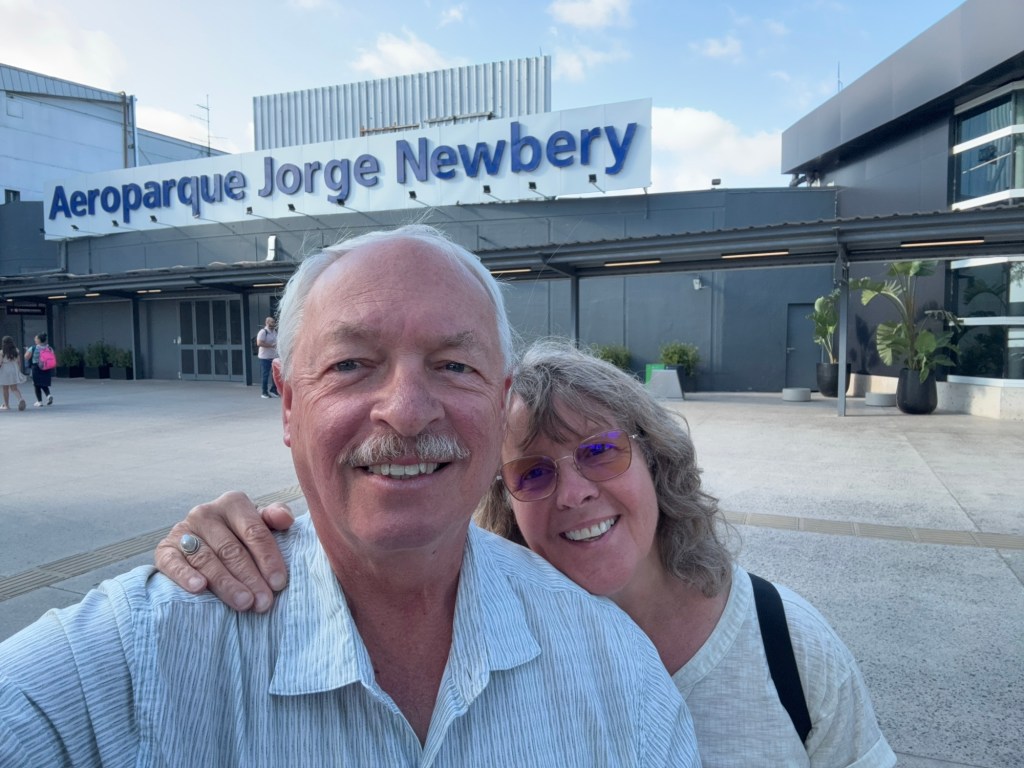
After a good night’s sleep we had breakfast at the hotel and then headed for Aeroparque Jorge Newberry for our flight to San Martin de los Andes. We tried to use the kiosk to get our boarding passes and seat assignments and were informed that the flight was overbooked and there were no available seats. That’s when the PTSD set in.

The line to the check in desks stretched through the airport, but moved fairly quickly. We got to the desk, got the last four seats on the plane and breathed a sigh of relief. Security, passport verification, boarding passes, x-Ray machine and all the little indignities we put up with to fly meant nothing. We had seats on the plane!

Our flight to San Martin was about two hours, and most of the flight was over flat farms and ranch land that looks very similar to the great plains of the United States: fields laid out in a grid pattern, with occasional irrigated crop circles, ponds and small lakes. Some bodies of water were green with algae, and others were white either along the shore or in their entirety, probably due to pollution.

When we thought we might not get seats on the plane we checked the possibility of driving to San Martin de Los Andes-18 hours by car! That’s when the size of Argentina became real; with primarily a north/south orientation, it’s over two thousand miles from Ushuaia in the far south to Buenos Aires. There is no reliable train system and the roads are not very good. Flying is the only way to go, and the do have a robust domestic flight network including Aerolineas Argentinas and a couple of budget airlines

We checked in to Hotel Viejo Esquiador(the hotel of the old skier) and walked to Lago Lacar, a beautiful glacial lake at the west end of town.

Lago Lacar

We had a nice dinner at Abasto restaurant next to the hotel and then went to bed. Argentinians keep late hours so we didn’t finish dinner until after 11:30.