Thoughts on France

Our final day in France we spent at La Condamine, packing, relaxing, finishing as much of our food as we could and all of our remaining wine; tough job, that. In the morning it’s up early and off for Italy. We’ll have multiple stops tomorrow as we pass through Monaco, Change trains at Ventimglia, Genoa, Pisa, Florence, and finally arrive in Siena about 5:30 in the afternoon.
The majority of the trip is along the Italian coast through the Cinque Terre. I visited there on my last trip to Italy, and the views are spectacular, so it should be a great ride.
The final stop at Siena will be our home for the next four days, with a side trip to Florence on Sunday- we’ve scheduled a guided tour called ‘Florence in a Day’. I’m already having flashbacks to the Paris museum death march.
So here are some observations on our time in France, and some thoughts on the French way of life. The driving we’ve already discussed in hair raising detail, and I’ll dwell on it no further, except to mention that as we backed into the parking spot at the Nice train station to return the car, touching bumper to bumper with adjacent cars without an inch to spare, our vehicle and ourselves were intact. It was one of the happiest moments of our trip.
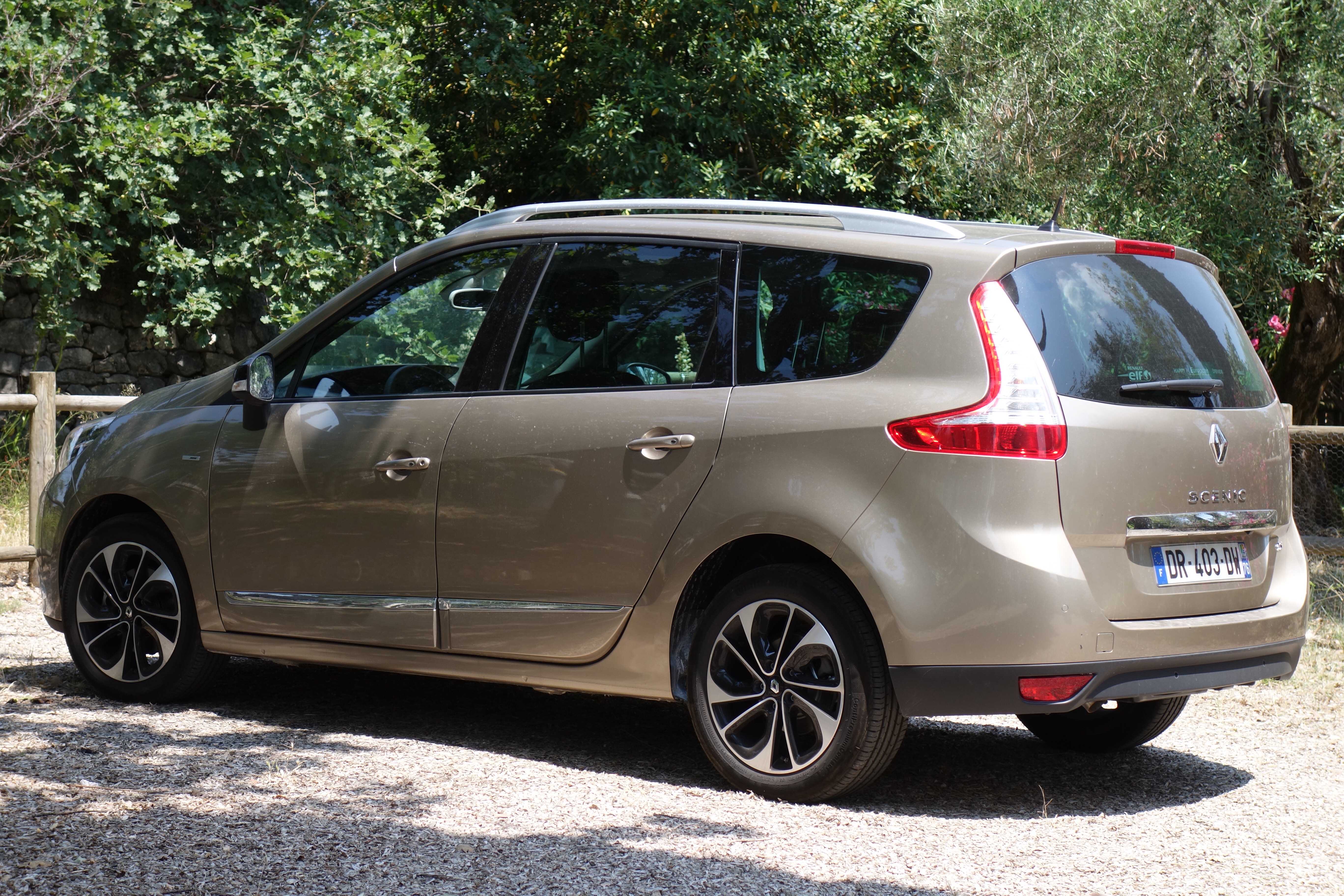
Our Renault Scenic

Our Renault Scenic

Eating in France is legendary, and the French relationship with food is not casual. We never had a bad meal during our 2 weeks here, although we ate at middling restaurants. The patisserie stop for fresh croissants or baguettes became a daily routine. The French grocery store dairy section is phenomenal, with hundreds of different cheeses, yogurts, creams, and things I’m not really sure of. We tried 6 different types of yogurt, including goats milk and sheeps milk varieties. We preferred the sheep over the goat; although it had a cottage cheesy texture, the flavor was delicious.
The other interesting thing about food in France is that it can be difficult to find. Grocery stores routinely close on Sunday, while restaurants close on Monday, as do most of the other shops. Both grocery stores and restaurants will close in the afternoons, with restaurants re-opening at 7 or 7:30 for dinner and stores re-opening at 2:30 for another three or four hours. We were just about locked into a grocery store on our first night in La Gaude as we tried to get supplies, so we grabbed a few items and planned to come back the next day for groceries. The next day was Sunday. Fortunately the patisserie was open and we could get sandwiches for dinner.
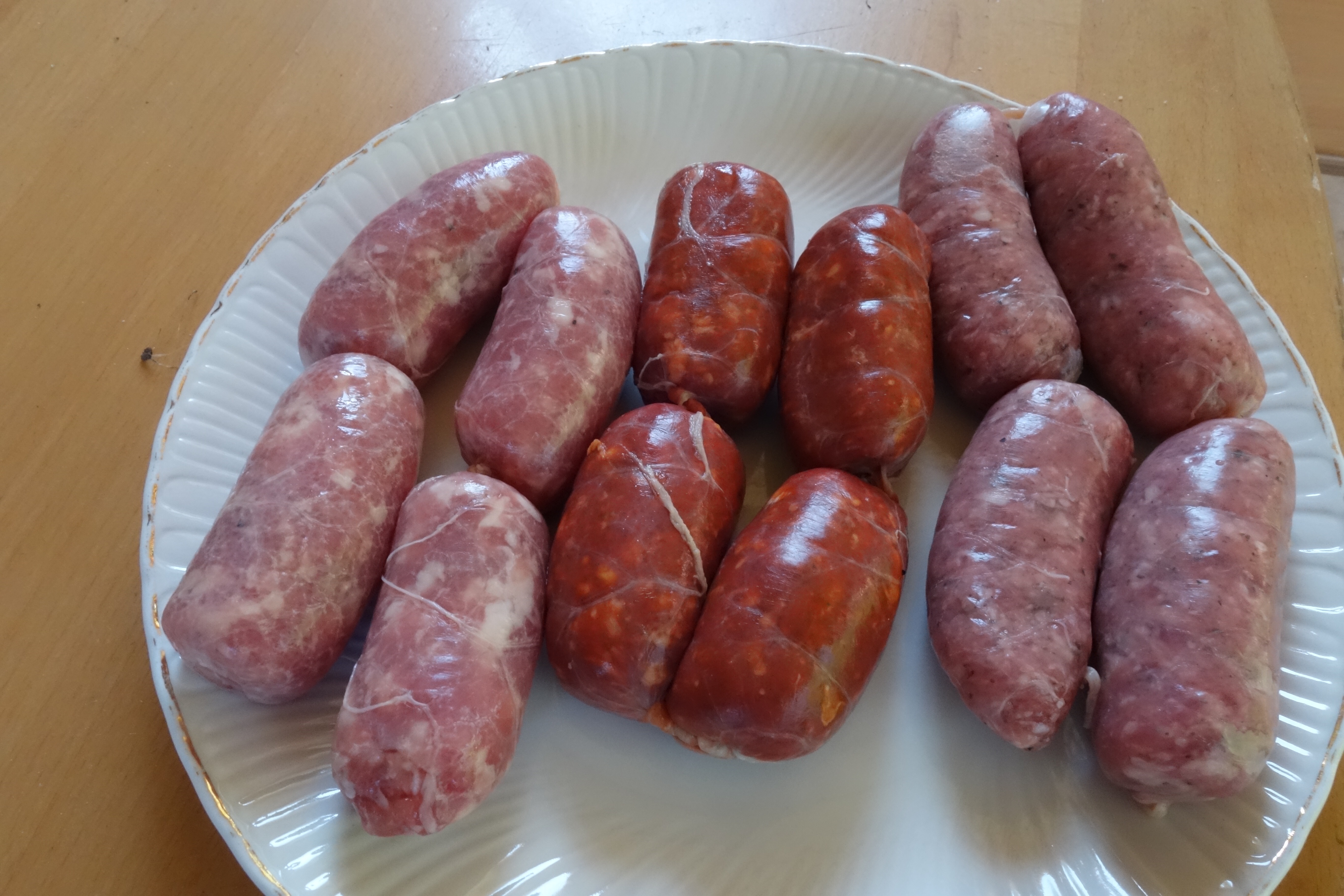
Selection of sausages from the grocery in La Gaude

Selection of sausages from the grocery in La Gaude

Wine in France is inexpensive and good. The grocer sold Provençal rose’s for less than €3.00 per bottle that were fine. You could also get a 6 liter box of wine for €16, but we didn’t venture there.
Seafood in Provence is fresh and plentiful. We had delicious shrimp, squid, mussels and fish. The local grocer in La Gaude carried octopus, trout, salmon, whole tunas and about a dozen other varieties, all of which looked freshly caught.
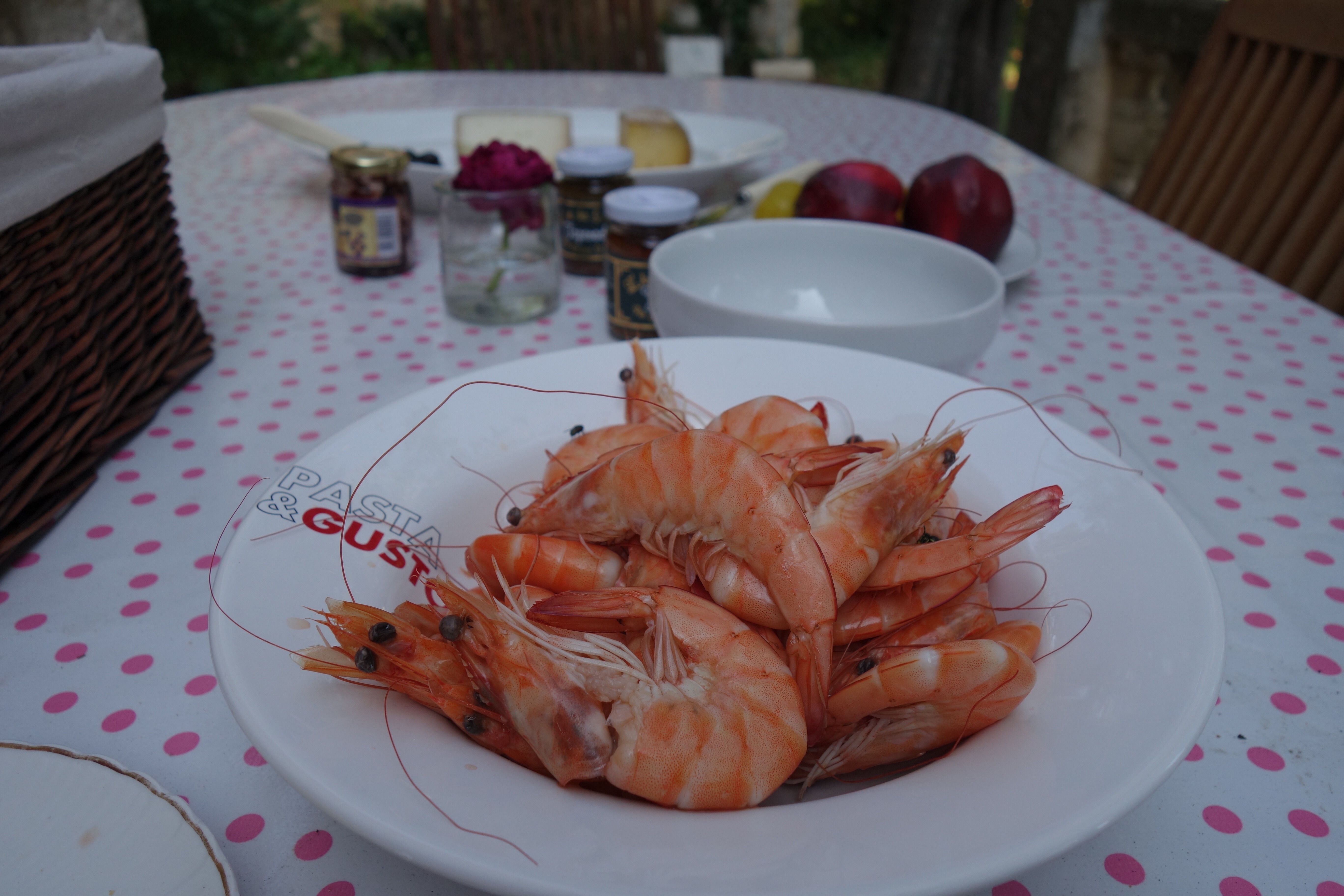
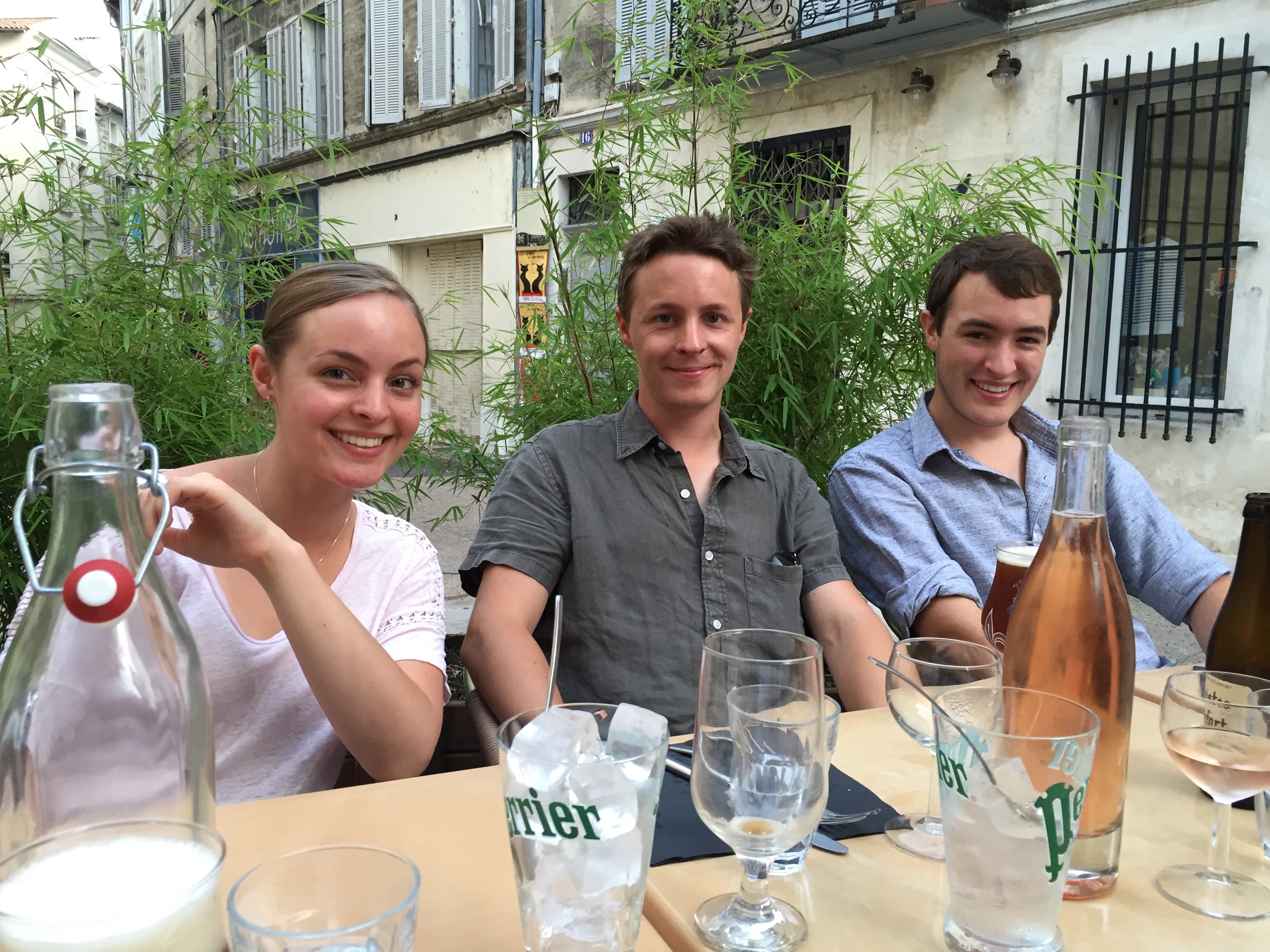
Our final feast in France

Our final feast in France

Raw beef is very common on restaurant menus, and at one place we saw no less than three menu items that featured it. Apparently no worries about mad cow disease here.
Among the things we ate here you may count escargot, duck pâté prepared 3 different ways, lamb, beef, duck, mussels, salmon, sole, squid and one order of stir fry that Melissa ordered when she panicked.
We had macaroons, glacés, butter cookies, croissants, pan du chocolate, creme brûlée, chocolates and gelees. We drank sparkling and tap water by the gallons. After 2 weeks, we hardly fit in here, but we’re certainly more comfortable and able to make our way. We’ve seen Paris and Provence, climbed hill towns, swum in the sea and walked countless stairs. Our favorite place in France has been our refuge at La Condamine, where we could return for a swim, find quiet, and maybe be just a little more at home. We’re sorry to leave, and the bags are full to bursting with souvenirs and gifts. Italy awaits.
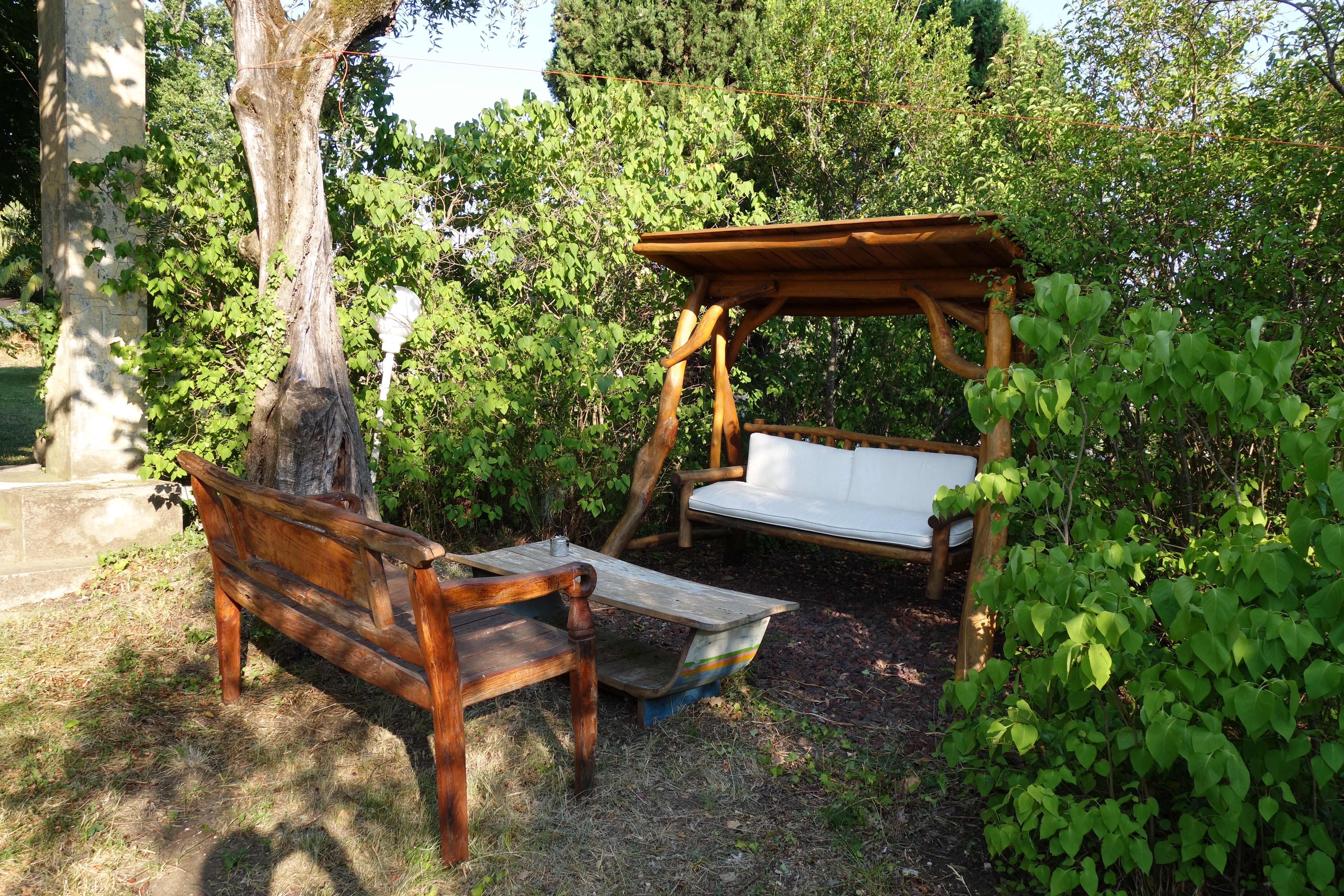
Balinese bench and table at La Condamine
Balinese bench and table at La Condamine
A Nice Afternoon

After a good night’s rest with a cool breeze, we spent our morning at La Condamine, went into town for a few groceries and fresh croissants and took a dip in the pool.  In the afternoon we drove into Nice.  We arrived in the city with only a few wrong turns and found parking at the Museum of Modern Art.  Matt took a tour of the museum, while the rest of us wandered the streets of Nice for a few hours.

image

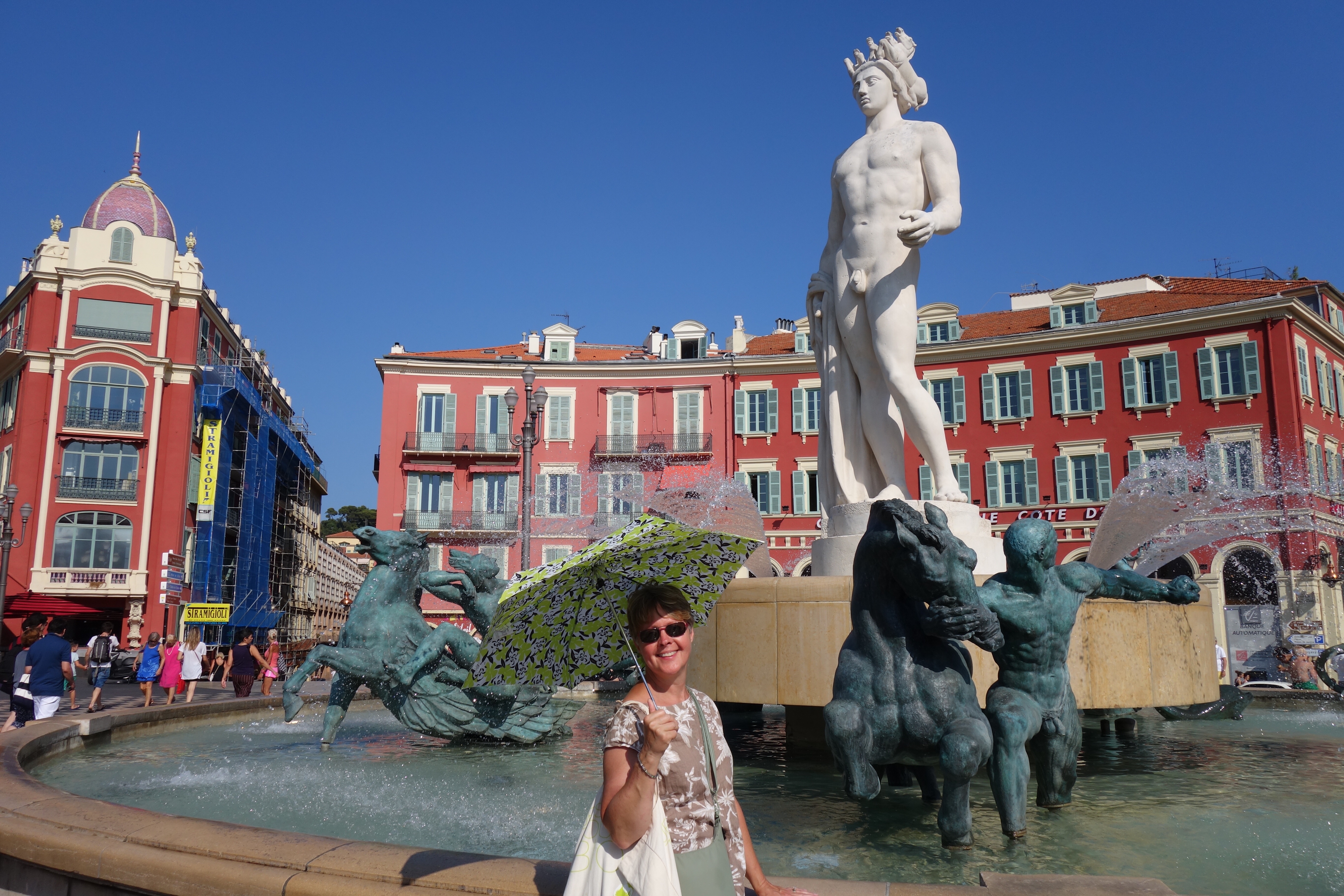
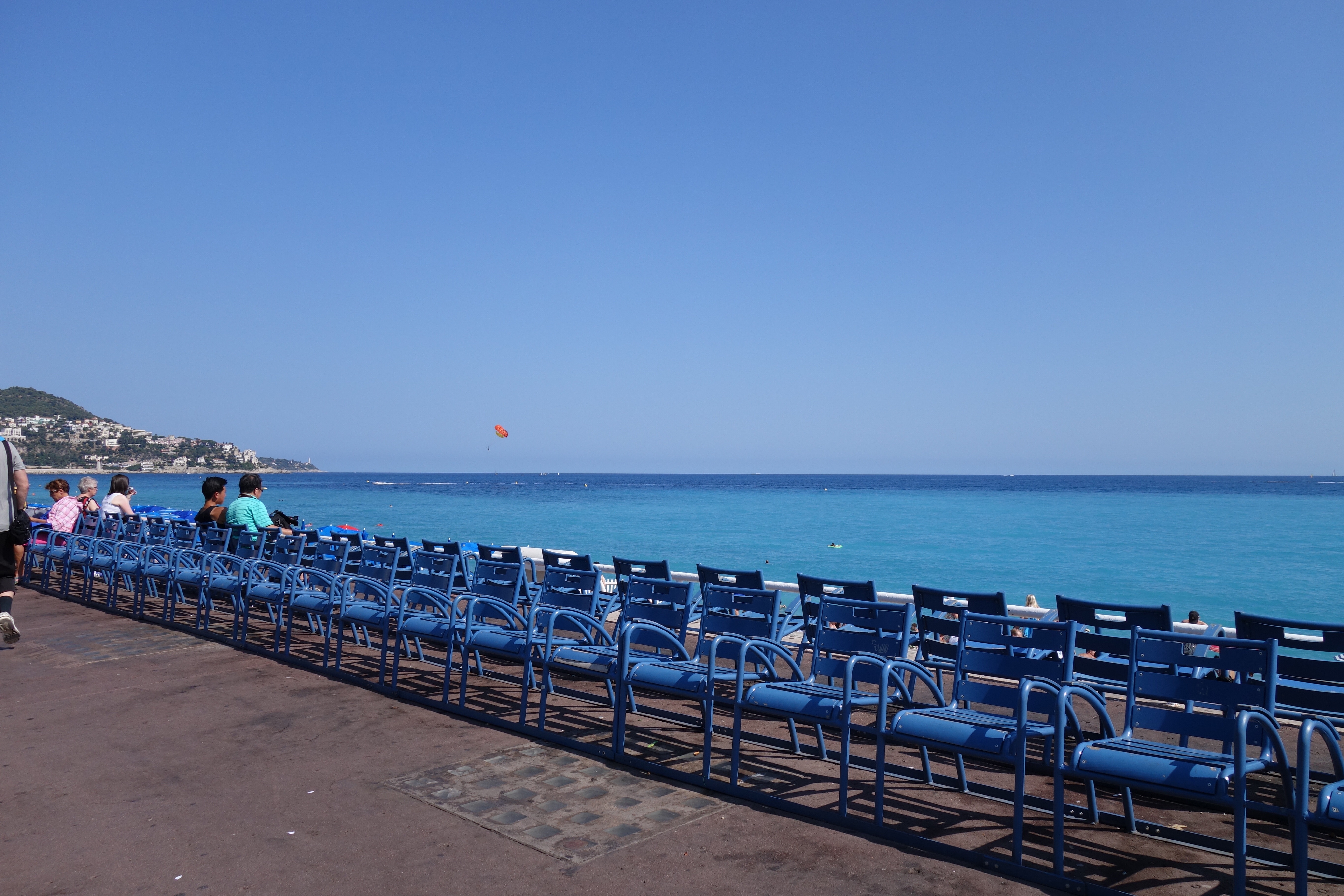
The  city of Nice has a colorful past.  It has been variously Italian and French, attacked twice by the Saracens and was finally ceded to France permanently in 1860.  In the 19th century its warm climate and beautiful waterfront became a favorite wintering spot for wealthy Englishmen, who paid for construction of a walkway by the sea now called the ‘Promenade des Anglaise’.  A further extension of that is called the ‘Quai des Etates Unites’ and includes a small replica of the Statue of Liberty.

Along the Promenade des Anglaise

Along the Promenade des Anglaise

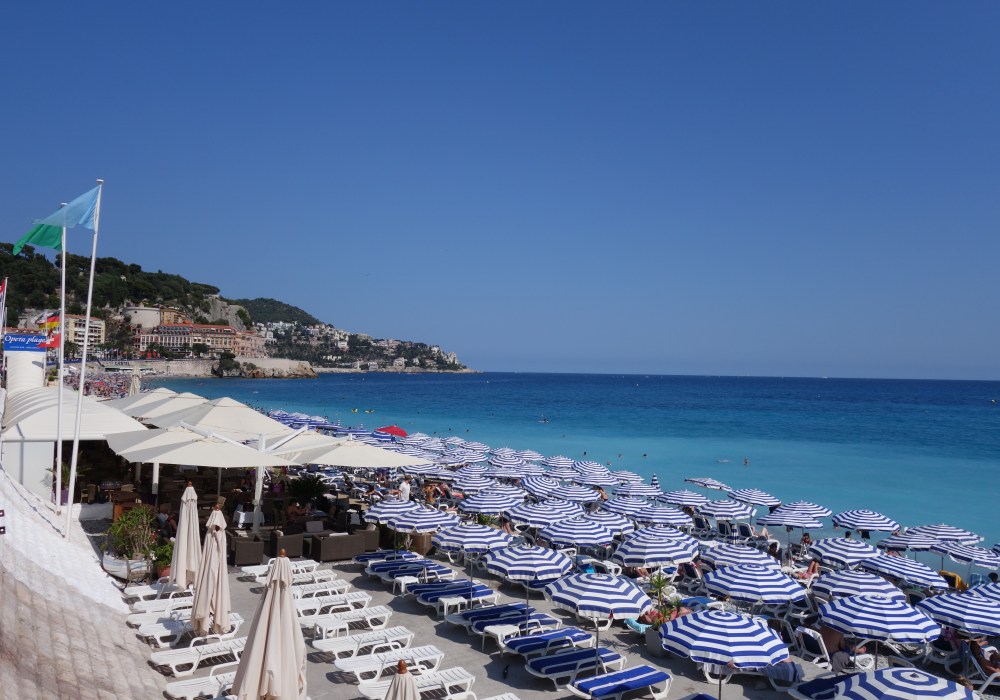
The entire waterfront on the Baie des Anges is nearly four kilometers long and is a continuous series of beaches and waterfront restaurants.  Parasailing out over the bay was popular, but most people seemed content to lounge under the innumerable umbrellas to escape the hot sun.  At one spot it looked as though someone had built a fish impoundment and  we could see a school of sardines swirling about, as well as larger fish that would occasionally break the surface for a tasty bug.

image

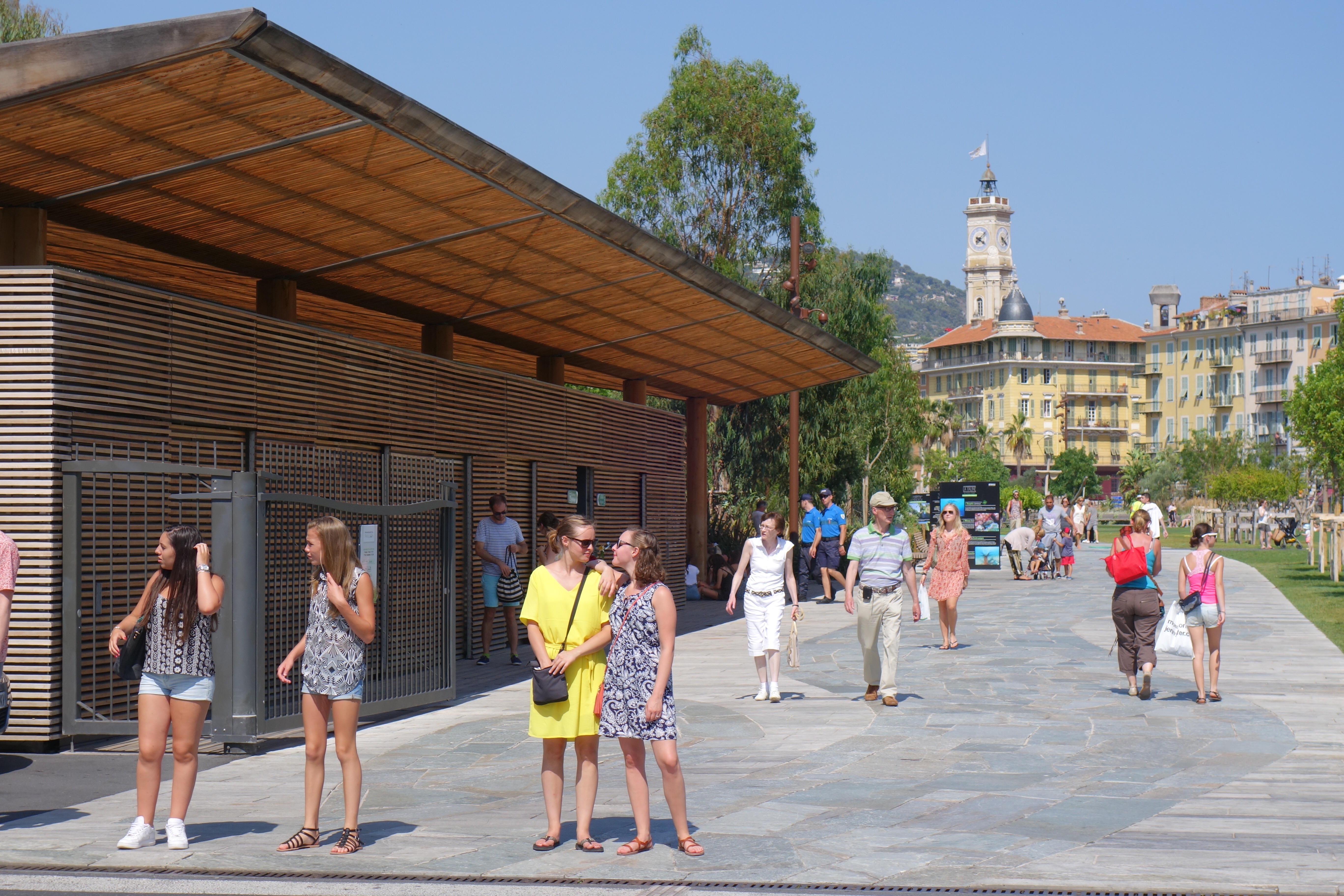
the late afternoon heat proved relentless, so we turned to the shaded side streets of Vieux Nice, or the old town.  Here there were shops selling olive oils, Provençal herbs and crafts as well as an open air market.  Restaurants small and large were starting to open for the evening, and we had reservations for dinner on the  rue Milton Robbins at a restaurant called ‘Frog’.

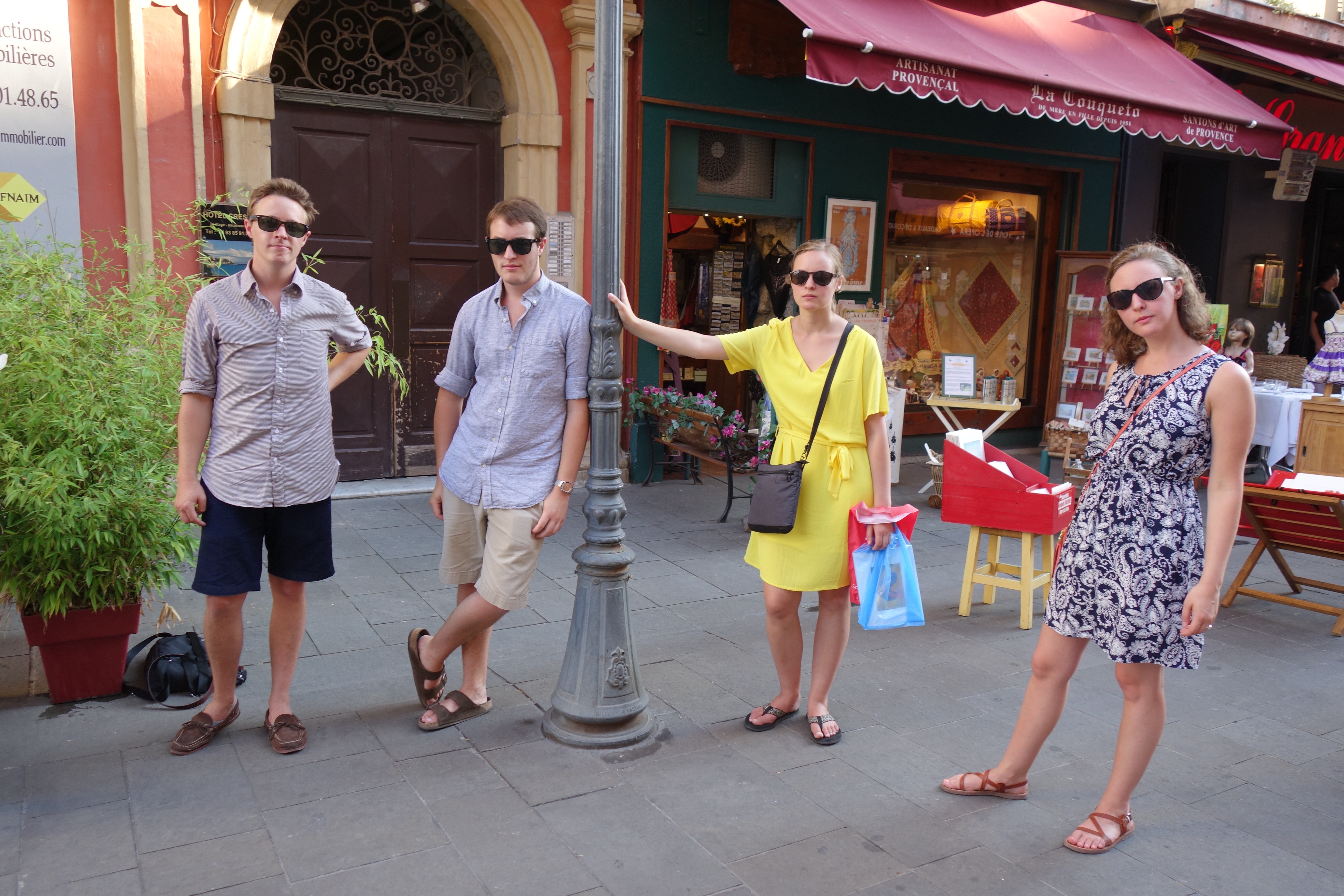
Strolling through Nice

Strolling through Nice

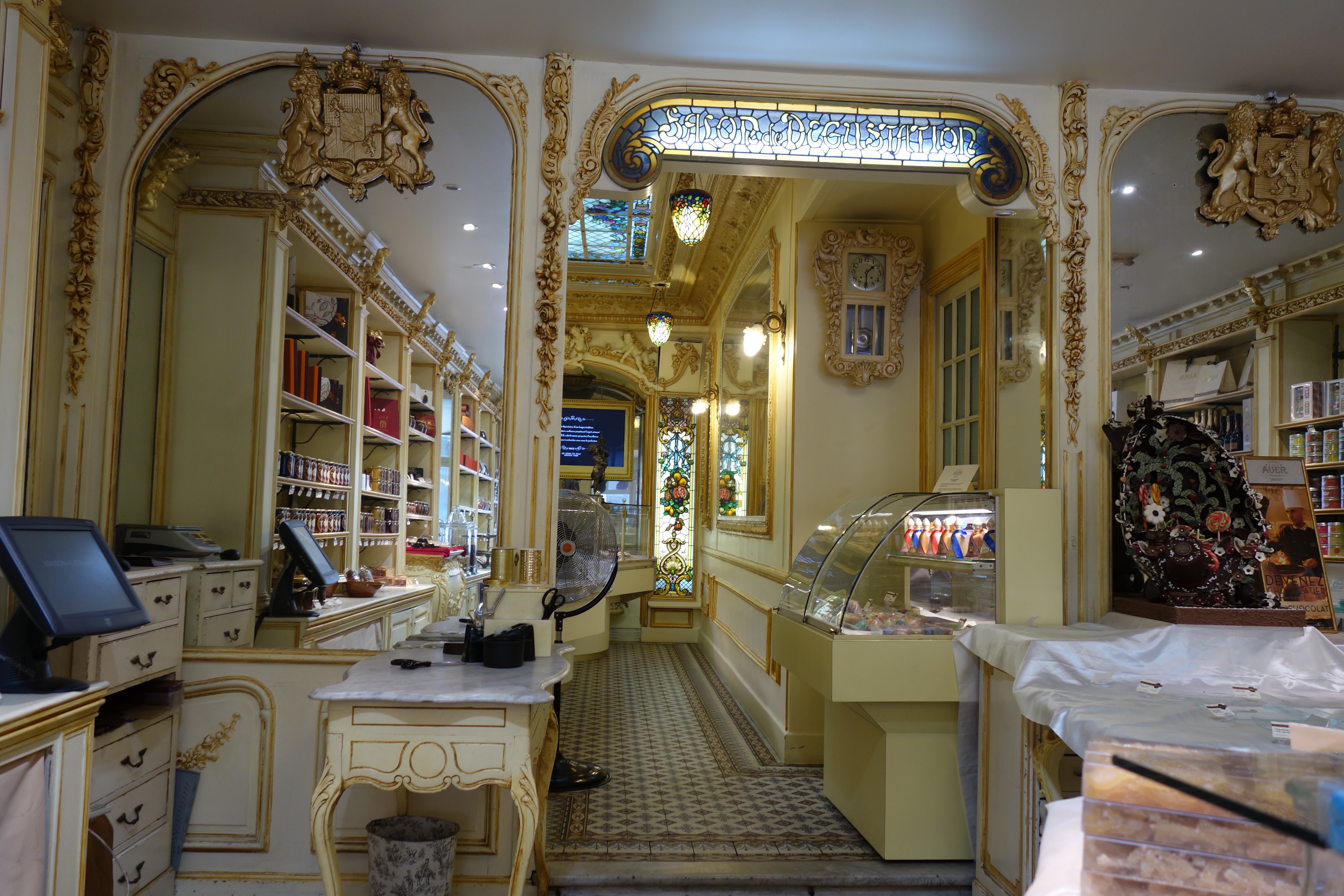
Melissa and I wandered into the most beautiful candy shop we had ever seen, when we saw a girl pouring glacéd fruits into large bowls in the front windows. The shop was called Confiserie Henri Auer and has been in Nice since the 1820s.  The floor was a beautiful mosaic tile  and the back room displaying chocolates was all stained glass and gilt wood.  We bought a small box of gelees and ate them as we walked down the street (surprisingly little flavor, we thought).

Inside Henri Auer

Inside Henri Auer

As we sat outside along the alley, the breeze from the sea was cool and refreshing.  ‘Frog’ as the name implies does feature frog legs as an entrée (that being the appetizer course- the main course is called the ‘plate’).  None of us were interested in trying the frogs, but settled on lamb, steak and mussels.  Our waiter assured us that these were not the larger (and left unspoken, inferior) Spanish mussels, but were instead the smaller local mussels.  I ordered the mussels and was rewarded with a pot filled to the top with at least 5 dozen little mollusks in a tomato and herb broth.  We had learned from the locals to use a mussel shell as a tweezers to grasp the meat from the remaining mussels, and it worked well.  After dessert of creme brûlée and melon with white cheese, a complimentary limoncello finished the meal.

A Nice afternoon indeed, and then back to La Condamine for a swim before bed.  Our time in France quickly running out, tomorrow we will rest and pack.  Next stop Italy.
Antibes and a Mediterranean Swim

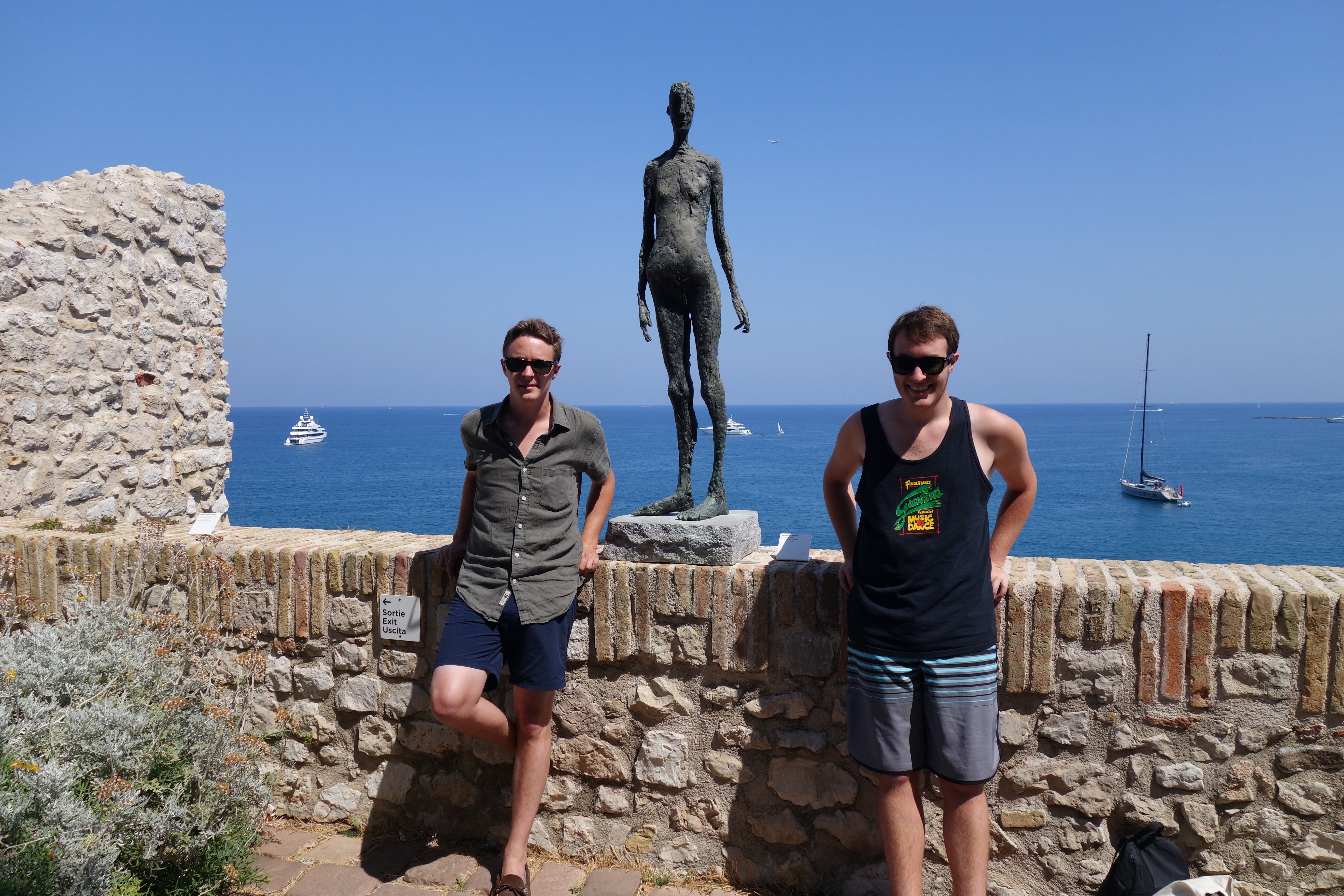
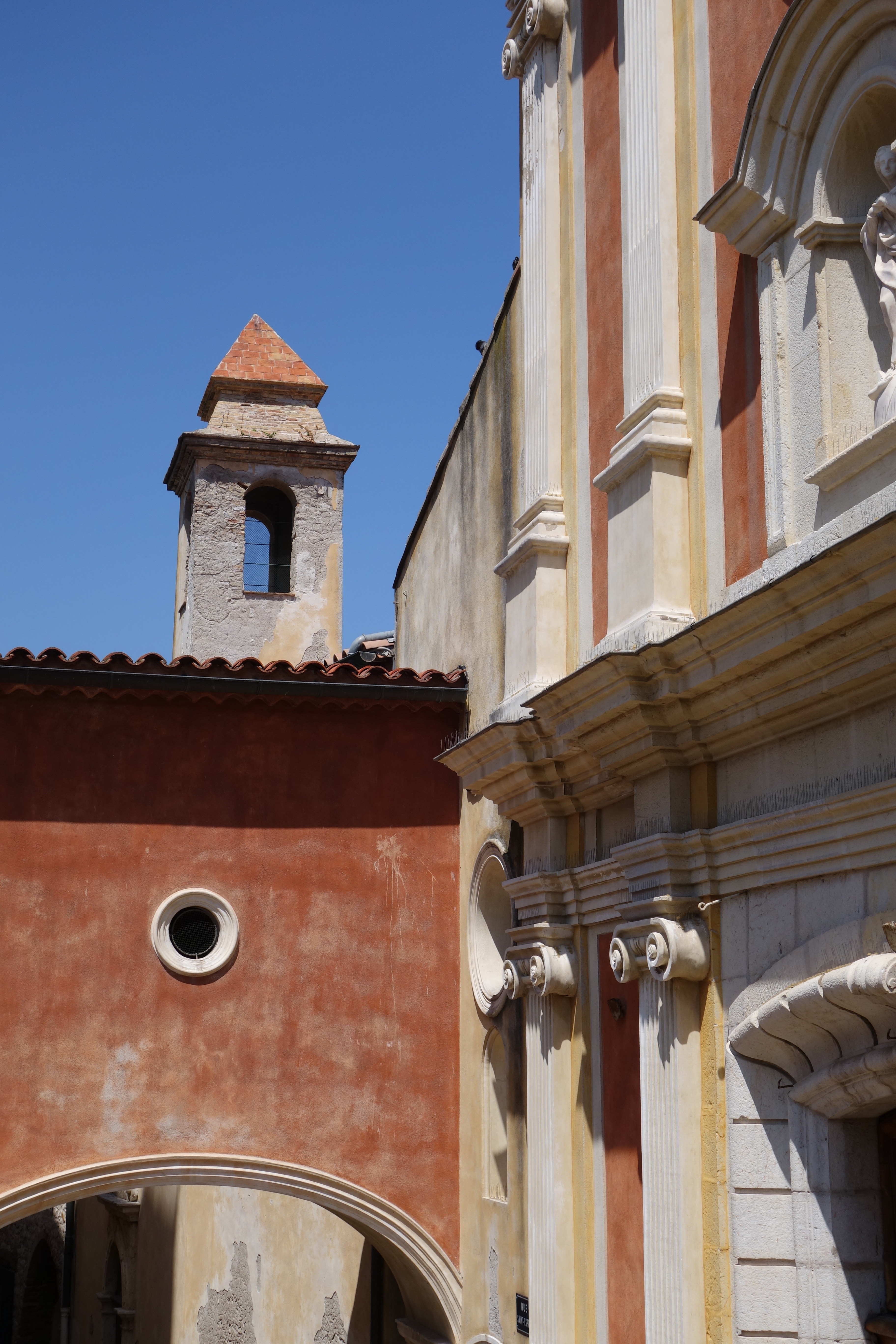
after looking out at the Mediterranean Sea for the past several days we decided it was time for a visit. There are many beautiful and famous towns along the Côte d’Azur including St. Tropez, Cannes, and Cap Ferrat, but our choice was the town of Antibes.  Noted for its beautiful old town and its sandy beaches, Antibes lies just west of Nice, and about 20 kilometers from La Gaude.  After spending the morning at home we left for the coast in the early afternoon.  Once again the driving and parking proved a challenge, and I was gratified to get behind a student driver so the locals had someone else on whom to focus their disdain.  Ignoring caution and common sense, the French drivers would pass on blind curves, steep descents and impossibly narrow roads; motorcyclists are the worst, and our gasps of astonishment as they raced past were followed by sighs of relief as they escaped calamity by millimeters.

On reaching Antibes we parked the car and briefly walked the town before a tour of the Picasso museum there.  Picasso lived and worked in Antibes in 1946, and while not his best work the museum was enjoyable and complimented by a series of photographs of Picasso taken at the time.  My favorite painting was called ‘Ulysses and  Sirens’ – an enormous canvas featuring our hero lashed to the mast as the sea nymphs try to lure him to his death.

At the Picasso museum in Antibes

At the Picasso museum in Antibes

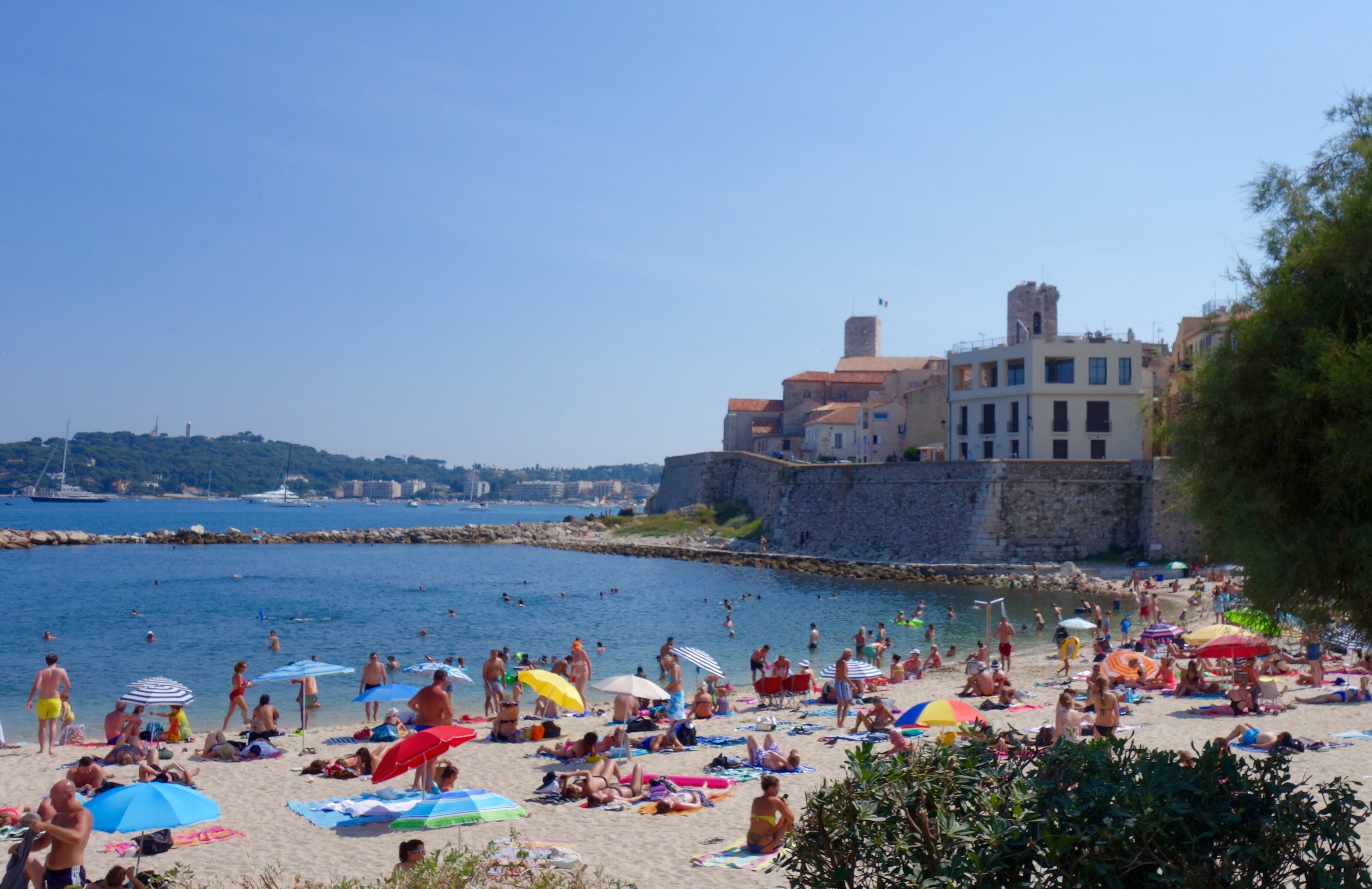
After our cultural detour we launched for our main objective, a sheltered beach in town that looked inviting for a swim.  Now let me say that we did spot a few topless older women along the beaches on our ride into town, but this was a family friendly spot, and all the boys were disappointed at the views.  Most of the beaches along the coast are quite rocky and only a few have sandy shores.  As we stepped into the water the coarse sand turned quickly to pebbles and then rocks covered with seaweed. It was necessary to quickly immerse to gain the buoyancy needed to avoid an awkward fall into the sea.  The water itself was wonderfully cool and clear.

Antibes beach

Antibes beach

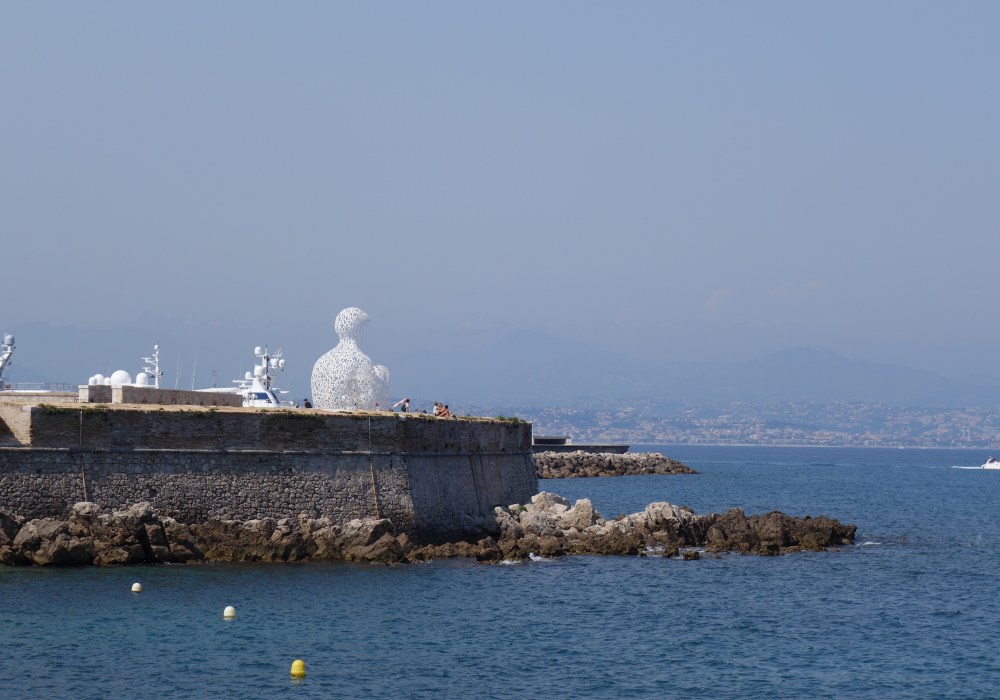
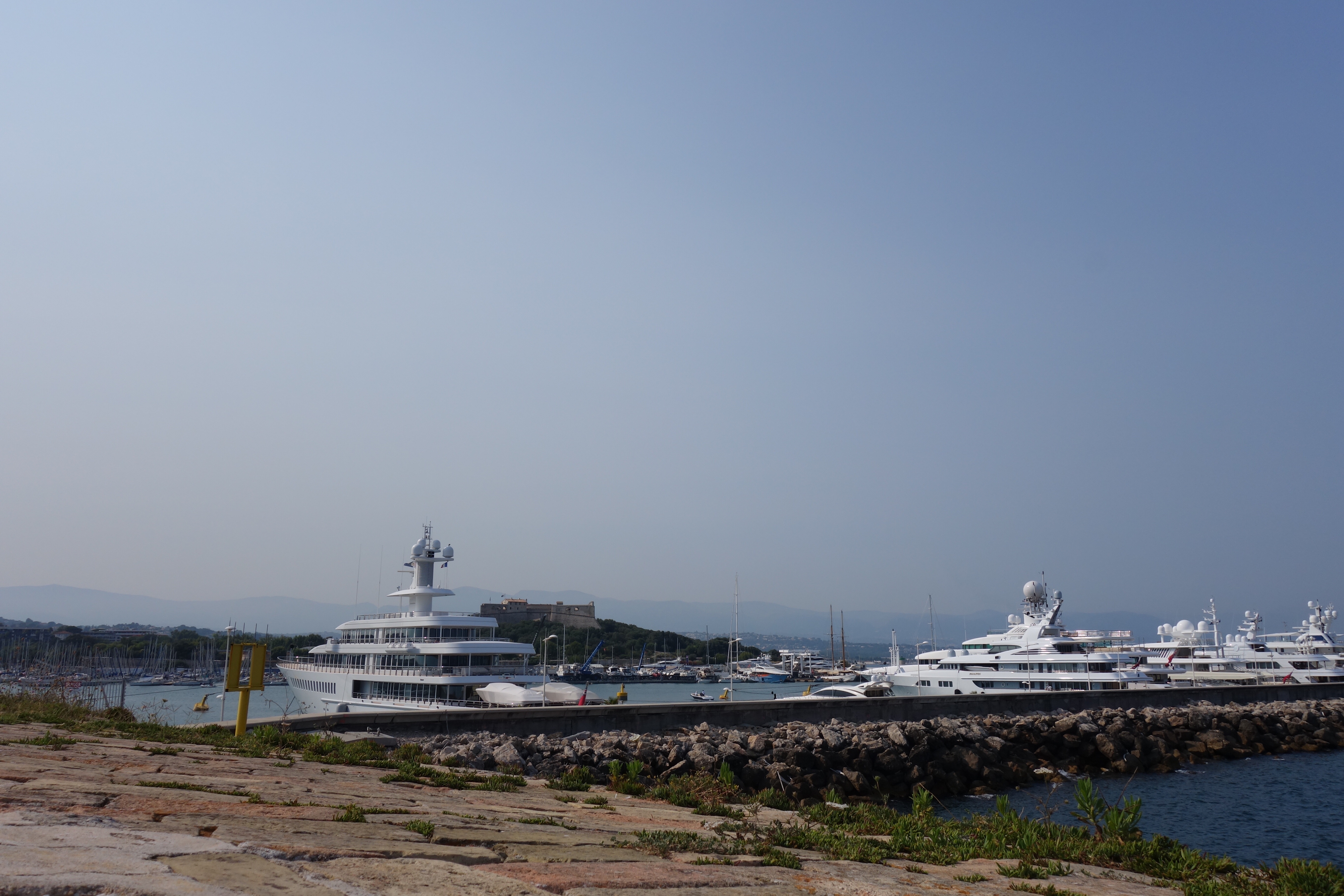
I swam to a rocky break wall nearby and could see small fish in the water below.  As I reached for a rock a small hermit crab raced for safety in a nearby hole. After a short swim I headed back to shore, rinse off in the handy beachside shower and headed off to explore the fortressed walls enclosing the nearby harbor.  As we discovered, there were several adjacent harbor areas with small boats then small yachts then large yachts.  The really large yachts rested offshore, and small sailboats that glided among them resembled the toy boats we had seen at Luxembourg Gardens in Paris.

Modest yachts in Antibes

Modest yachts in Antibes

After our sojourn to the sea we headed back to La Condamine, caught our breath and then drove to Vence where we had our dinner in an outdoor cafe.  A French couple seated next to us struck up a conversation and we compared our impressions of France(crowded, beautiful, historic and with horrible parking) with their impressions of America (big, beautiful, young and easy driving).  We were home by near midnight and went to bed for a restful night’s sleep.

image

Visits to Vence and Eze

The past two days we’ve visited some nearby towns, nosed around for a couple of hours, and then returned to La Condamine to cool off in the pool.  Temperatures have been somewhat cooler than in Paris, but still around 90 or above.  On Monday we went to the nearby town of Vence, which is only about 12 kilometers from La Gaude.  For such a short distance it is a harrowing journey down narrow “two” lane roads at best, and single lane roads at worst, with switchbacks and steep grades constantly a challenge to my skills with a manual transmission; I think the ride is worse for the passengers. Vence is an old walled city, with the former moat now a road, and with houses built into the walls. After wandering the cobbled streets and visiting typical tourist shops for a while we had lunch at a shaded cafe in the central square.  In the nearby cathedral is a mosaic by Marc Chagal that overlooks the baptistery.
The central square of Vence The central square of Vence

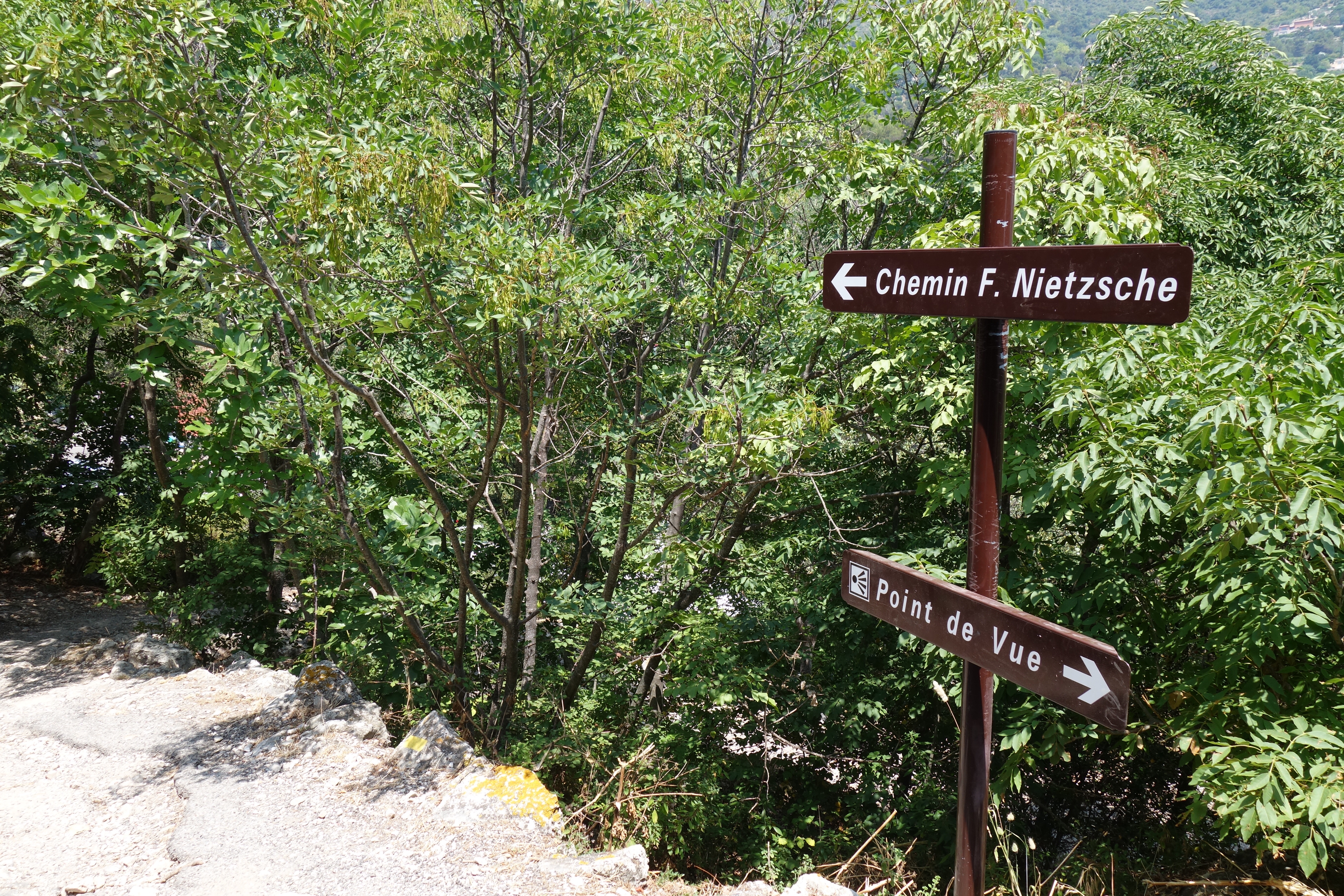
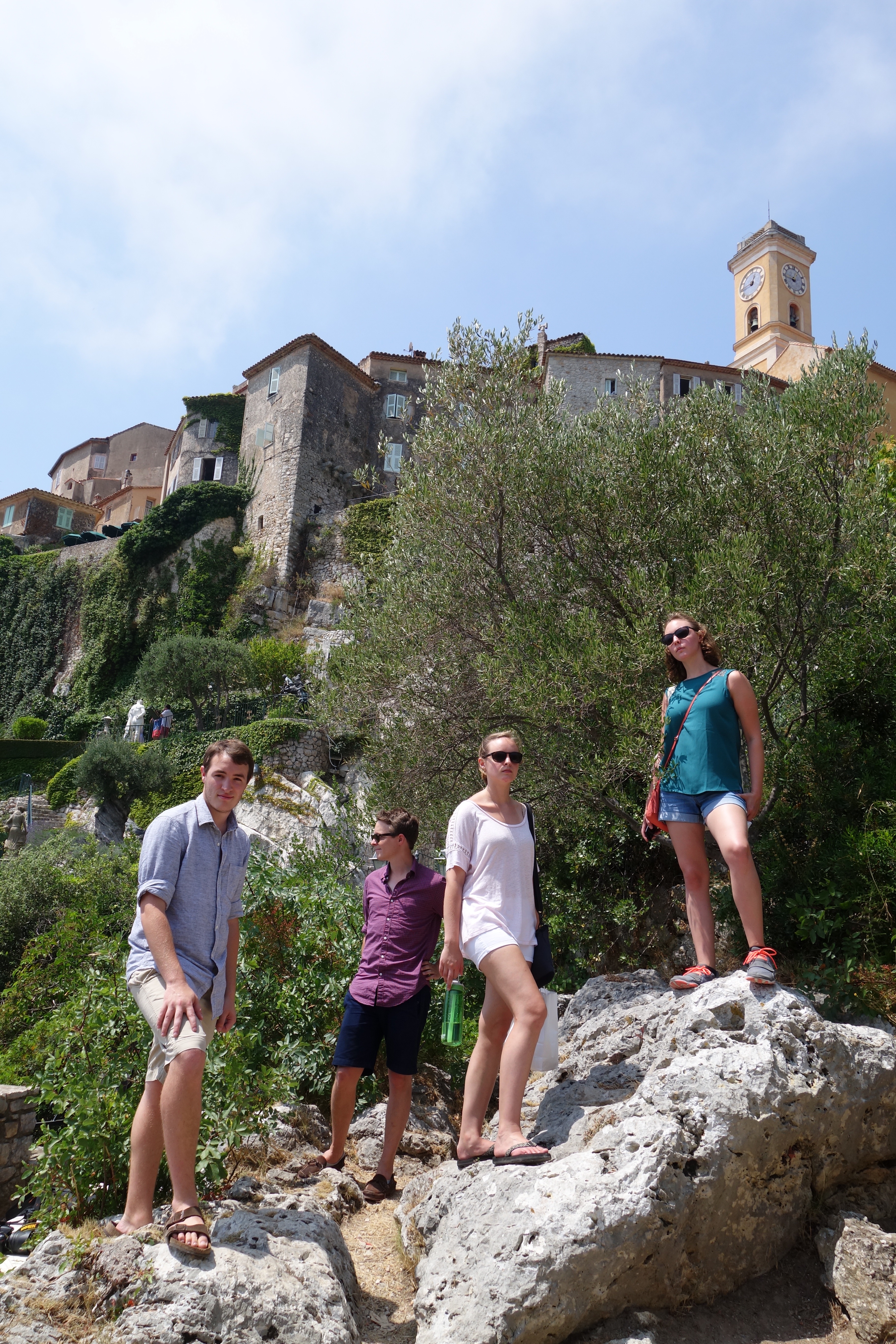
The following day we drove to Eze, which is a tiny town just northwest of Nice perched high on a hilltop. Eze is a beautiful village with very narrow cobbled streets filled with flowering bushes and vines.  As small as it is, it attracts throngs of visitors, and we discovered one of the most difficult problems in these small villages is finding a place to park; although our Renault Scenic is small by U.S. standards, it is a large car here and fitting it into a parking space takes patience and luck. After touring Eze we headed back down toward our car and discovered a small trail called the Chemin Nietzsche, named after the German philosopher.  Nietzsche stayed in Eze for a time and would take this trail from the village down to the sea as he contemplated.  It is said he composed portions of “Thus Spake Zarathustra” on these walks.  We weren’t really prepared for a hike, but set off down the path anyway, shopping bags in hand.  Matt and Sam scouted ahead and found the trail went on for a great distance and became more rugged as it descended.  We met a couple coming up the trail from below and asked if they had reached the bottom, which they had.  The woman looked at us exhaustedly and said “It gets much worse!” image

Below Eze on the Nietzsche trail Below Eze on the Nietzsche trail

At that point we decided to turn back, having covered about a third of the descent.  I would learn later that the trail is 6 kilometers long, described as a moderate hike, and takes 50 minutes down to Eze sur Mer and 90 minutes for the return.  If we had come prepared it would have been a great hike.  Once we regained the town, sweaty and tired, what else to do but stop in a perfume shop.  As I stood there in the air conditioning I felt notably out of place in my dusty shoes and dripping shirt. image A quick lunch in a nearby cafe, and it was back to La Condamine for a swim.  What a pleasure!
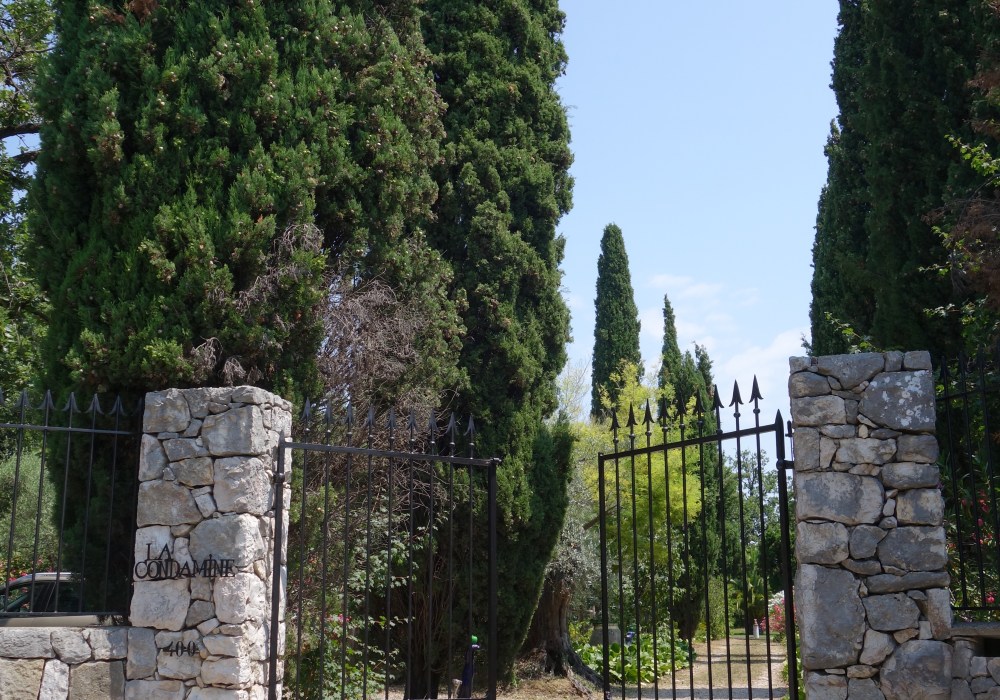
La Condamine
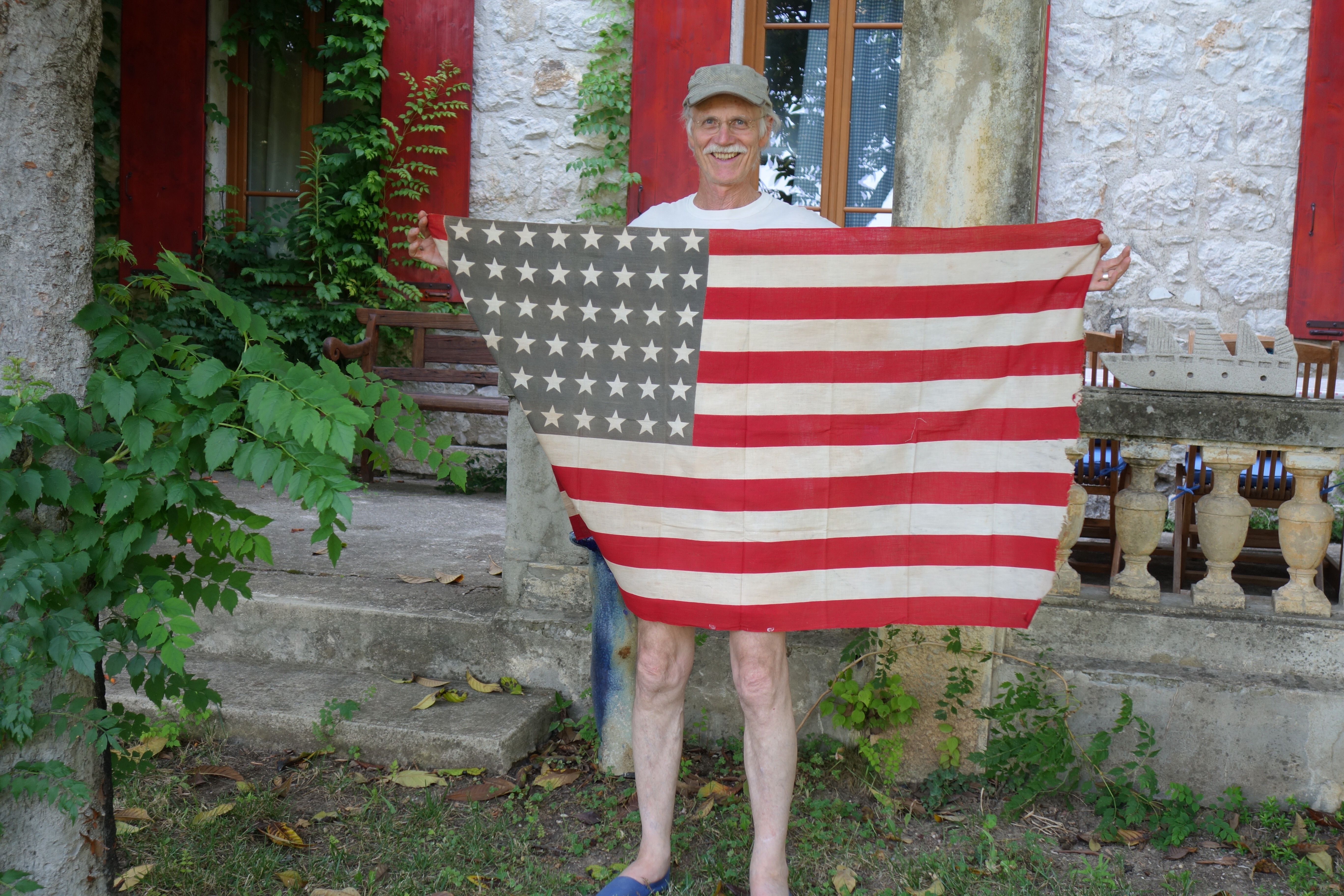
Following our arrival in La Gaude we spent a restful Sunday swimming in the pool and exploring the house and grounds of La Condamine, which is the name of our vacation house.  Our host Dominique and his family have owned the house since 1933 when his grandfather bought it from a pair of Russian opera singers who fled here after the Bolshevik revolution.  His grandfather was a French playwright, Denys Amiel who also was sent to America in 1916 to promote the French and Allied cause in WW I.   Among Dominique ‘s possessions is a  48 star U.S. Flag his grandfather was given before his return to France.

Dominique with his grandfather's flag.

Dominique with his grandfather’s flag.

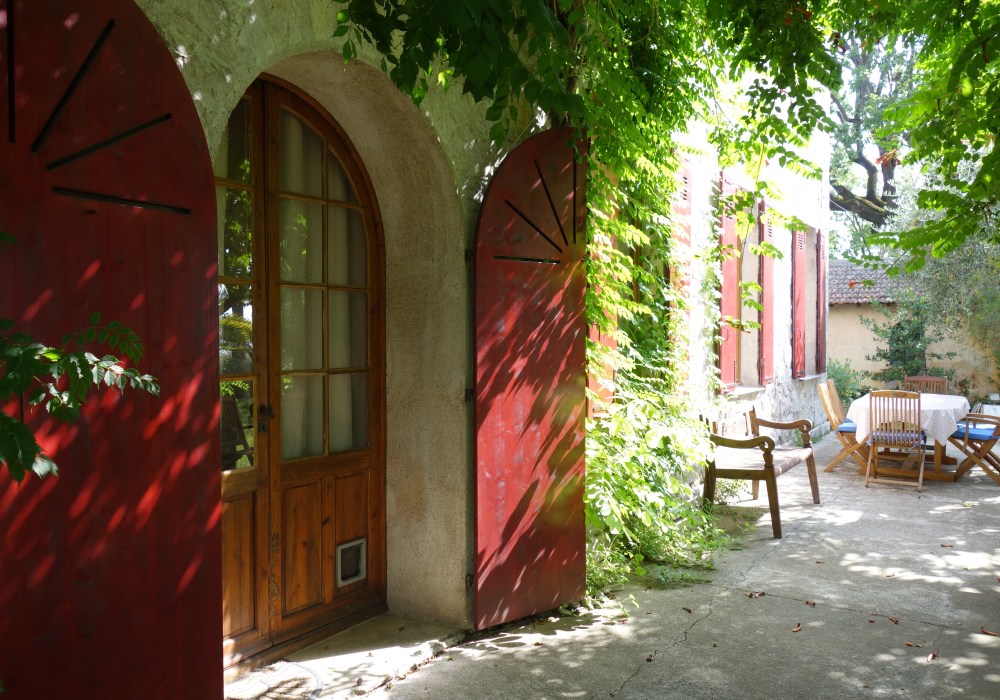
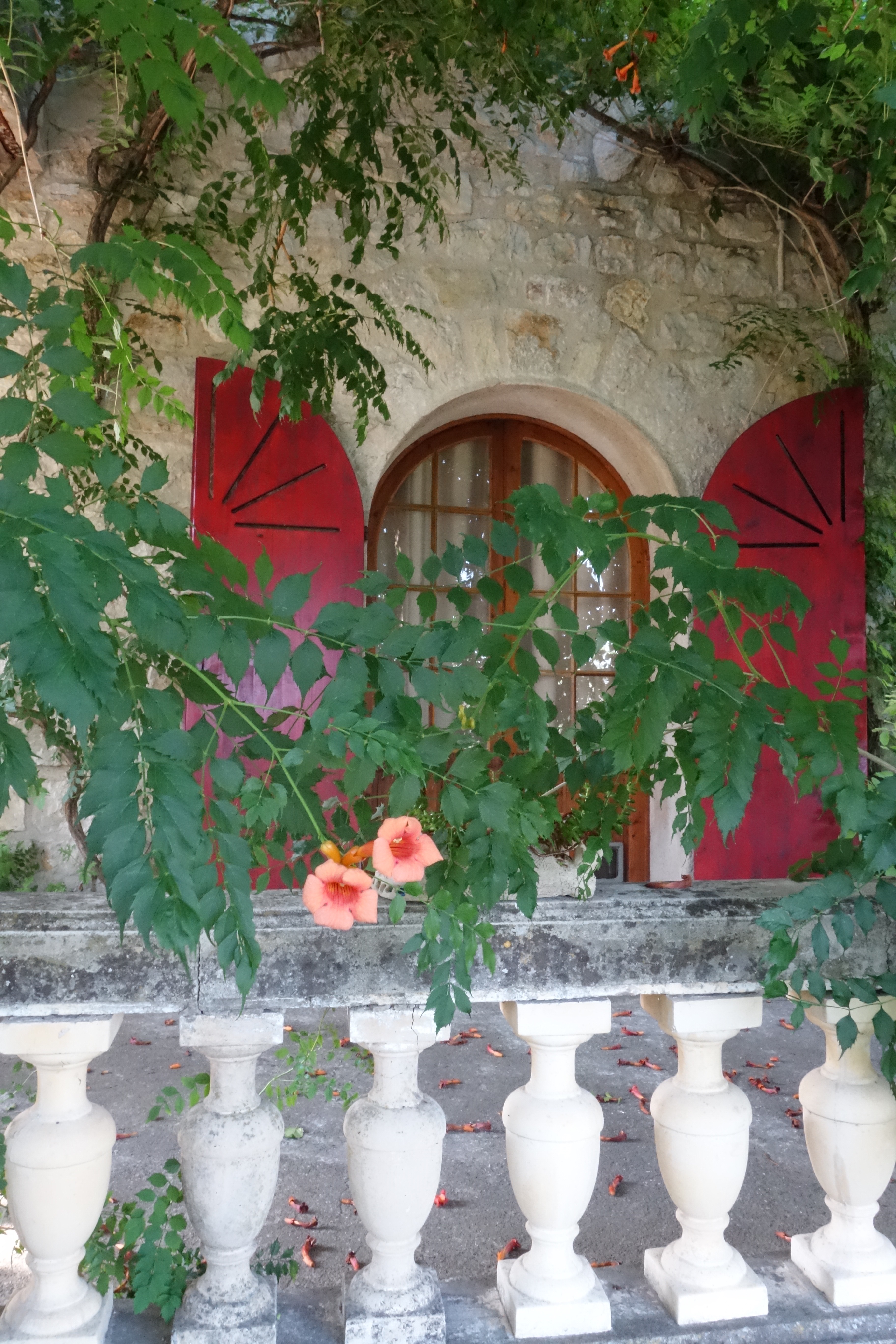
La Condamine is a sprawling stone house built in the 19th century, with massive windows that let in the cool night air. Each morning as the sun starts to heat things up we close the windows and drapes to keep things cool inside.  There are trumpet vines climbing the columns along the outside colonnade, and the buzz of bees is constant as we sit and enjoy the shade.
Trumpet vine

Trumpet vine

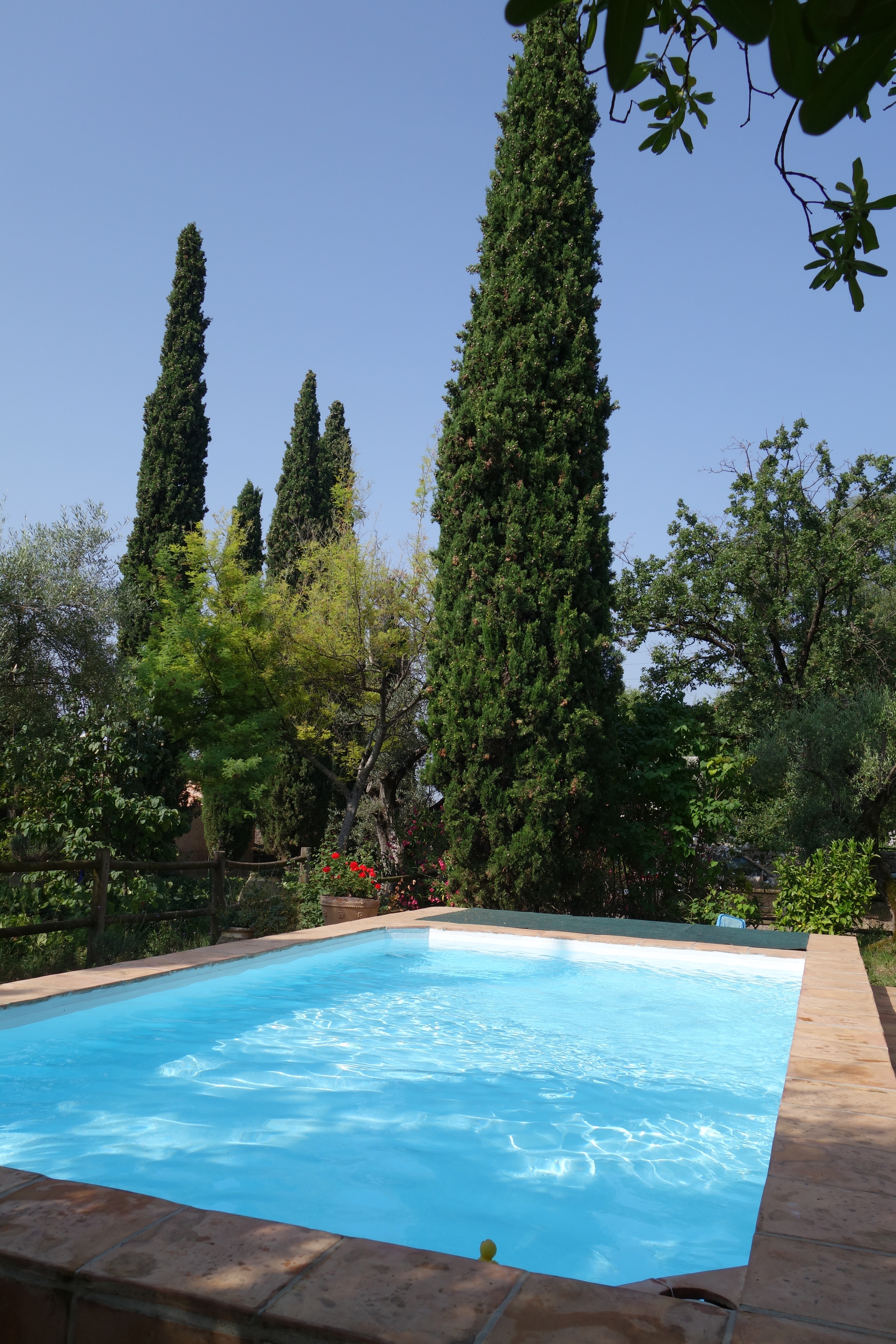
Outside, the property is planted with columnar cypresses, lavender, roses, jasmine and laurel bushes.  The constant call of doves is heard throughout the day and into the night.  A short walk to the garden leads to the saltwater pool, which is small but incredibly refreshing on these hot days(continued highs in the 90’s).  Our plan for the rest of the week is to make short trips to nearby towns, spend a day at the beach, and relax!
image

Hilltop Villages of Provence and Arrival in La Gaude

Waking early this morning for our drive to La Gaude, we finished our packing, ate some hard boiled eggs and cheese and set off for the Europecar office.  Our plan was to use a GPS brought from home to guide us, but alas it was nowhere to be found; fortunately Europecar had a car with GPS, so we paid the fee, and headed out of town.  Our car is a gold Renault Scenic with a 6 speed Diesel engine.  I haven’t driven a standard in a while, so there are a few near stalls until I get the hang of it.  Having seen the French roads and drivers I opted to buy the full insurance on the car.

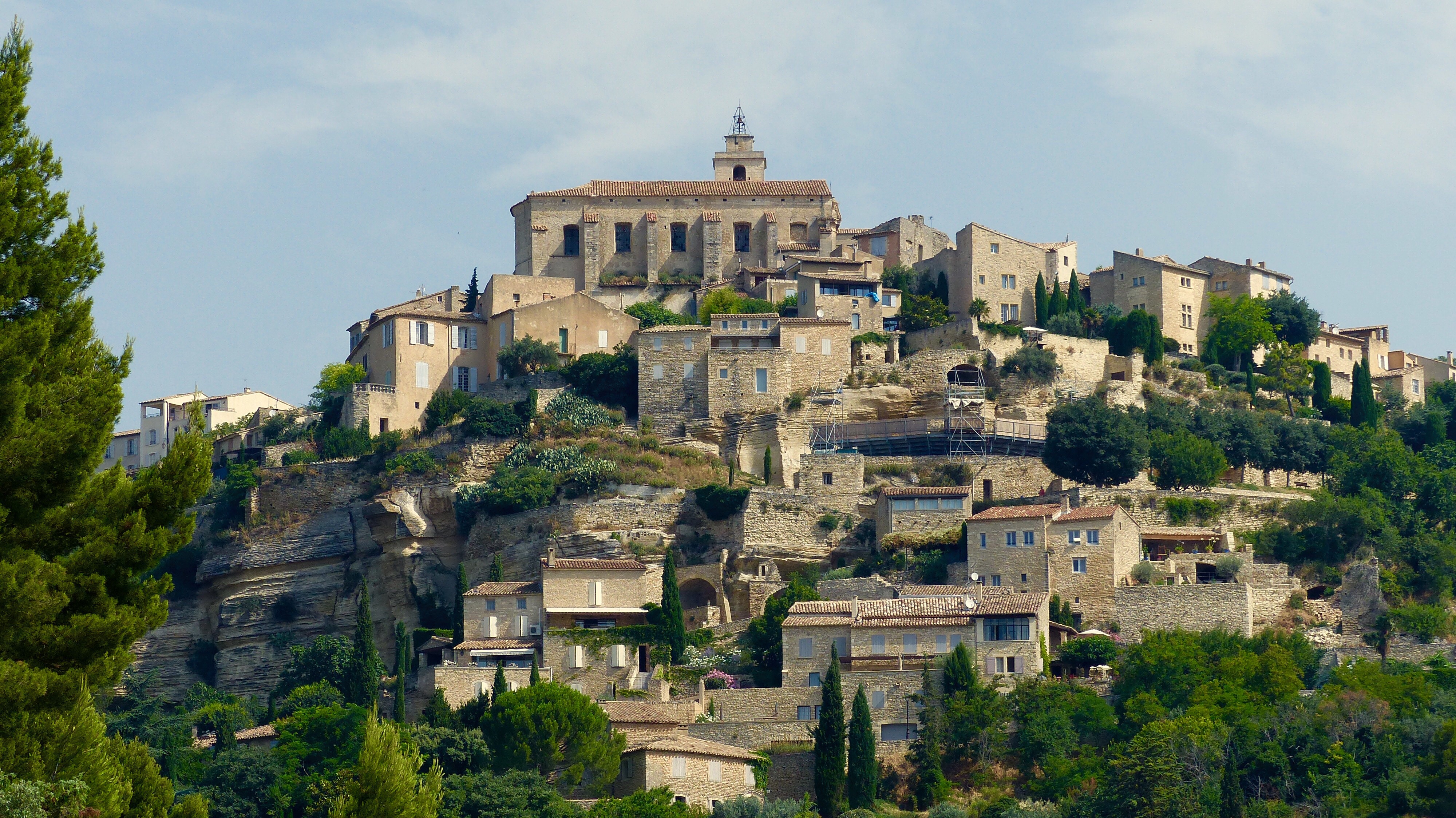
La Gaude is a small town outside Nice where we’ve rented a home for the upcoming week.  The drive is about two and a half hours from Avignon, but our early start would allow us to visit some hilltop villages along the way.  Our first stop is the village of Gordes sitting atop its rocky perch.  These small hilltop villages were isolated for centuries and that isolation meant little modern development. Roads are still cobbles, driving near impossible, and views spectacular.  After strolling around Gordes for a couple of hours we found a shaded spot for lunch; too hot for anything else we all had delicious salads (except Matt who ordered the charcuterie plate).  The cold water was especially welcomed.

Gordes

Gordes

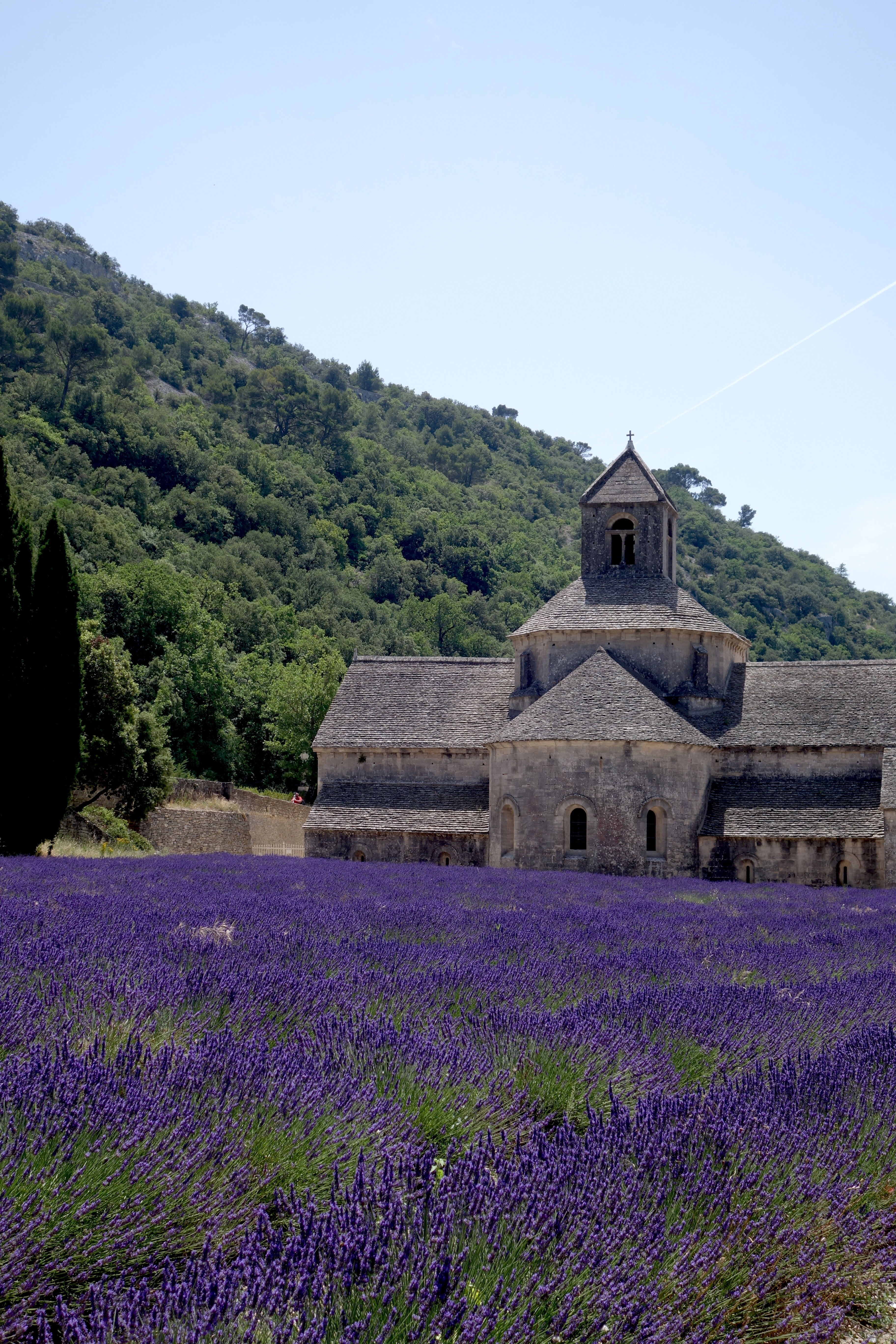
Next brief stop, and near Gordes, was the Abbeye de Senanque, a 12th century Cisturcian monastery whose livelihood is lavender and honey.  The monastery is surrounded by lavender fields, all in full bloom on our visit.

The Abbeye Senanque

The Abbeye Senanque

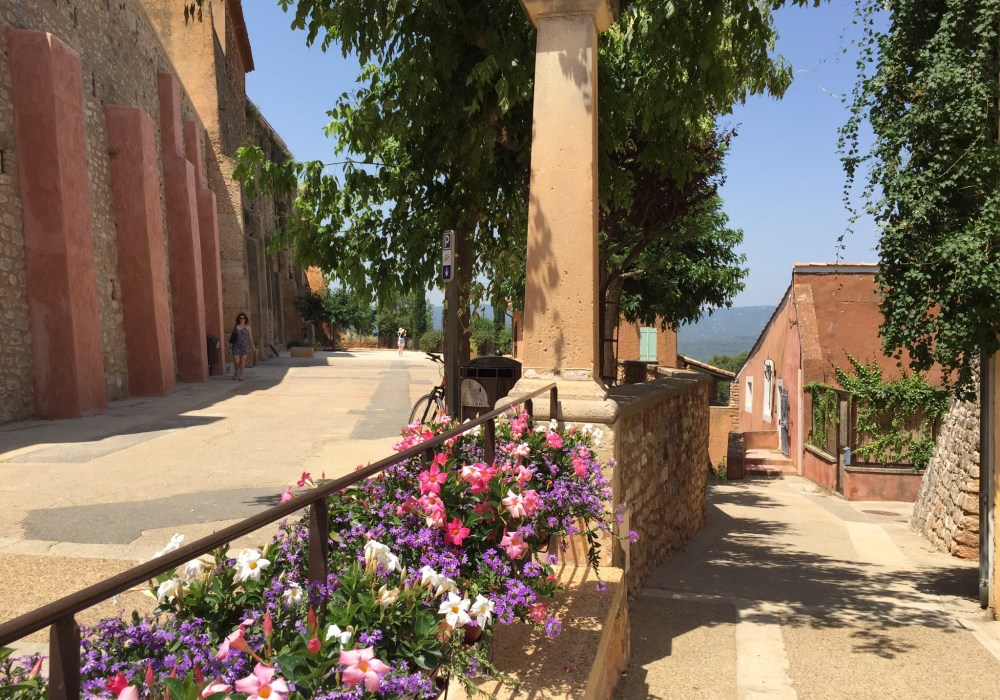
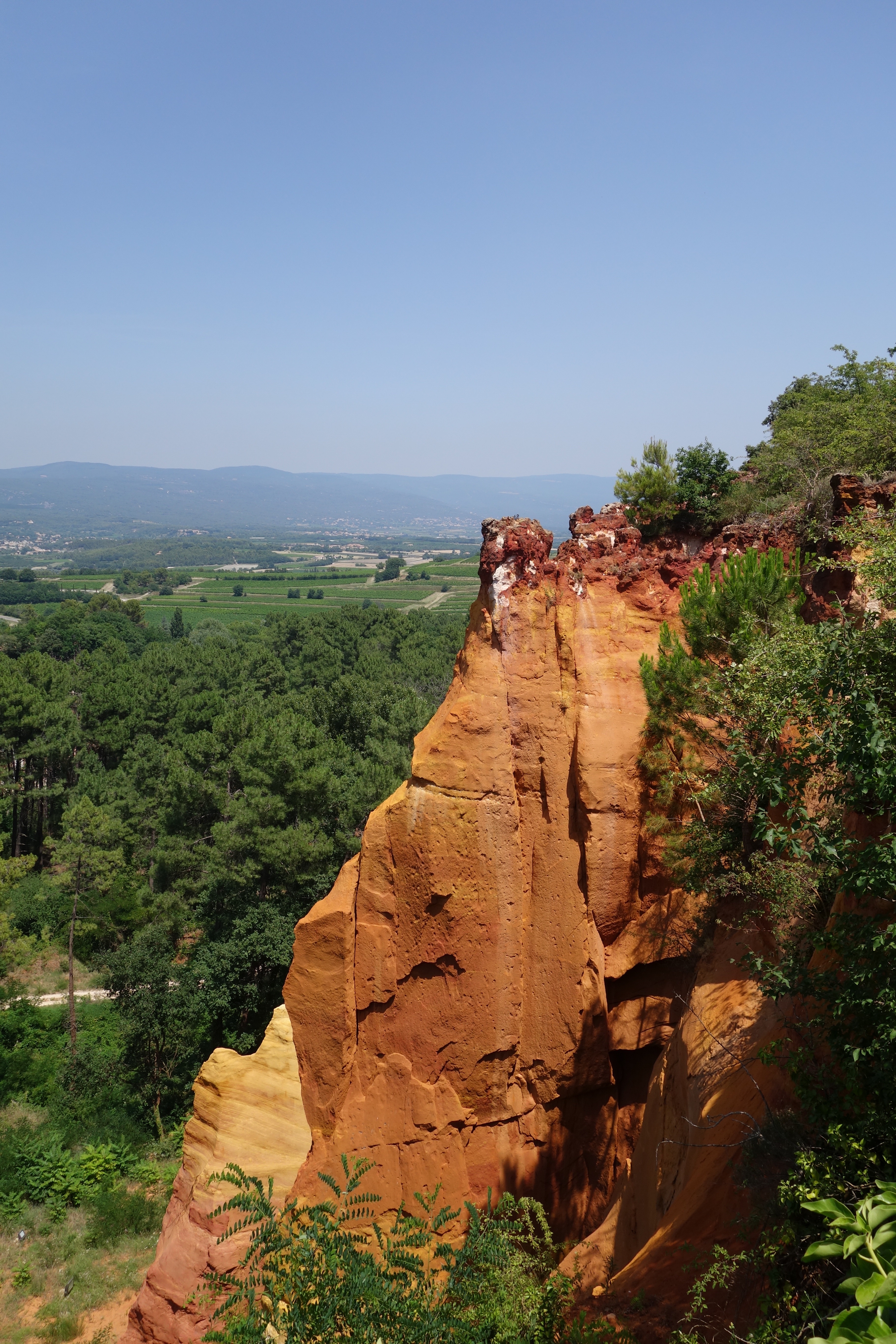
Our final mountain village was the town of Rousillon, called the red city for the ochre cliffs and the color of the buildings.  Ochre was used as a pigment in the textile industry, and there are old mines outside town, now abandoned.  The author Samuel Becket hid from the Germans in Rousillon during World War II.  After our brief stop in Rousillon we resumed our drive toward La Gaude, still over two hours away.

The ochre cliffs of Rousillon

The ochre cliffs of Rousillon

Once we hit the superhighway the kilometers flew by, but we were shocked by a highway toll of €14.50 for about a 90 mile drive. Finally we arrived in La Gaude.  Unfortunately, GPS proved almost worthless in finding our house – directing us to several wrong locations until we stumbled upon the house almost by accident.  The GPS indicated we were in the middle of terra incognita, but there was our house, and our host Dominique to greet us.  Looking out over the terrace the Mediterranean shimmered on the horizon.

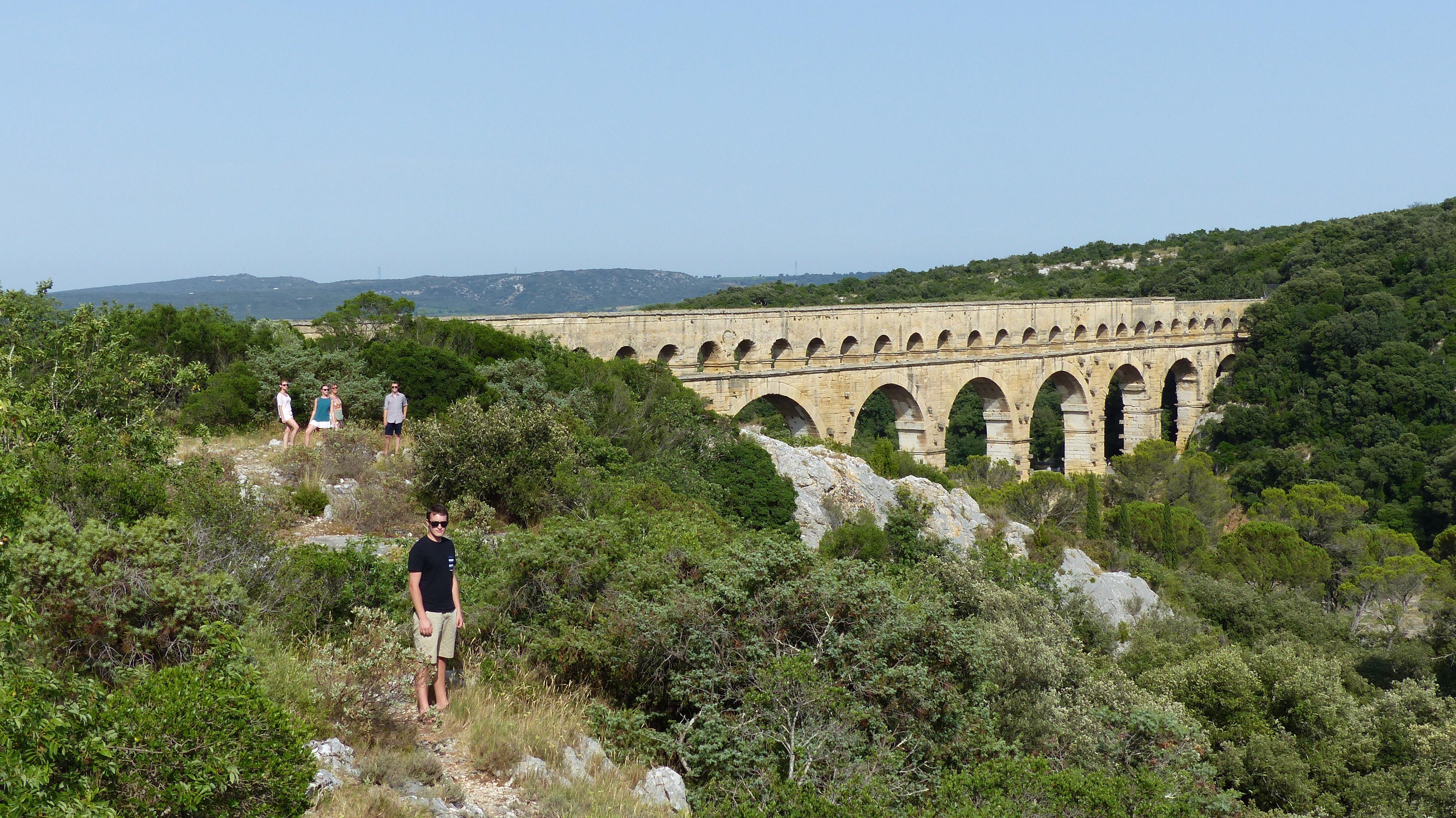
The Pont du Gard

Our restful day in Avignon proved anything but.  After a fitful night’s sleep due to the relentless heat and the constant parade of revelers outside our windows, we awoke to another blistering day.  Melissa and I set off on a short walk through town and returned with bread, cheese, eggs and croissants for our breakfast.   Our only destination for today is the Pont du Gard, which is a Roman aqueduct built in the year 50 A.D. The goal seemed easy enough, since Pont du Gard is only 20 miles away.  But without a car we had to rely on the French bus system.  That didn’t seem a problem, since there are normally 6 buses daily to the site. As we checked the bus information however there seemed to be a problem on that particular bus run and there was only a single bus, leaving at 4:30 p.m. With the return bus at 6:45.

We decided to check with the tourism office in Avignon to see if we were misunderstanding the bus information.  The woman at the tourist office was not encouraging; there was only the single round trip, and she wasn’t sure we would have time to see the Pont DuGard and make the return bus.  “If you miss the bus there is no way back” she said in an ominous tone.

Still, nothing ventured, nothing gained. We boarded the bus for the forty minute ride to Pont du Gard.  The bus was air conditioned, but we noted a curiosity of French culture – they leave the windows and vents open, thus rendering the air conditioning nearly useless.

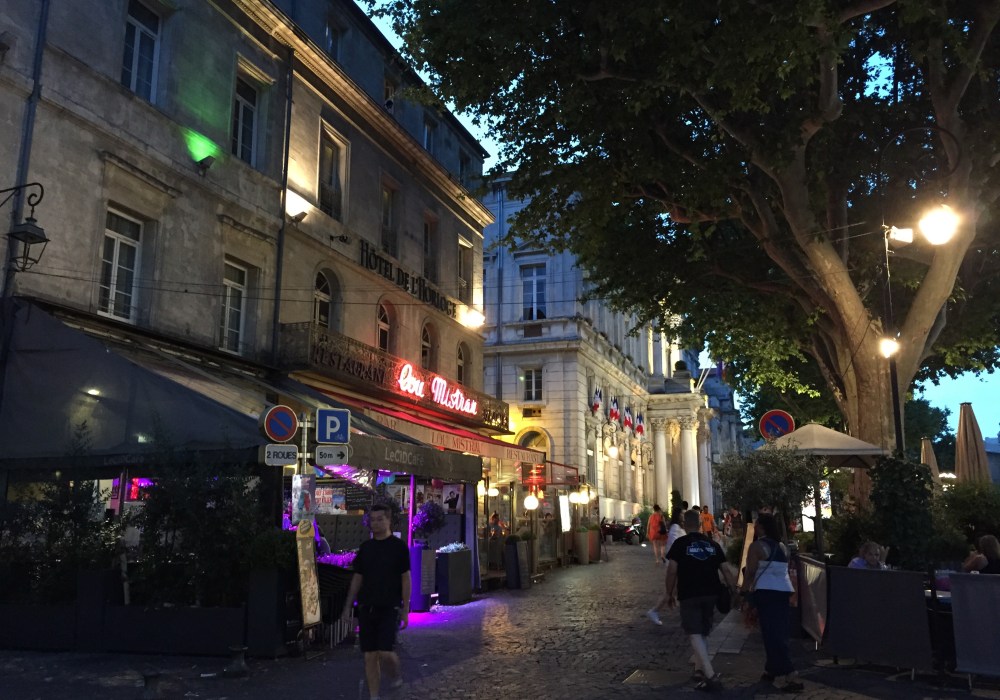
We arrived at Pont du Gard, and what a spectacle.  Below us the river, and towering above the massive three level aqueduct, still intact after 2000 years.  Many people came to view the aqueduct, but just as many or more were there to swim in the river. It was a pleasure to note the absence of lifeguards or roped off areas for swimming, and the freedom the swimmers had to enjoy themselves.  But we had a bus to catch, and no time to give it a try.  Back we marched in the swelter to the dusty bus stop; we made the bus, returned to Avignon for dinner at an outdoor cafe shaded by massive Plain trees, then home to pack for our morning departure for Nice.

image

On the TGV to Avignon and the Palais des Papes

Following our busy last day in Paris we prepared for our journey to Avignon. Packing of course, and also cleaning up our apartment at 24 rue Vavin that had served us so well. Then there was that last minute run for those darned macaroons we had missed yesterday, and a stop at the patisserie for “jamon et Gruyere” and “poulet” on baguettes to eat on the train.
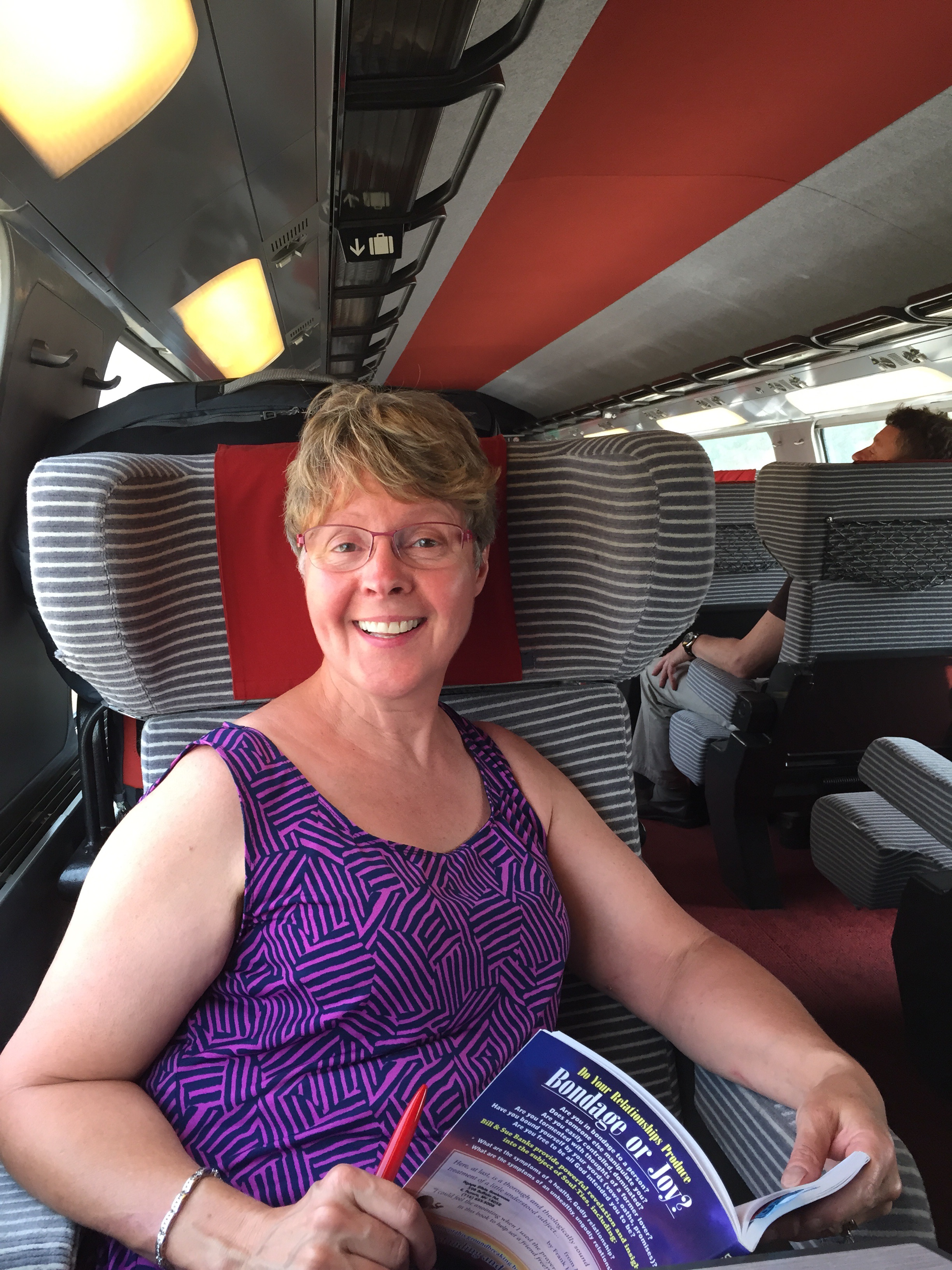
A quick metro ride to Gare Lyon, followed by brief confusion while we found our train, and we were soon settled into our seats on the upper cabin of the double decker TGV. Leaving on time at 11:41 we raced out into the French countryside, past hay and wheat fields. The white French Charolais cattle all had found shade from the midday sun under large oak trees, and appeared content to wait out the heat there before resuming their grazing.

image
The flatland outside of Paris gradually turned into rolling hills, with fewer fields and more wooded countryside. The sky, somewhat cloudy and hazy in Paris, gradually cleared but the heat persisted; even in our air conditioned train it oozed through the walls.

We arrived in Avignon by 3:30 after a very comfortable and speedy trip. Our home in Avignon has massive beamed ceilings and a fireplace in typical French country style. The city is chaotic in preparation for the 2 week Arts Festival that begins this weekend, and every available wall is covered with posters for the upcoming events.

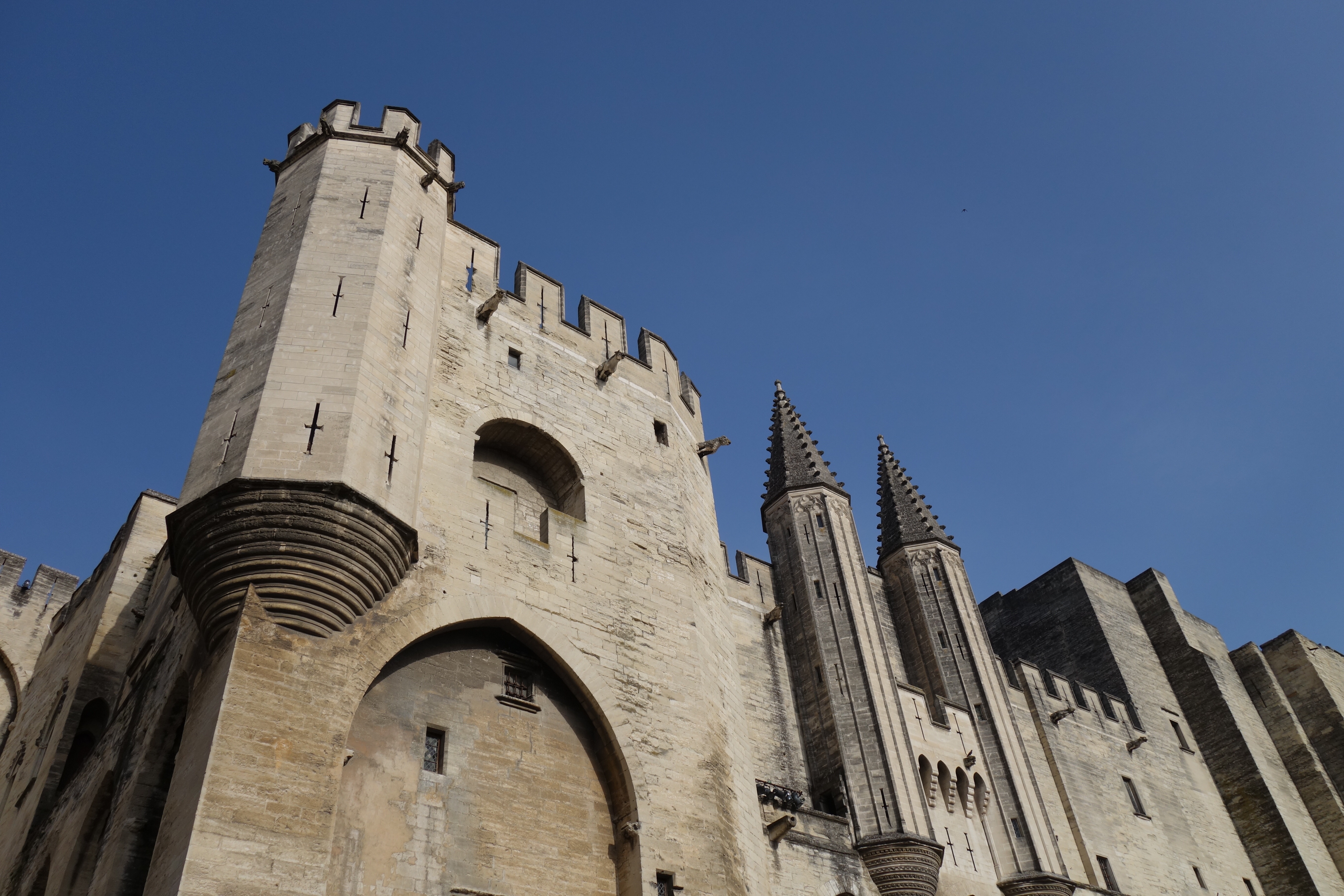
Once settled into our apartment we decided to knock off the cultural part of our stop in Avignon so we could have some relaxation tomorrow.  Off we went to tour the Palais des Papes and the nearby bridge. Avignon was the seat of the papacy during the 14th century, when the city ofAvignon was purchased from Queen Joan of Naples for 80,000 florins (and she coincidentally received a papal judgement that she did not murder her husband  in order to marry his cousin- riiiight!).

The palace is a monumental wreck of a place, lots of fun to ramble through and looming over the walled city like a tombstone.  Large parts of the palace were torn down after the Papacy returned to Rome, and I’d bet there are more than a few buildings throughout the area that contain parts of the old palace.

image

Finding ourselves in need of nourishment we strolled through the city and came across a place advertising blues and burgers.  The owner assured me they were all very sad due to BB King’s recent death, and there was a radio station playing Chicago blues.  We sat outside and had maybe the best hamburgers we’d ever eaten.  Of course in French fashion and after observing the locals we ate the burgers with knife and fork.

image

Another day ended with a fine meal, we went home to bed.
Paris Museum Death March

The temperature in Paris has climbed to a street melting 100 degrees for the last 2 days.  Still, there are sights to see, and limited time, so off we go.  Margaret and I started early with a trip to Montmartre, the bohemian district of fin de siècle Paris with its cobbled streets and corner hangouts.  Van Gogh and his contemporaries stumbled these streets after a night of absinthe and dissolution, only to wake up and create a new world of art.  We then went in search of macaroons, but failed in our objective, when we walked right past the store we were looking for on Rue de Bonaparte.  We’ll try again today.

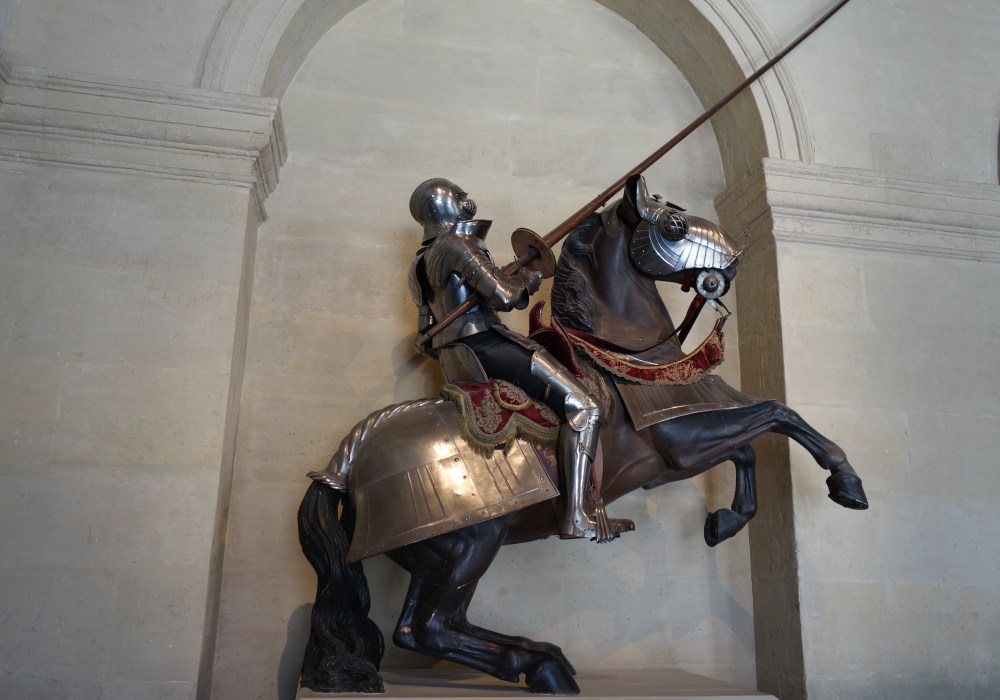
After that began what I now call our Paris Museum Death March.  Matt, Margaret, Sam and myself started with a visit to Les Invalides with a military museum, a beautiful chapel, and most significantly Napolean’s tomb.  Let me tell you, that guy gets some serious love from the French people with an elaborate rotunda of marble and a sunken burial chamber where the sarcophagus can be viewed.

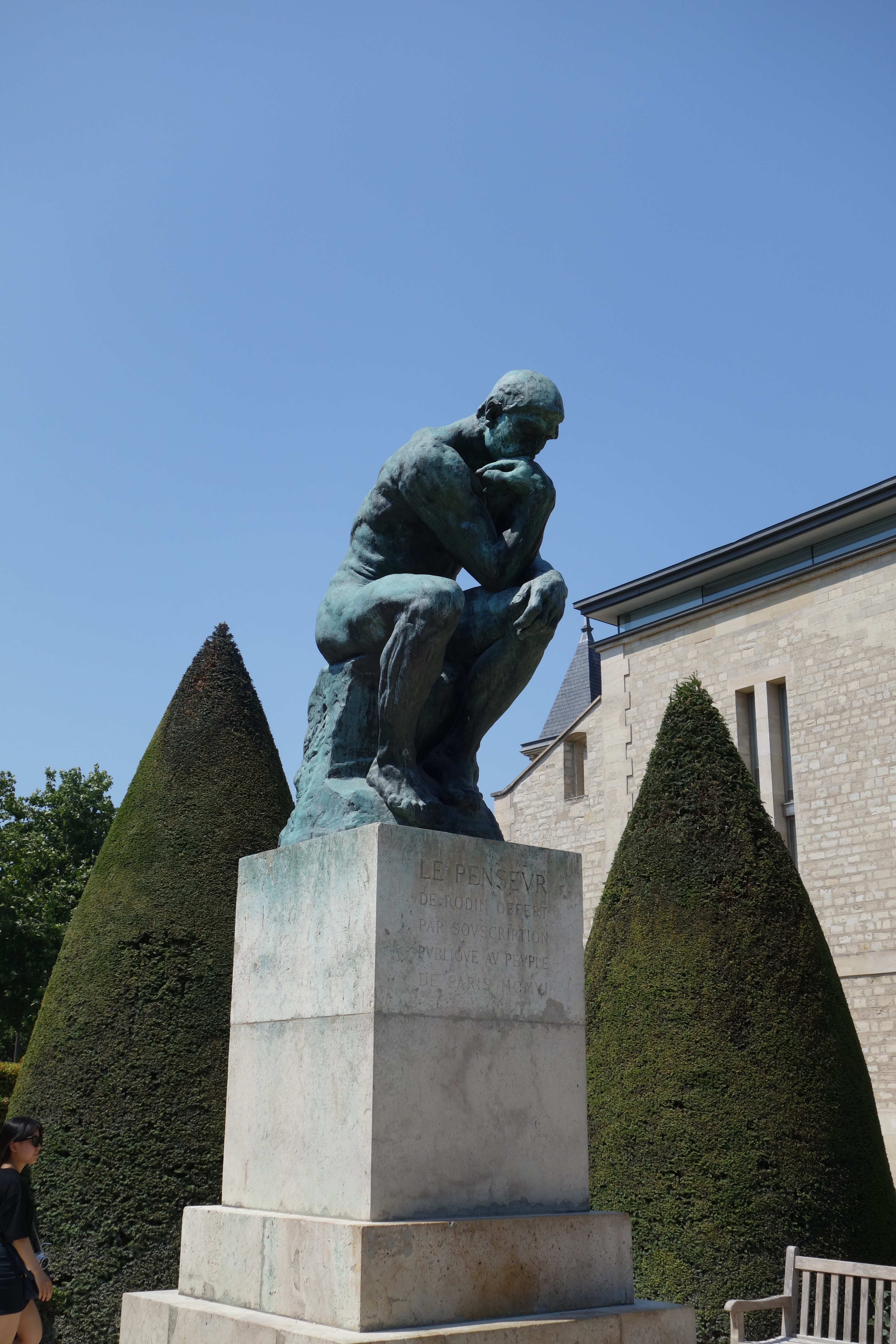
Next on our list was the nearby Rodin museum, where many of his famous sculptures are displayed among beautiful gardens and the home where he lived.  We stopped here for lunch under the shade of the trees, and continued to drink liters of water to stay hydrated.

image

Next stop was the Orangerie, where Monet’s water lilies are on display.  But here we struck out, as the line was too long and the heat too fierce.  In our only retreat of the day we met our Waterloo, and fled for the coolness of the Metro and headed back to our apartment to collect Melissa and Sarah who had spent a relaxed morning in Luxembourg Gardens.  Then off we went for more punishment.

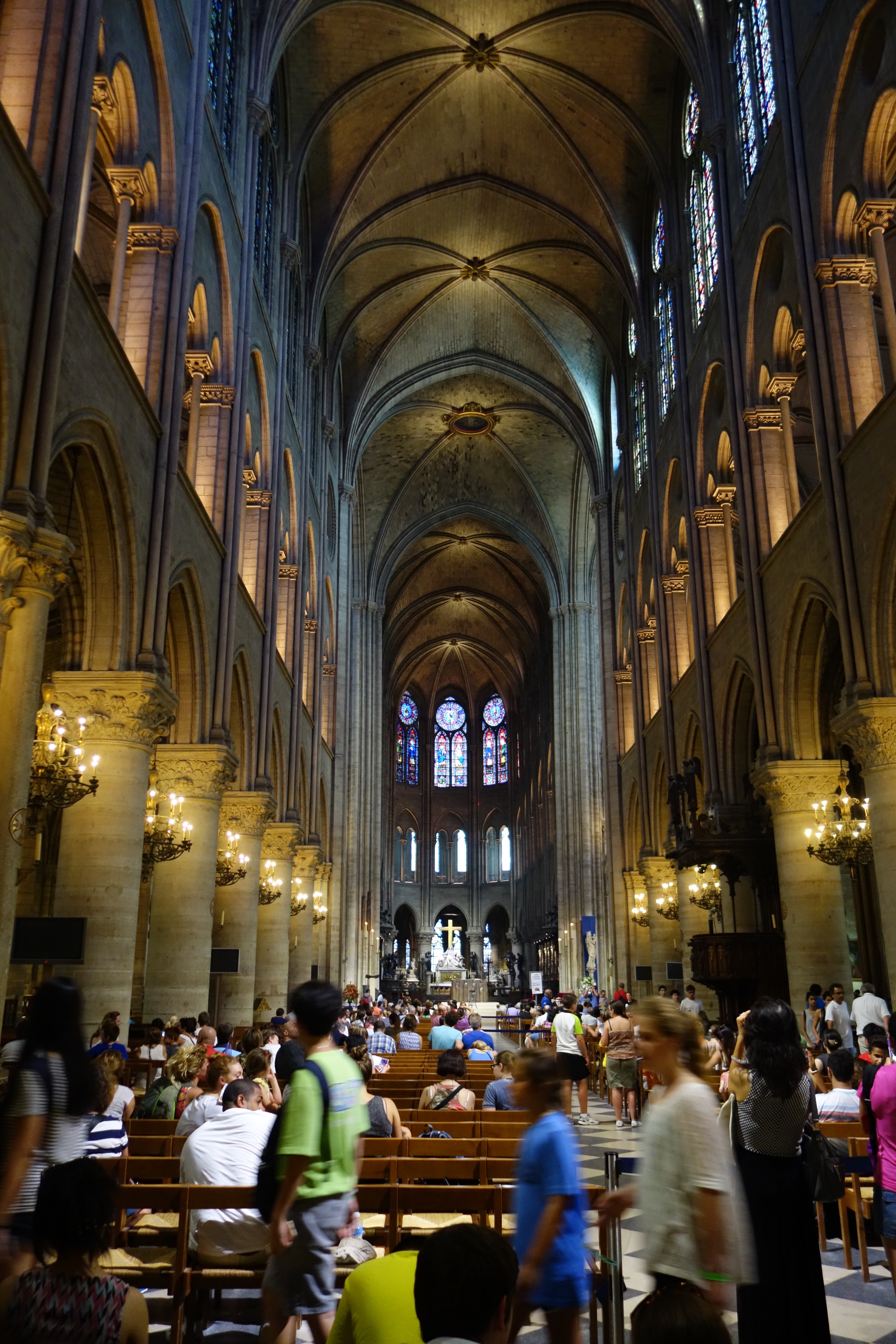
A quick tour of Notre Dame showed us the inside of the Cathedral with its massive arches and galleries. It’s incredible to think this was all built with hand labor and took centuries to complete.

image

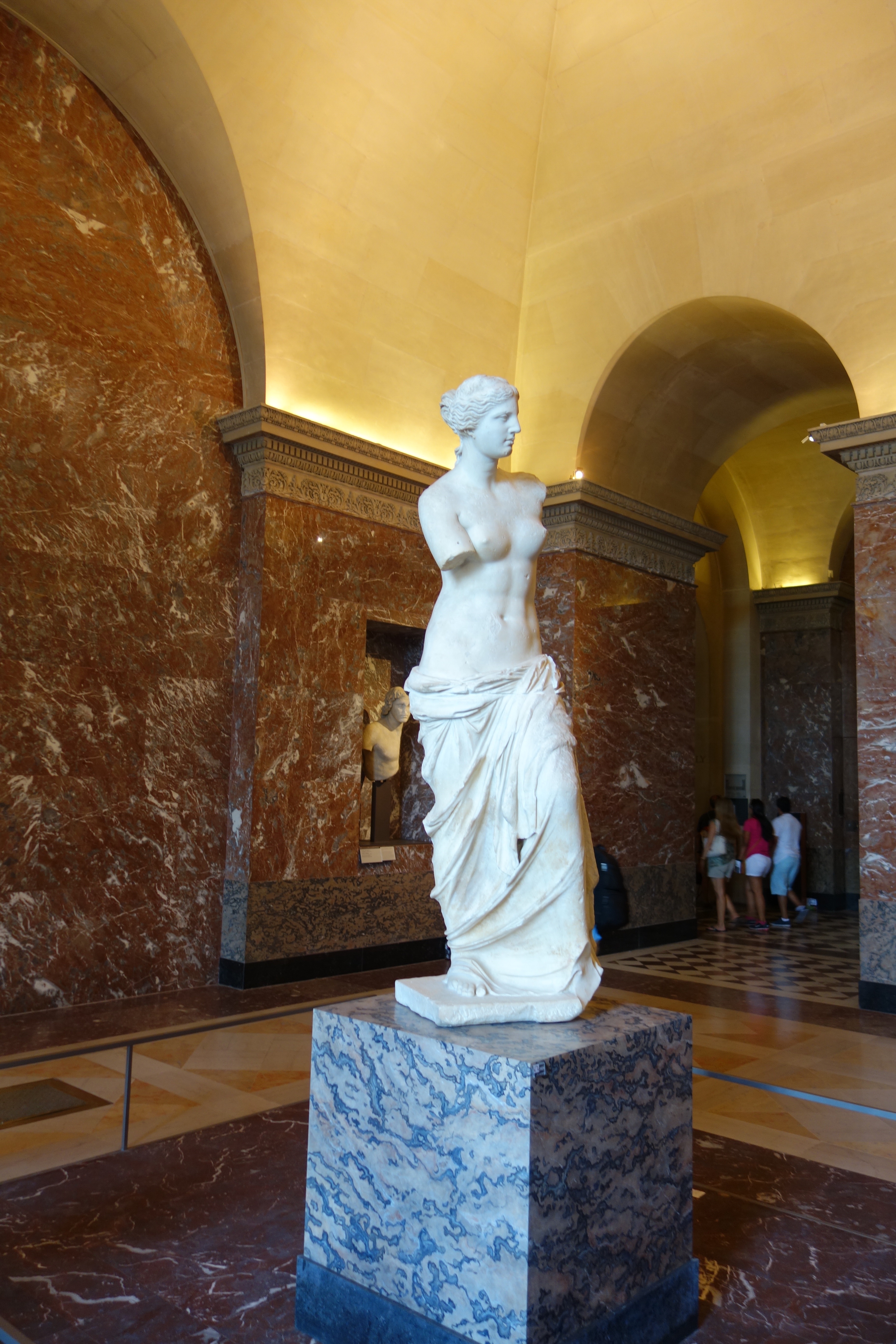
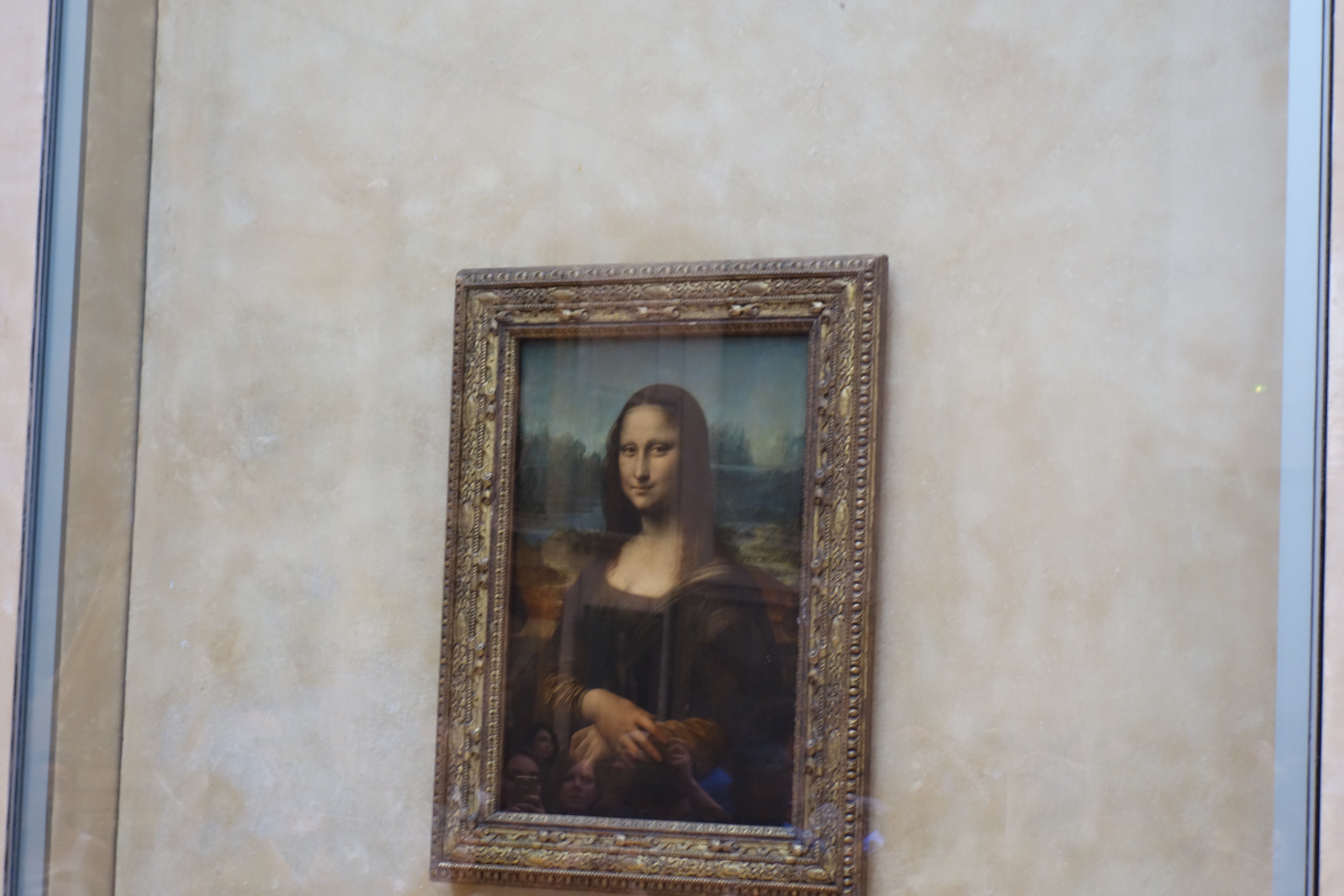
Our final visit for the day was the massive Louvre, which for shear volume is overwhelming.  Now with limited time and dinner reservations pending we passed through gallery after gallery of priceless treasures with barely a glance, in search of the two pieces you must see.  These of course are Leonardo da Vinci’s Mona Lisa and the Venus de Milo.  Here is the photographic proof of our success:

imageimage

Near exhaustion, bloated like Michellin men from all the water and with blistered feet and aching legs, we at last called it a day.  Our final destination was a small restaurant around the corner from our apartment called Timbre, where we had a memorable meal.  The menu is set, with 3, 4, or 5 courses.  We had seared tuna gazpacho, turbot with potato cream and leeks, sweetbreads, Guinea fowl cooked 2 ways, and strawberries with sorbet for dessert. The French certainly know how to cook!

Then home to bed, and tomorrow off for Avignon.

image

Oh So French

Our first full day in Paris, and what could be more appropriate than Impressionist art and the Eiffel Tower.  Things got off to a slow start and went downhill from there until mid-afternoon.  Everyone was still tired, so Melissa and I wandered the neighborhood to see what was here.  We found a nice patisserie on the corner, a charcuterie down the street selling great looking aged beef, patès and sausages, and a produce store across the street selling delicious fruits and vegetables; we’ve already eaten a kilogram of cherries.  We stopped at the Vavin Café on the corner for cappuccino and watched the parade of people going past.  One thing we noticed was nicely dressed men and women passing by on adult sized kick scooters- and looking quite elegant as they glided along.

After a late breakfast of croissants and Coffee,we finally headed for the D’Orsay museum.  By now it was really getting hot, but not too humid so if we walked in the shade it was tolerable.  At the museum there was a huge line, and although we had museum passes and knew there was an express line to get in, we couldn’t find it.  In the process of searching we all got separated, all eventually found our way inside, and all eventually found each other.  It’s incredible how dependent on our cell phones we’ve become, and how lost without them.

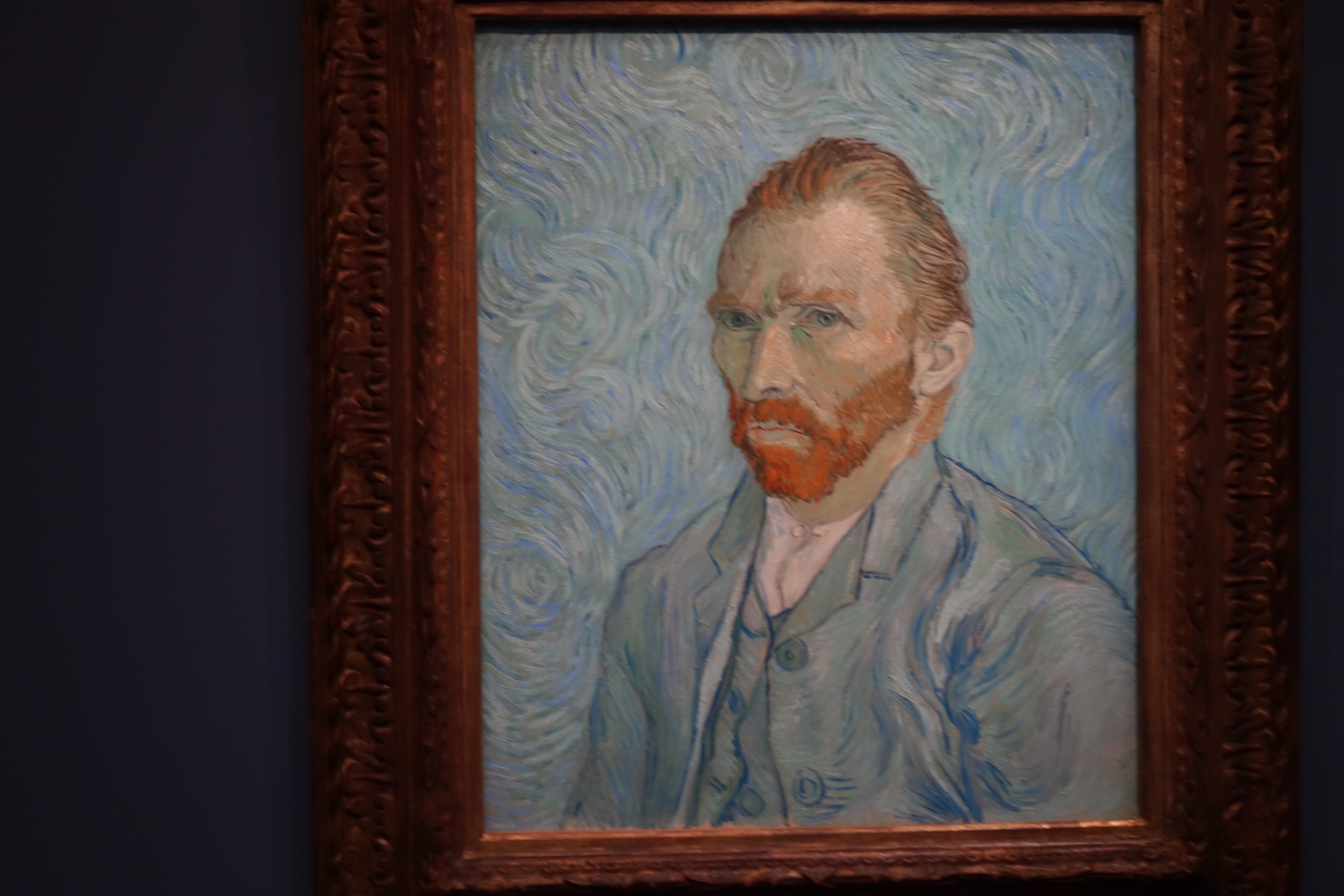
The museum was great: full of Monets,Manets, Cezannes and Van Goghs.  The museum is in the old train station, with great natural light, and arranged in a linear fashion that highlights the development of the impressionist style. A second section is post impressionists, including this guy:

image

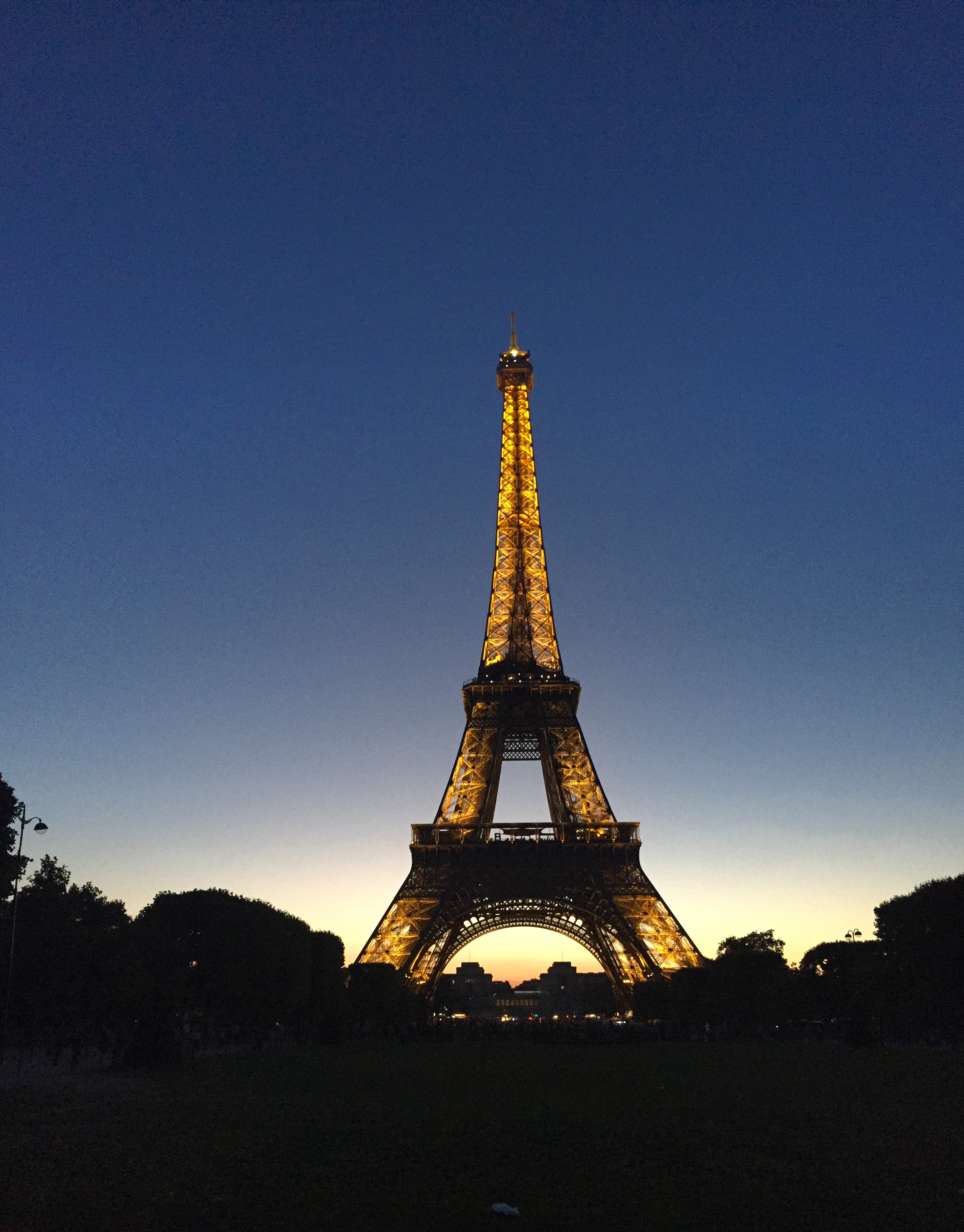
We snacked on pâté, cheese and sausage for dinner, then joined the crowd heading for the Eiffel Tower.  as dusk settled the lights on the tower came on, the crowd got larger, the hawkers with beer, wine, light up toy Eiffel Towers and food grew bolder. Finally, at 11:00 the moment everyone was waiting for arrived and the tower lit up with thousands of blinking lights like a giant Christmas tree.  After a minute of this spectacle the flashers stopped.  Time for us to go home to bed.

image