After our last night in El Calafate we set off for Puerto Natales, Chile and Parque Nacional Torres del Paine. Our route out of El Calafate on Argentina route 11 headed directly east and climbed a series of long switchbacks before meeting route 40, the primary north/south route through the country. We were now driving through the Patagonian steppes, with hundreds of kilometers of barren treeless desert around us.
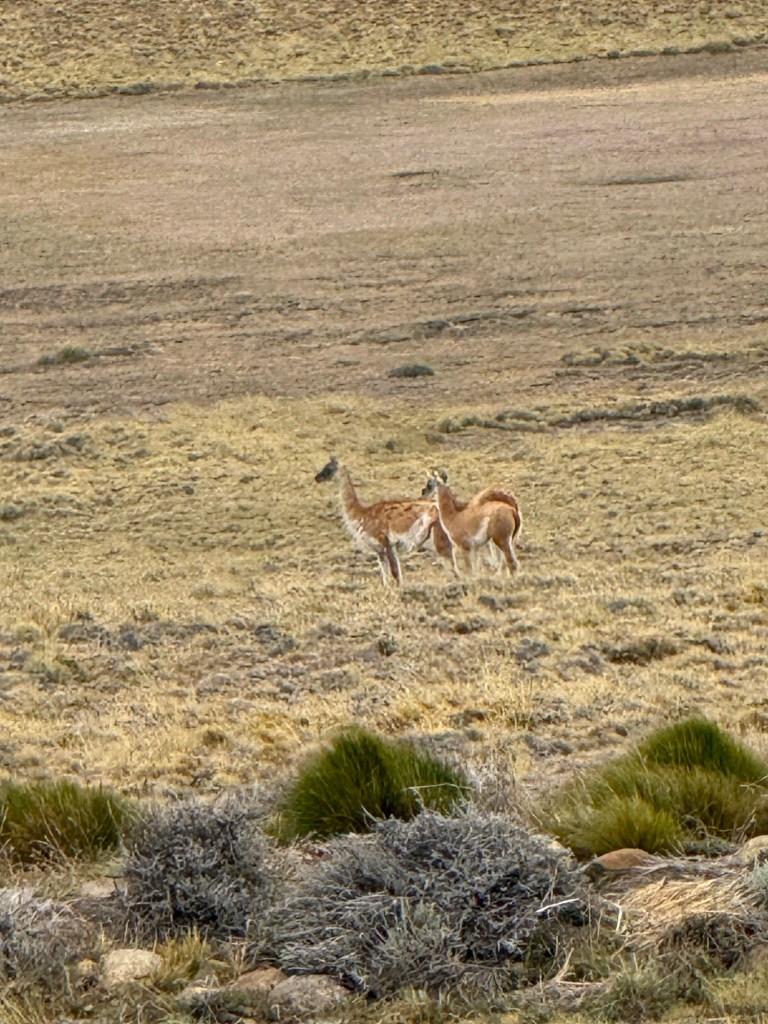
There are no interstate highways or four lane roads in Patagonia. The two lane roads are narrow and with minimal gravel shoulders. There are four foot high wire fences set back about 200 feet from the road, and native guanacos, similar to llamas, often get caught on the fences. We saw numerous skeletal remains during our drives.
Traffic is light, mostly other tourists, trucks and occasional motorcycles. The wind is ever present and at times the Hilux is forced across the road as we drive. Scattered clouds and intermittent rain follow us across the steppe.
We began the long descent into Chile, and crossed the border near Rio Turbo, Argentina , a grim coal mining town with surly border guards and a forlorn aspect.
In contrast, the Chilean border guards, who we had been told were so strict and severe, were quite pleasant and very helpful. After declaring our bag of trail mix, our passports were stamped and we drove down a road with huge fields of lupines into the green valleys of Chile.
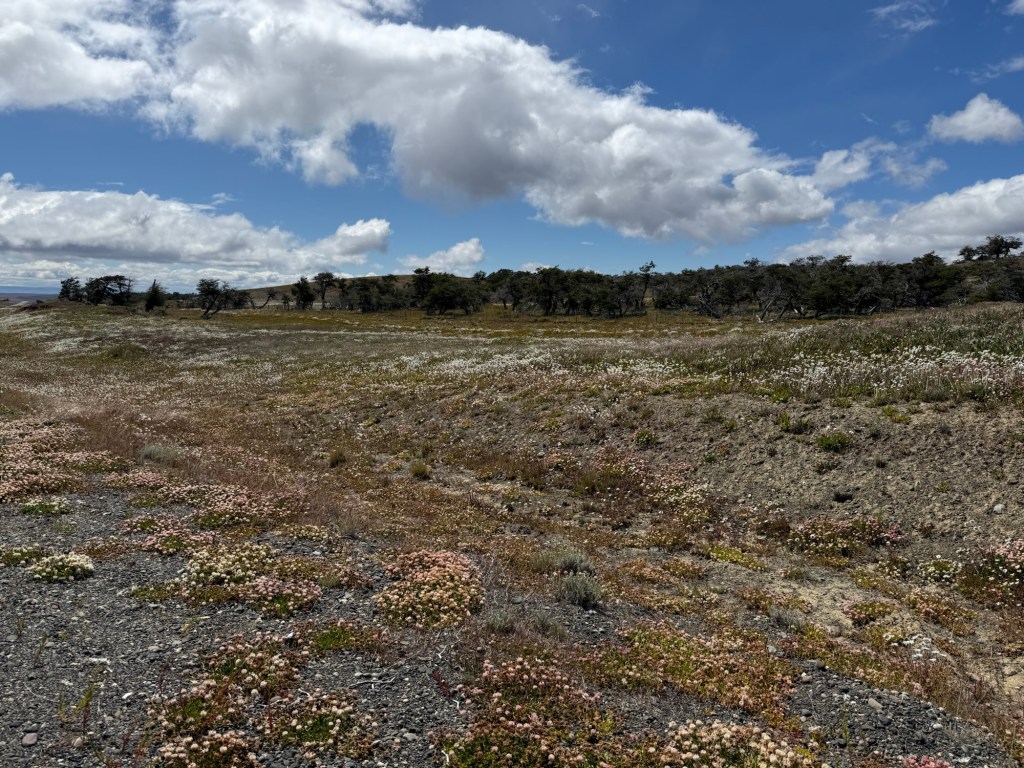
During the short drive into Puerto Natales it was evident that Chile is more prosperous than Argentina, at least in Patagonia. It is greener, there are more shops and restaurants, and more cars. People in both countries are generally pleasant and friendly, although fewer people in Chile speak English. Fortunately for us, Doug is quite fluent in Spanish, and that made a huge difference in getting around town and in ordering food in the restaurants.
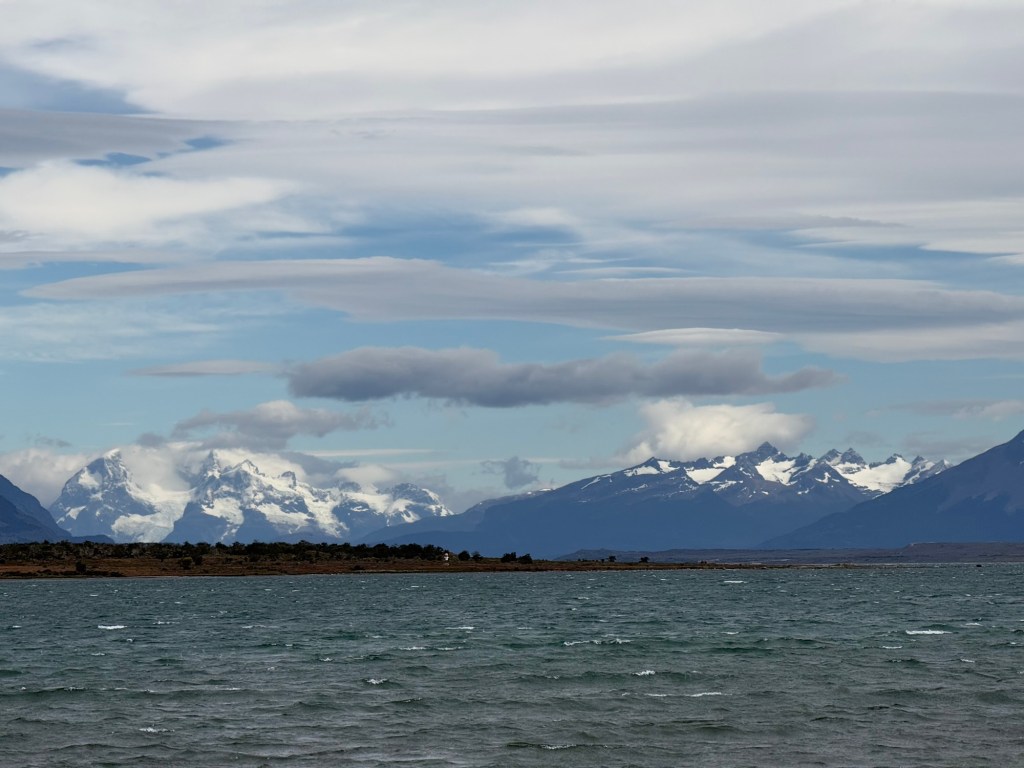
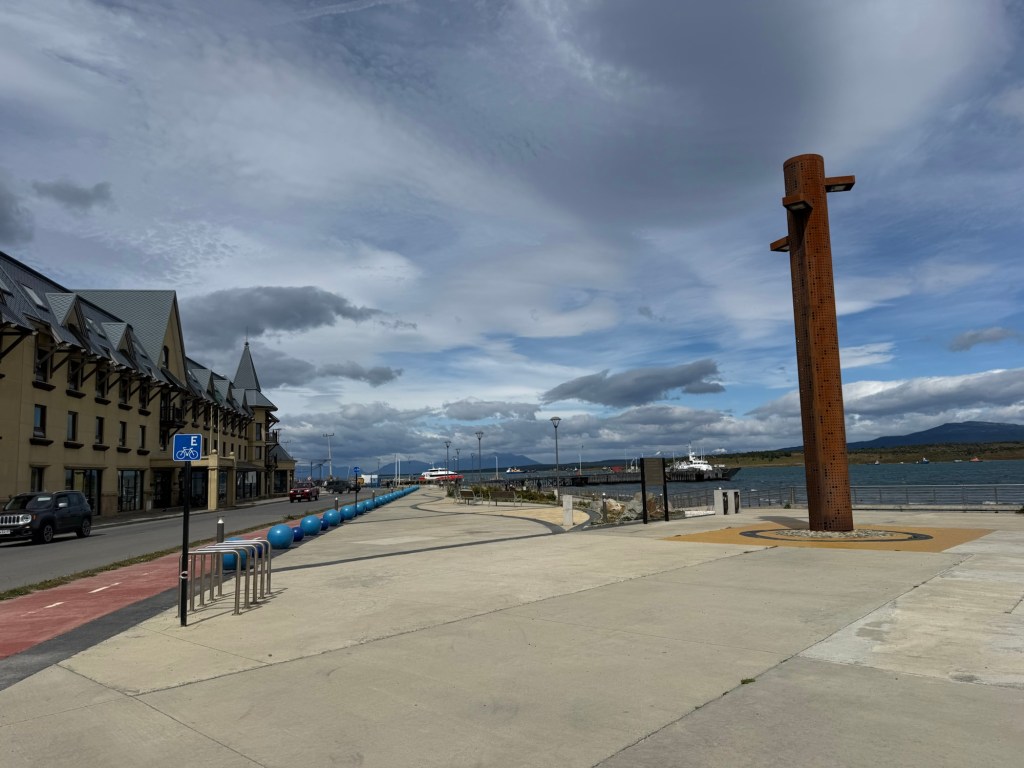
Our hotel in Puerto Natales, Aquaterra, is small but clean and comfortable. The water in Chile, as in Argentina, is generally potable. The city sits on the eastern edge of the Queen Adelaide Archipelago and is accessible to the open sea via byzantine channels between the outer islands. Snow capped peaks of the southern Andes are visible in the distance. Seafood is plentiful, and a welcomed change after weeks of Argentine lamb and beef.
 wormer family band